2026 Best Rigid Flex PCB Suppliers for Global Buyers
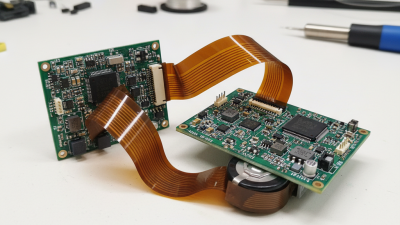
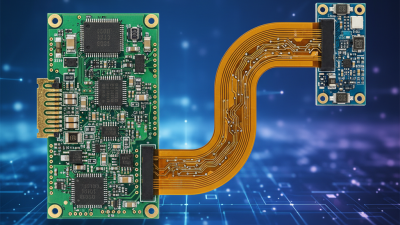
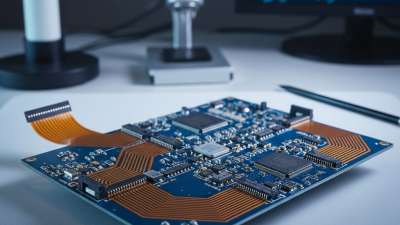
The 2026 Best Rigid Flex PCB Suppliers for Global Buyers guide examines manufacturers through a practical, evidence-based lens. It focuses on engineering capability, production consistency, material control, and international support. A rigid flex pcb is not simply a flexible circuit combined with a rigid board. It is a carefully engineered structure that must survive bending, vibration, heat, and repeated assembly.
Ray Prasad, a respected PCB design and manufacturing educator, offers a useful principle: “A design is successful only when it can be built repeatedly.” That idea matters when comparing suppliers. Buyers should review stack-up control, bend-radius guidance, impedance testing, via reliability, and first-article inspection records. Factory photographs can help, but process data is more convincing. Ask for test reports.
The strongest suppliers usually provide DFM feedback before quotation. They also explain copper thickness, adhesive systems, coverlay selection, and controlled-impedance options in clear language. Their engineers should identify risks before mass production begins. That is real experience.
Global sourcing still has weak points. A polished website does not prove stable output. A low price may hide tooling changes, longer qualification cycles, or inconsistent materials. No ranking is perfect. Supplier performance can change with capacity, management, or raw-material availability. Buyers should verify current certifications, sample quality, delivery history, and communication speed before approval.
This guide therefore treats supplier selection as a technical and commercial decision. It highlights companies that show measurable competence, reliable documentation, and practical support for demanding rigid flex pcb programs.

Rigid-Flex PCB Fundamentals: Stackups, Bend Radii, and IPC-2223 Design Rules
Rigid-flex PCB design starts with the stackup, not the outline. A practical build separates rigid multilayer zones from flexible bend zones. Copper layers, dielectric films, adhesive, and stiffeners must align across each transition. Keep plated through-holes away from the dynamic bend area. Blind or staggered structures may reduce stress, but they increase fabrication risk. That tradeoff deserves a real review.
Bend radius controls service life. For a one-time fold, engineers often use a larger radius than the minimum drawing value. Dynamic flexing needs more margin, especially with repeatedly moved assemblies. A common starting point is six times the finished flexible thickness, but material construction can change that value. Measure the actual stackup. Do not estimate it from nominal datasheets alone. Copper grain direction, coverlay openings, and nearby components also affect fatigue. I have seen failures begin at a sharp coverlay corner, not at the visible crease.
IPC-2223 provides useful design guidance for flex and rigid-flex boards, including bend regions, conductor geometry, and component placement. Apply it with the fabricator’s process limits and impedance requirements. Avoid abrupt width changes near the transition. Use rounded corners and keep vias outside the bend path. Ask for a cross-sectional drawing before release. A supplier should explain layer registration, adhesive flow, bend testing, and inspection records clearly. Early prototypes may reveal uneven neutral-axis behavior. That is inconvenient, but better than trusting a perfect CAD model.
2026 Supplier Qualification: IPC-6013 Class 2/3 Compliance and ISO 9001
For global buyers, rigid-flex PCB supplier qualification should begin with evidence, not attractive samples. IPC-6013 compliance shows whether a supplier can control flexible and rigid-flex board construction. Ask for recent qualification records, material approvals, process controls, and inspection results. Class 2 supports reliable general electronics, while Class 3 demands tighter control for high-reliability applications. The correct class depends on product risk, service conditions, and customer requirements.
ISO 9001 adds a structured quality system, but certification alone proves little about every shipment. Review internal audit findings, corrective-action records, calibration logs, and batch traceability. Experienced suppliers can explain how they control coverlay alignment, plated-through holes, dielectric thickness, and bend areas. Request test coupons and sample reports that match your actual stack-up. A small gap in documentation may reveal a larger process weakness. That deserves attention.
Tips: Compare the supplier’s IPC-6013 Class 2 or Class 3 claim with independent test evidence. Confirm revision levels and approved materials before production. Check whether engineering changes require formal approval. Visit the facility when practical, and observe moisture control, cleanliness, and final inspection. Do not rely on a certificate kept in a sales folder. Ask difficult questions. The answers matter.
Verify Global Certifications: UL 94 V-0, RoHS, REACH, and IATF 16949
For 2026 rigid-flex PCB sourcing, certification evidence deserves the same attention as price and lead time. Grand View Research’s 2024 flexible printed circuit board analysis projects double-digit annual growth through 2030. More volume means more documentation risk.
UL 94 V-0 is a flammability classification, not a complete product certification. The material should self-extinguish quickly, without flaming droplets, under the specified vertical test. Ask for the exact laminate grade and current test report. RoHS compliance must cover restricted substances, including lead, mercury, cadmium, and several phthalates. REACH evidence should identify the latest Candidate List review date. Paperwork is not enough.
IATF 16949 certification shows a controlled automotive quality system, but scope matters. Verify the certified site, manufacturing processes, expiry date, and audit status. IPC’s 2024 electronics industry reporting highlights continued pressure on supply resilience and quality consistency across global production networks. A supplier should connect certificates to lot records, incoming inspection, and corrective-action reports. Request sample traceability from copper foil to final shipment. Traceability matters. In practice, certificates are sometimes valid but poorly matched to the supplied construction. That uncomfortable gap deserves a second review.
2026 Best Rigid-Flex PCB Suppliers for Global Buyers
Global certification verification benchmarks: UL 94 V-0, RoHS, REACH, and IATF 16949
This chart summarizes measurable requirements used when screening rigid-flex PCB suppliers. UL 94 V-0 limits afterflame time, RoHS restricts ten substances, and REACH uses a 0.1% weight-by-weight threshold for SVHC communication obligations. IATF 16949 is a process-based automotive quality-management standard and is verified through certification and audit records rather than a single numeric limit.
Rank Suppliers by Lead Time, MOQ, Yield, Traceability, and Landed Cost
2026 Best Rigid Flex PCB Suppliers for Global Buyers
A practical supplier ranking starts with verified lead time, not marketing promises. Request a production schedule for prototypes, pilot lots, and repeat orders. Compare quoted days with shipment records from the previous six months. A five-day promise means little if engineering approval adds two weeks. MOQ also matters. A low MOQ reduces inventory risk, while a higher MOQ may lower unit cost. Buyers should calculate both outcomes.
Yield deserves direct evidence. Ask for first-pass yield, rework rates, and defect categories from similar rigid flex designs. Fine-pitch components, tight bend zones, and multiple lamination cycles can expose weak process control. Traceability should reach material lots, operator records, inspection images, and electrical test results. It must work quickly. A spreadsheet alone is not traceability. Sample audit trails before approval.
Landed cost gives the clearest ranking. Include tooling, test fixtures, freight, insurance, duties, currency fees, and probable scrap. A cheaper board can become expensive after delays and customs handling. I once ranked suppliers by quoted price and missed packaging damage during transit. That scorecard was incomplete. Weight lead time, MOQ, yield, traceability, and landed cost according to project risk. Keep the assumptions visible. Recheck them after the first shipment.
2026 Best Rigid-Flex PCB Suppliers for Global Buyers
Supplier ranking by lead time, minimum order quantity, first-pass yield, traceability, and estimated landed cost
| Rank |
Supplier Profile |
Manufacturing Region |
Prototype Lead Time
(Business Days) |
Production Lead Time
(Business Days) |
MOQ
(Panels) |
First-Pass Yield
(%) |
Traceability Score
(1–5) |
Estimated Landed Cost
(USD / Panel) |
Weighted Score
(100) |
Best Fit for Global Buyers |
| 1 |
Profile A |
East Asia |
7–10 |
18–24 |
50 |
98.5 |
5.0 |
$42–$49 |
91.2 |
High-volume programs requiring strong documentation and stable yield |
| 2 |
Profile B |
Southeast Asia |
8–12 |
20–27 |
100 |
98.1 |
4.8 |
$40–$47 |
89.6 |
Balanced cost, capacity, and supply-chain diversification |
| 3 |
Profile C |
East Asia |
6–9 |
16–22 |
25 |
97.6 |
4.5 |
$48–$57 |
88.7 |
Fast prototypes and low-volume engineering builds |
| 4 |
Profile D |
North America |
5–8 |
15–21 |
10 |
97.2 |
5.0 |
$82–$98 |
86.9 |
Defense, aerospace, medical, and controlled-source projects |
| 5 |
Profile E |
Southeast Asia |
10–14 |
24–32 |
100 |
97.8 |
4.4 |
$37–$44 |
85.8 |
Cost-sensitive commercial electronics with repeat demand |
| 6 |
Profile F |
East Asia |
9–13 |
22–30 |
50 |
96.9 |
4.1 |
$39–$46 |
83.7 |
Consumer, industrial, and IoT products with moderate complexity |
| 7 |
Profile G |
Europe |
8–12 |
20–28 |
25 |
96.5 |
4.7 |
$76–$91 |
82.9 |
Regional supply, shorter customs exposure, and compliance-focused builds |
| 8 |
Profile H |
South Asia |
12–16 |
28–38 |
100 |
95.8 |
3.8 |
$35–$42 |
79.4 |
Price-driven programs with flexible delivery planning |
| 9 |
Profile I |
North America |
6–10 |
18–25 |
20 |
96.1 |
4.6 |
$88–$108 |
78.8 |
Low-MOQ prototypes and regulated domestic sourcing |
| 10 |
Profile J |
Southeast Asia |
11–15 |
25–35 |
50 |
96.3 |
4.0 |
$41–$50 |
77.6 |
Medium-volume assemblies where cost is prioritized over speed |
Benchmark basis: representative 4-layer rigid-flex design, approximately 100 × 150 mm, standard polyimide flex section, ENIG finish, controlled impedance where required, and a 100-panel production order. Estimated landed cost includes board price, standard export packaging, international freight, insurance, customs handling, and typical import fees, but excludes taxes, tooling, expedited freight, and assembly. Lead times, yields, MOQ, and costs vary by design complexity, material availability, inspection requirements, and destination. Supplier profiles are anonymized benchmark categories rather than company-specific quotations.