2026 Top Pcb Board Innovations and Trends in the Industry?
In the fast-evolving world of technology, Pcb Board innovations play a crucial role. These innovations directly impact various industries, from electronics to automotive sectors. As we look ahead to 2026, several trends are emerging that are reshaping how Pcb boards are designed and manufactured.
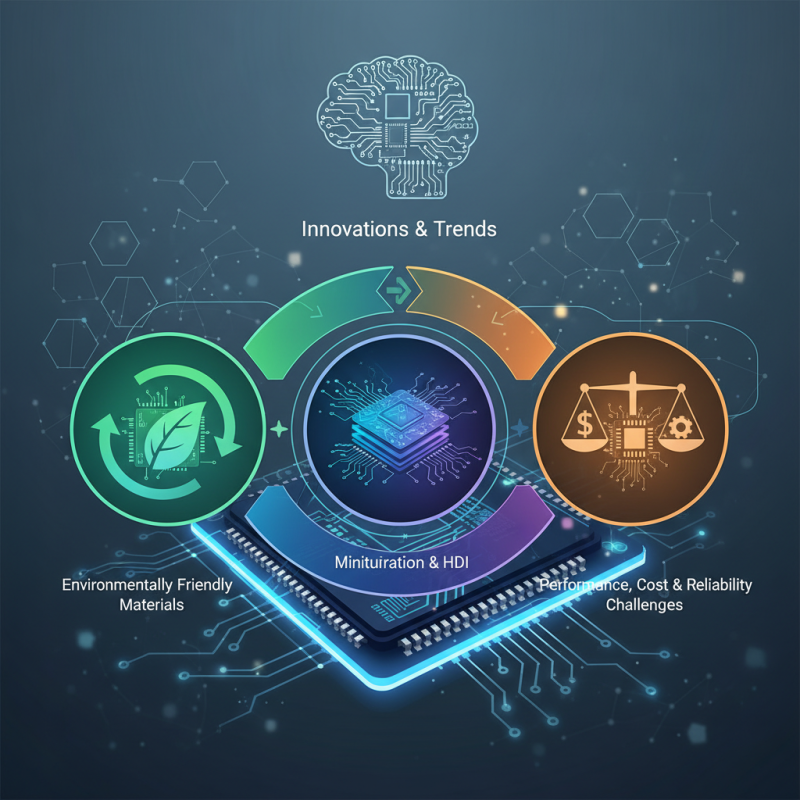
One significant trend is the shift towards more environmentally friendly materials. Companies are exploring sustainable options to reduce waste. This reflects a growing awareness of environmental issues within the industry. However, challenges remain in balancing sustainability with performance and cost.
Additionally, advancements in miniaturization are pushing Pcb board capabilities to new limits. As devices become smaller and more complex, the demand for high-density interconnect (HDI) technology rises. While this opens doors to innovative applications, it also raises questions about reliability and production costs. Understanding these trends will be vital for professionals and businesses aiming to stay competitive in the coming years.
2026 PCB Board Innovations: A Comprehensive Industry Overview
In 2026, the PCB board industry is poised for significant transformation. Innovations will drive the market towards higher efficiency and sustainability. Emerging technologies aim to meet the growing demand for compact and complex designs. Flexible PCBs are gaining traction in sectors like wearable tech, offering versatility that rigid boards cannot.
**Tips:** Consider how your design can incorporate flexibility. It might help you stay ahead in a competitive landscape.
Another trend is the integration of AI in PCB manufacturing. Automated processes could enhance accuracy and reduce waste. However, challenges remain in balancing automation with skilled labor.
**Tips:** Evaluate your supply chain. Finding the right balance can improve productivity and reliability.
As sustainability becomes a priority, eco-friendly materials will emerge. Biodegradable options and recycling programs can reshape industry standards. Not all manufacturers are ready to adapt, highlighting a gap worth exploring.
**Tips:** Research biodegradable materials for your next project. Sustainability could be a key differentiator in the future.
Emerging Materials: High-Performance Substrates and Their Benefits
The PCB industry is undergoing significant shifts with emerging materials that enhance performance. High-performance substrates are at the forefront, offering numerous advantages. These materials improve thermal management, reduce signal loss, and increase reliability in various applications. Recent studies indicate that the adoption of advanced substrates can boost the efficiency of electronic devices by up to 30%.
New materials such as polyimides and ceramic composites are being developed. These substrates are not only versatile but also lightweight. Their unique properties make them suitable for high-frequency applications, which is crucial for next-generation telecommunications. According to industry reports, approximately 65% of manufacturers are considering these innovative materials in their designs for 2026.
However, challenges remain. The costs associated with these high-performance substrates can be a barrier for many companies. The complexity of manufacturing processes also requires specialized knowledge and equipment. As the industry pushes forward, the onus is on engineers and designers to evaluate these innovations thoroughly. Testing and validation will be key to ensuring these materials meet the rigorous demands of today's applications.
Advancements in PCB Design Software: Trends and Impact on Efficiency
The advancements in PCB design software are changing the landscape of the electronics industry. Enhanced simulation and modeling tools enable designers to identify potential issues early, significantly reducing errors. According to a recent industry report, companies using advanced PCB software saw a 30% decrease in prototype development time. This efficiency translates into faster time-to-market for new products.
Designers also benefit from improved collaboration features. Cloud-based platforms make it easy for teams to work together in real time. Such tools can lead to more innovative designs and increased productivity. A survey indicated that 70% of engineers believe that better collaboration tools will drive further innovation in PCB design.
**Tips:** When choosing PCB design software, prioritize those with robust simulation capabilities. Investing upfront can save time and costs down the road. Keeping abreast of software updates is crucial. Regular enhancements can lead to significant productivity gains. Ensure your team is trained in the latest features to leverage these benefits effectively.
2026 Top PCB Board Innovations and Trends in the Industry
| Innovation/Trend | Description | Impact on Efficiency | Projected Adoption Rate (%) |
| Automated Design Software | Software that automates component placement and routing. | Reduces human error and design time. | 75% |
| AI Integration | Using AI algorithms to optimize PCB layouts based on performance metrics. | Enhances design quality and reduces iteration cycles. | 65% |
| 3D Printing Technology | Additive manufacturing for creating prototypes and low-volume PCB assemblies. | Speeds up prototyping and reduces waste. | 50% |
| Flexible PCBs | PCBs that can bend and flex without breaking, suitable for compact devices. | Allows for more innovative product designs and space efficiency. | 70% |
| Sustainability Practices | Use of eco-friendly materials and processes in PCB manufacturing. | Improves corporate responsibility and reduces environmental impact. | 80% |
Sustainability in PCB Manufacturing: Eco-Friendly Practices and Technologies
As the PCB industry evolves, sustainability takes center stage. Eco-friendly practices are becoming essential. Manufacturers are exploring alternative materials. These materials reduce environmental impact and improve recyclability. A notable trend is the use of bio-based resins. They provide a greener choice without compromising quality.
Water-based processes have also gained traction. They minimize hazardous waste and use fewer harmful chemicals. This shift is significant, as traditional PCB production often relies on toxic substances. However, challenges remain. Not all eco-friendly options meet the performance standards of conventional materials.
Investing in energy-efficient equipment is crucial for manufacturers. These upgrades can lower overall energy consumption. Some companies still hesitate to adopt these technologies. Budget constraints and awareness play a role. The path toward sustainability is not straightforward. It requires ongoing commitment and innovation.
Future Trends: Flexible and Printed Circuit Boards in New Applications
Flexible and printed circuit boards (PCBs) are gaining traction in various applications. These innovations show promise across industries, including consumer electronics and automotive. Flexible PCBs can fit into compact spaces, making them ideal for wearables. Printed circuit boards simplify manufacturing processes and reduce costs, benefiting small start-ups looking to innovate.
Tips: Analyze the specific needs of your application before choosing PCB types. Consider the manufacturing capabilities and costs. Optimization is key to maximizing functionality.
New applications demand tailored solutions. For instance, in healthcare, flexible PCBs are used in diagnostic tools. Their lightweight and adaptable design enhance mobility and accuracy. However, achieving reliability in complex environments remains a challenge.
Tips: Test prototypes rigorously in real-world scenarios. Factor in potential stress points during design. This helps inform future improvements and iterations.