2026 Top Rigid Flex Rigid PCB Innovations and Trends?
The rigid flex rigid PCB market is evolving rapidly. According to a recent report by MarketsandMarkets, the global rigid flex PCB market is projected to reach $34.5 billion by 2026. This growth is driven by advancements in technology and increased demand in various sectors, including consumer electronics and automotive industries.
As we analyze the trends for 2026, several innovations emerge. Manufacturers aim for thinner, lighter, and more durable designs. Increased functionality in smaller spaces becomes essential. However, challenges remain in balancing performance and manufacturability. Companies must invest in research and development to address these issues.
Moreover, sustainable practices are gaining traction in PCB manufacturing. Eco-friendly materials and processes are becoming important for companies. The industry is gradually shifting towards sustainable solutions but still faces hurdles related to cost and efficiency. This tension between innovation and practical implementation warrants critical examination. The future of rigid flex rigid PCB will likely require careful navigation of these complex dynamics.

Innovative Developments in Rigid Flex Rigid PCB Technology for 2026
The landscape of rigid flex rigid PCB technology is rapidly evolving. In 2026, industry experts predict a growth rate of 8% annually. This trend is driven by the high demand for compact electronics. Consumer gadgets are getting smaller and more sophisticated. Rigid flex PCBs offer unique solutions for space-constrained applications.
Recent reports highlight innovations in materials and manufacturing techniques. For instance, improvements in flexible substrates enhance durability. This leads to increased performance in harsh environments. However, challenges remain. Managing the thermal properties of these materials is complex. Designers must carefully balance flexibility and rigidity in their layouts.
Moreover, integration of advanced functionalities is on the rise. Multi-layer designs are becoming commonplace. Yet, achieving uniform quality can be difficult. Variability in production can impact reliability. Communication among teams during the design phase is crucial. Ensuring every detail aligns with manufacturing capabilities is essential for success.
2026 Rigid Flex PCB Innovations and Trends
Key Trends Shaping the Future of Rigid Flex Rigid PCBs in 2026
The landscape of rigid flex rigid PCBs is changing rapidly as we approach 2026. Advancements in materials are at the forefront. New polymers are being tested for better flexibility and durability. These materials promise to enhance the lifespan of devices in various applications. This is crucial as electronic devices become more compact.
Sustainability is another key trend. Manufacturers are looking for eco-friendly options in PCB production. Using recyclable materials can reduce environmental impact. However, this approach requires careful consideration of performance trade-offs. The challenge lies in balancing sustainability with quality and cost-effectiveness.
Smart technology integration is on the rise. Flexible circuits are being used in wearable technology and IoT devices. This shift opens doors for innovative designs but requires meticulous planning. Reliability remains a concern in complex applications. Engineers must navigate this intricate landscape to ensure functionality without compromising on performance.
Sustainable Practices in Rigid Flex Rigid PCB Manufacturing for 2026
In 2026, the rigid flex rigid PCB industry is emphasizing sustainable practices. A recent report indicates that approximately 30% of manufacturers plan to implement eco-friendly materials. These strategies aim to reduce plastic use and minimize waste. The shift is not just about compliance but also meeting increasing consumer demand for environmentally conscious products.
Innovative manufacturing processes are emerging. Using recyclable materials can significantly reduce environmental impact. For instance, a study revealed that adopting green chemistry in PCB manufacturing could cut harmful emissions by 50%. Companies are also exploring water-based processes. This transition can decrease the toxic load on wastewater treatment plants.
Despite progress, challenges remain. Many firms still rely on traditional methods, leading to high energy consumption. The industry must grapple with balancing efficiency and sustainability. Investing in greener technologies often requires upfront costs that some are hesitant to absorb. However, the long-term benefits could outweigh the initial hurdles. More awareness around such issues is needed to drive meaningful change in the rigid flex rigid PCB market.
Advancements in Applications of Rigid Flex Rigid PCBs Across Industries
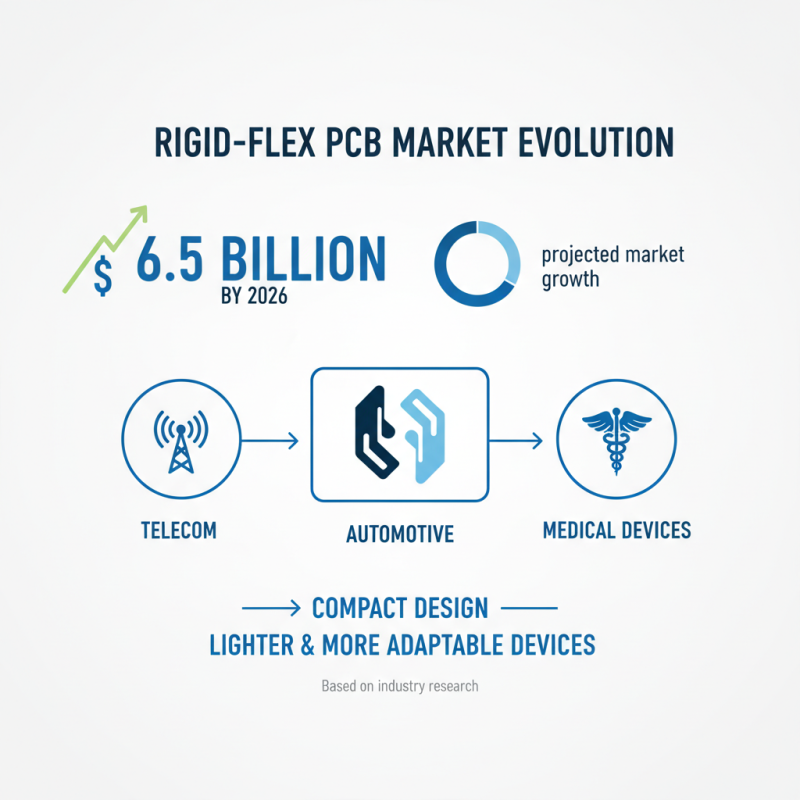
The rigid flex PCB market is rapidly evolving. Recent research indicates that the industry will reach a staggering $6.5 billion by 2026. This growth is largely driven by demand in sectors like telecommunications, automotive, and medical devices. The integration of rigid and flexible materials allows for more compact designs. This enables devices to be lighter and more adaptable.
Automotive applications are particularly noteworthy. As electric vehicles gain traction, rigid flex PCBs become crucial. They offer enhanced durability and reliability in harsh environments. A significant 30% of rigid flex PCB usage is projected to be in automobiles by 2026. This shift indicates a desire for more efficient electronic components.
However, there are challenges. Manufacturing complexities can lead to higher costs and longer production times. Additionally, the recycling of rigid flex materials is still underdeveloped. Companies need to address sustainability issues to align with global standards. A balance between innovation and environmental responsibility remains a pressing concern. The industry must strive to refine processes while meeting rising consumer expectations.
Future Challenges and Opportunities in Rigid Flex Rigid PCB Design and Production
The world of rigid-flex PCBs is evolving quickly. Designers face challenges with material selection and layer count. These choices impact performance and manufacturability. Engineers must balance flexibility with cost. High-quality materials are often expensive. This can lead to budget constraints, especially in large projects.
Another challenge is miniaturization. As devices shrink, PCBs must adapt. Complex designs can lead to increased error rates. Tighter tolerances make production more difficult. Moreover, testing these delicate boards is crucial. Any oversight can result in significant failures.
However, the future holds opportunities. Emerging technologies may simplify design processes. Simulation tools can predict performance without extensive prototyping. Innovations in manufacturing can reduce costs. This could make rigid-flex solutions accessible to more businesses. The key is continuous improvement and adaptation.