2026 Top Rigid Flex PCB Trends and Innovations You Need to Know?
In the dynamic world of electronics, rigid flex PCBs stand out for their versatility and innovation. Industry expert Dr. Emily Zhang, a leading figure in PCB technology, states, "Rigid flex PCBs are revolutionizing how we design compact devices." As we approach 2026, this technology is poised for significant advancements. Companies are exploring ways to optimize performance and reduce costs.
The trends in rigid flex PCB design reflect the growing need for more efficient space usage in gadgets. Not only do they enhance durability, but they also allow intricate layouts. With the rise of wearable technology, the demand for such PCBs is skyrocketing. However, challenges remain, like achieving the right balance between flexibility and strength. Some engineers express concerns about manufacturing complexities.
A key focus moving forward will include sustainability in PCB production. Innovative materials are being researched to reduce environmental impact. As rigid flex PCBs evolve, the industry must keep questioning: How can we innovate responsibly? This ongoing dialogue is crucial for shaping the future of flexible electronics.
Trends in Rigid Flex PCB Design for Enhanced Performance in 2026
In 2026, the design of rigid flex PCBs will focus on enhancing performance through innovative techniques. One notable trend is the use of advanced materials. These materials provide better durability and flexibility. They also help reduce weight, making PCBs more efficient. Manufacturers are experimenting with different combinations of materials to achieve optimal results.
Another significant trend is the integration of 3D structures. This shift allows for more compact designs. The ability to create layers in multiple dimensions opens new possibilities. However, this complexity also brings challenges. Designers must consider thermal management and signal integrity carefully. These elements are crucial for high-performance applications.
Additionally, eco-friendly practices will gain traction in Rigid Flex PCB production. Companies are striving to minimize their environmental impact. Yet, achieving sustainable production is not easy. It requires investment and innovation. The balance between sustainability and performance will be an ongoing conversation. Industry players will need to reflect on these issues throughout the design process.
Emerging Materials for Rigid Flex PCBs: Impact on Durability and Flexibility
Emerging materials for rigid flex PCBs are changing the landscape of electronics. New composites and substrates are enhancing durability while maintaining flexibility. These innovations allow for more intricate designs and increased reliability in various applications, from smartphones to medical devices. The right materials can significantly impact the performance and lifespan of a product.
One of the exciting developments is the use of hybrid materials. These materials combine the strength of rigid substrates with the flexibility of traditional flex PCBs. However, the integration process is complex and requires careful consideration. Engineers must balance the benefits with potential manufacturing challenges. Testing often reveals unexpected results, prompting a reevaluation of designs.
Another focus is the sustainability of materials. Eco-friendly options are on the rise, but their long-term performance is still under scrutiny. Questions remain regarding how these materials will hold up under different conditions. While the market moves towards greener choices, durability cannot be compromised. Real-world applications often expose limitations not initially apparent. Continuous innovation in this field is crucial, as the demand for higher performance and reliability grows.
Integration of AI and Machine Learning in Rigid Flex PCB Manufacturing
The integration of AI and machine learning into rigid flex PCB manufacturing is reshaping the industry. A recent report from Market Research highlights a projected CAGR of 8.5% for AI in electronics manufacturing by 2026. This growth drives innovation, pushing companies to adopt smart technologies for improved efficiency.
AI algorithms can analyze production data in real-time. They identify anomalies and optimize the assembly process. The result? Fewer defects and shorter production cycles. However, many manufacturers struggle to implement these technologies effectively. The complexity of AI systems sometimes leads to miscommunication among teams.
Machine learning models enhance design processes as well. They predict various factors including material behavior and cost implications. However, these models require vast datasets and training, which not all companies can afford. This gap creates challenges. Companies need to balance the potential of AI with practical limitations and workforce skills. Embracing this trend may lead to significant advancements but requires careful navigation.
Market Growth Projections for Rigid Flex PCBs in Automotive and Wearable Tech
The rigid flex PCB market is experiencing significant growth, especially in automotive and wearable tech sectors. As technology advances, the demand for more efficient and compact designs increases. Rigid flex PCBs combine the best qualities of rigid and flexible circuits, making them ideal for modern applications. In vehicles, these PCBs enable innovative features like advanced driver assistance systems and infotainment.
Wearable tech is another area where rigid flex PCBs shine. These small circuits are critical for devices like smartwatches and fitness trackers. Their lightweight and flexibility make them perfect for fitting into various shapes. However, one challenge remains: balancing durability with miniaturization. Manufacturers must constantly innovate to ensure reliability in harsh conditions.
Meeting the needs for higher performance and lower costs will drive the market forward. As companies explore new materials and designs, it's essential to reflect on the environmental impact. Sustainability is becoming more important, and producers must consider how to minimize waste. The rigid flex PCB industry stands at a crossroads of innovation and responsibility in 2026 and beyond.
Sustainability Practices in Rigid Flex PCB Production: Trends for 2026
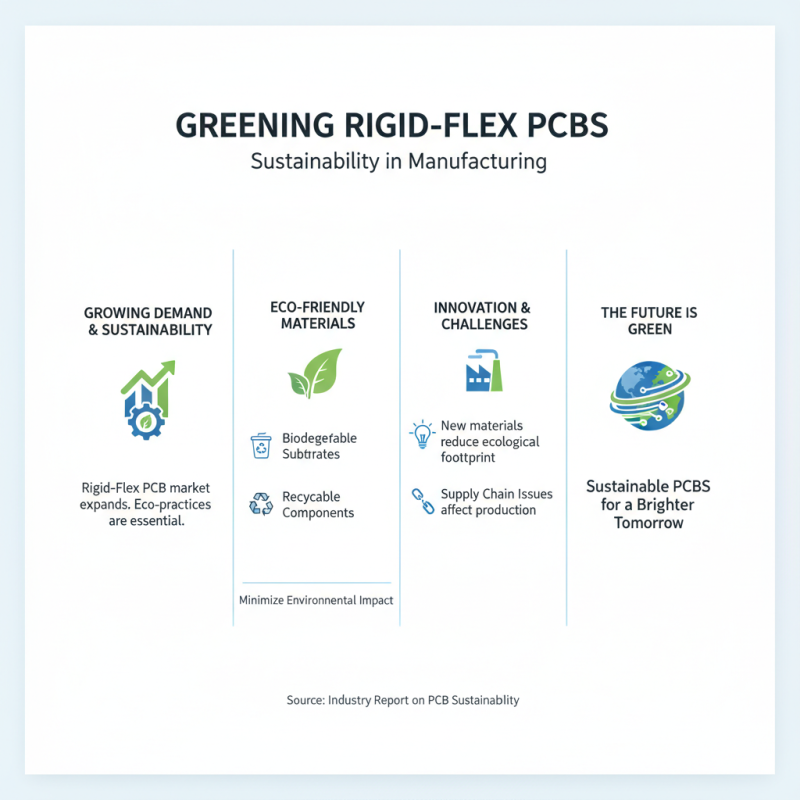
As the demand for rigid flex PCBs continues to grow, sustainability practices have become crucial. Manufacturers are now focusing on eco-friendly materials. Biodegradable substrates and recyclable components are emerging as popular choices. These innovations aim to minimize environmental impact. Still, the adoption of these materials can be challenging. Many companies struggle with supply chain issues, affecting production schedules.
Efficiency in production is another trend. Techniques like reduced waste and energy-saving processes are gaining traction. However, these methods can require substantial investment. Some industries may find it hard to commit the required resources. Every company must evaluate its capabilities carefully. Additionally, workforce training is essential for implementing new sustainable practices effectively.
Collaboration across sectors is vital for advancing sustainability. Sharing knowledge and resources can help overcome common obstacles. Yet, many companies still operate in silos. This limits innovation and slows progress. The journey towards sustainability in rigid flex PCB production is ongoing. Companies must reflect on their current practices and embrace change to stay relevant in 2026.