
Top 10 Benefits of Flexible PCBs for Your Projects?
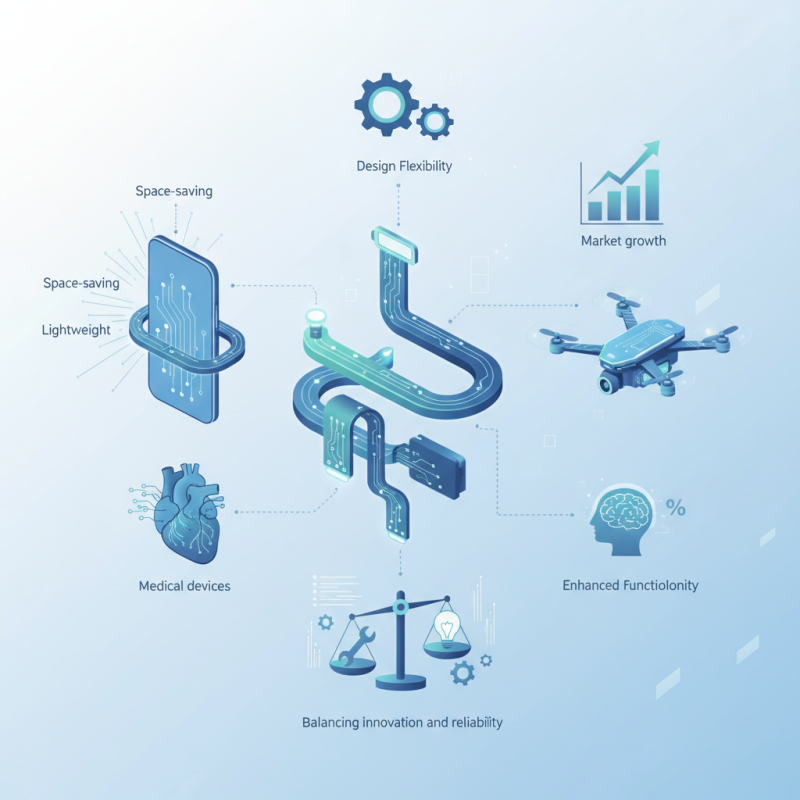
Flexible Pcbs (Printed Circuit Boards) are revolutionizing the electronics industry. Their unique design allows for adaptability in various applications, from smartphones to medical devices. A report by The Flexible Printed Circuit Board Market indicates a projected growth of 8.3% annually, highlighting their increasing importance.
Industry expert Dr. Richard Taylor states, “Flexible PCBs can reduce weight and save space, essential for modern technology.” This statement encapsulates why many manufacturers are shifting towards these innovative solutions. They offer benefits like improved performance and design flexibility, yet challenges exist. For instance, the fabrication process can be complex and costly.
Projects utilizing Flexible PCBs have seen enhanced efficiency and functionality. However, careful consideration is essential to mitigate potential risks. As the industry evolves, balancing innovation with reliability remains crucial. Reflecting on these dynamics can offer valuable insights for future developments in Flexible PCBs.
Advantages of Lightweight and Thin Designs in Flexible PCBs
Flexible PCBs offer unique advantages, particularly in their design. Their lightweight nature makes them perfect for portable devices, reducing overall weight without compromising performance. For example, smartphones and wearables benefit from this reduced heft, allowing for sleek designs. A lightweight PCB can also lead to an easier assembly process, which is essential in crowded electronic environments.
Thin profiles are another significant feature of flexible PCBs. They can fit into tight spaces where traditional boards cannot. This flexibility often encourages innovative designs in products like medical devices and automotive electronics. However, the thinness also brings challenges. Protecting these delicate structures from bending and environmental factors is crucial. Engineers must carefully consider their applications to avoid potential failures. Durability and flexibility should go hand in hand to prevent future issues.
Enhancing Design Flexibility with Customizable Shapes and Sizes
Flexible PCBs offer remarkable design flexibility, allowing engineers to create customizable shapes and sizes. These circuits are not limited to traditional rectangular forms. They can be easily molded to fit into compact and intricate spaces. This adaptability opens new avenues in product design. Whether a device is sleek and slim or uniquely shaped, flexible PCBs can accommodate various requirements.
Incorporating flexible PCBs can enhance functionality in unexpected ways. Designers can integrate them into tight corners and complex geometries. The challenge lies in ensuring the circuit performs reliably in these new configurations. Sometimes, the innovative design can lead to unanticipated issues. Engineers may need to iterate on prototypes to resolve unforeseen complications. Each adjustment teaches valuable lessons, refining the design further.
Moreover, the lightweight nature of flexible PCBs contributes to overall product efficiency. They add minimal weight while maximizing performance capabilities. However, manufacturers occasionally face hurdles in the production process. This can lead to inconsistencies in quality. Understanding these potential pitfalls is crucial for successful implementation. Embracing this technology invites both opportunity and responsibility in project development.
Improving Reliability and Durability in Challenging Environments
Flexible printed circuits, or flexible PCBs, are becoming essential in modern electronic design. They excel in challenging environments. These circuits can bend, twist, and fit into tight spaces. This adaptability improves equipment reliability. In industrial settings, vibrations and shocks are common. Flexible PCBs absorb stresses better than rigid boards.
Durability is another key advantage. They withstand temperature fluctuations and humidity. Traditional circuits might crack under these conditions. A flexible PCB can continue to perform, maintaining its function. In medical devices, reliability is critical. If a device fails, it can have serious consequences. Flexible PCBs enhance the longevity of these products.
However, it’s important to consider the manufacturing process. Creating quality flexible PCBs can be complex. There is a learning curve for designers. Poorly designed PCBs can lead to failures in the field. This is a concern; attention to detail is crucial. Consideration of materials and construction methods impacts performance. Ultimately, the benefits often outweigh the challenges in demanding applications.
Cost-Effectiveness and Reduced Material Waste in Production
Flexible printed circuit boards (PCBs) offer significant cost-effectiveness and material savings. Their design allows for more compact arrangements, reducing the number of components needed. This leads to lower manufacturing costs. With flexible PCBs, less raw material is wasted. This is particularly beneficial in industries focused on sustainability.
When designing with flexible PCBs, consider your layout carefully. Efficient designs minimize excess material. Use simulation software to identify potential waste areas early on. Avoid making assumptions about layout efficiency. Always seek input from your team to ensure all aspects are covered.
Keeping an eye on production processes can uncover additional savings. Reducing the physical footprint usually also decreases shipping costs. Test various design prototypes to find the most efficient arrangement. Sometimes, initial designs may incur unexpected expenses, prompting a reevaluation. It's vital to view each project critically before finalizing your approach.
Top 10 Benefits of Flexible PCBs for Your Projects
| Benefit | Description | Impact on Cost | Material Efficiency |
|---|---|---|---|
| Space Savings | Flexible PCBs can be bent or shaped to fit into small spaces. | Reduces need for larger enclosures, lowering overall project costs. | Minimizes wasted space, maximizing component placement. |
| Weight Reduction | Lighter materials decrease the overall weight of devices. | Lower shipping and material costs due to lighter products. | Less raw material needed, decreasing waste. |
| Simplified Design | Fewer components required leads to simpler assembly. | Lower manufacturing costs due to simplified production. | Efficient use of materials reduces overall waste. |
| Durability | Flexibility enhances the resilience of the PCB. | Less likely to suffer damage, reducing repair/replacement costs. | Fewer replacements mean less material waste over time. |
| Improved Performance | Flexible PCBs can enhance signal integrity and reduce interference. | Higher quality production may decrease failure rates. | Maximizes functional efficiency, reducing excess production. |
| Heat Resistance | Flexible materials withstand higher temperatures. | Less damage leads to reduced costs on thermal management solutions. | Saves materials typically needed for heat shielding. |
| Versatility | Can be used in a wide range of applications. | Increased market opportunities and potential sales. | Optimizes production processes for varied applications. |
| Shorter Lead Times | Streamlined production processes can speed up delivery. | Reduces costs associated with holding inventory. | Less excess materials saved due to quicker production cycles. |
| Reduced Stress on Components | Flexibility distributes mechanical stress across the board. | Lower replacement rates decrease costs. | Minimizing strain prolongs component life, reducing waste. |
| Compatibility with Advanced Technologies | Easily integrates with modern tech like IoT devices. | Facilitates innovation, potentially lowering R&D costs. | Efficient use of advanced materials can reduce waste. |
Facilitating Compact Electronic Solutions for Space-Limited Applications
Flexible printed circuit boards (PCBs) provide innovative solutions in space-constrained environments. These unique structures can bend and twist, fitting into tight spots that traditional boards cannot. This flexibility allows designers to create more compact devices without sacrificing functionality. Small electronic gadgets often require intricate designs, and flexible PCBs accommodate these needs.
In many applications, users may underestimate the importance of layout and design. Rigid boards limit possibilities. In contrast, flexible PCBs open up new pathways for creativity. Engineers can design circuits that wrap around components, maximizing space usage. However, this comes with challenges like ensuring durability and reliability during bending. It prompts the need for careful material selection and testing.
Moreover, integrating flexible PCBs often leads to increased assembly complexity. Soldering techniques may differ. Additional training may be required. In some cases, this can slow down production. Yet, the benefits often outweigh the drawbacks, encouraging teams to rethink their approaches. Crafting compact solutions can inspire more innovative electronics, pushing the boundaries of design.