
7 Best Boiler Pumps for Efficient Heating Systems
A Boiler Pump is easy to overlook until a radiator stays cold, pipes start humming, or fuel use creeps upward. This small component moves heated water through the system, so its flow rate, head, controls, and compatibility matter. Small part. Real consequences. The International Energy Agency’s Energy Efficiency 2023 report estimates that buildings account for about 30% of global energy demand. That figure is a reminder: efficient heating depends on sound system choices, not just a modern boiler. The European Commission’s ecodesign requirements also set an energy-efficiency index limit of 0.23 for applicable glandless circulators. Check the product’s actual rating and the rules that apply to your installation.
Hydronic-heating educator Dan Holohan, author of Pumping Away, emphasizes pumping away from the expansion tank to support stable pressure and air removal. That principle is useful, but it cannot replace correct sizing or careful commissioning. A pump that is too powerful may waste electricity or create noise; one that is too weak may leave distant rooms underheated. A tidy specification sheet does not reveal every air-bound loop or aging valve. That is worth remembering. This guide compares seven Boiler Pump options for efficient heating systems, focusing on practical details such as variable-speed control, operating efficiency, installation needs, and system fit. Product claims should be checked against manufacturer data and a qualified installer’s assessment. The best choice is not automatically the most expensive or feature-rich model. It is the pump that meets the system’s measured demands reliably.
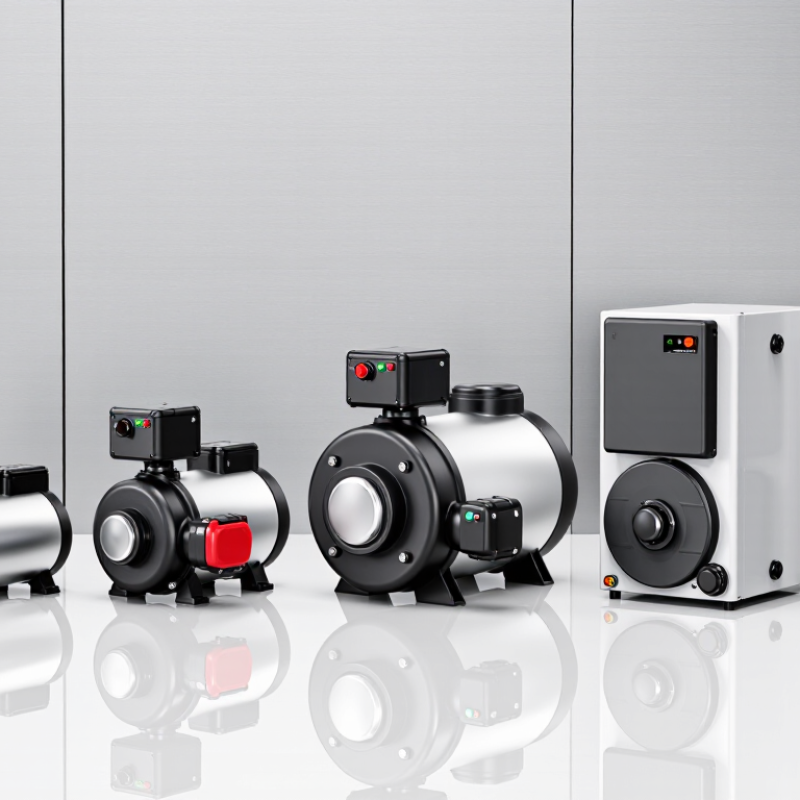
How Boiler Pumps Circulate Heat Through a Heating System
A boiler pump moves heated water through a closed loop: from the boiler, along supply pipes, through radiators or underfloor coils, and back to be reheated. Its pressure difference overcomes resistance in pipes, valves, and fittings. It does not continually “push” water uphill; the returning water balances the circuit. When flow is too low, distant rooms may stay cool. When it is unnecessarily high, pipe noise and wasted electricity can follow.
Pump efficiency matters beyond one home. The U.S. Department of Energy’s Improving Pumping System Performance sourcebook estimates that pumping systems use about 20% of global electricity. This covers many sectors, not boilers alone. For circulators, European Commission Regulation (EC) No 641/2009 set an energy-efficiency index limit of 0.23 for covered products. A suitable pump also depends on system resistance and required flow, not just boiler size. A larger pump is not automatically better.
Tips: Check for trapped air, a dirty strainer, or partly closed valves before replacing a pump. A warm pipe does not prove that every room receives enough flow. Ask a qualified heating professional to measure flow and verify pump settings; guessing can mask the real fault. Even a quiet system may be poorly balanced.
7 Best Boiler Pumps for Efficient Heating Systems - How Boiler Pumps Circulate Heat Through a Heating System
| Pump Type | Best Suited For | Typical Control | Efficiency Strength | Key Selection Consideration |
|---|---|---|---|---|
| ECM variable-speed circulator | Residential and light-commercial hydronic systems with changing zone demand | Electronically commutated motor; commonly offers proportional-pressure, constant-pressure, or constant-speed modes | Can reduce electrical use by slowing down when system demand or resistance decreases | Confirm the selected control mode suits the zoning and valve arrangement; verify the pump’s flow and head curves. |
| Fixed-speed circulator | Small, straightforward heating loops with stable design flow | Runs at a set speed when powered | Simple operation and fewer control settings | Must be sized for the design flow and total system resistance; it does not automatically adjust to changing demand. |
| Multi-speed circulator | Retrofits or systems where several manual operating settings are useful | Selectable speed settings, usually adjusted during commissioning | Allows a closer match to system requirements than a single fixed setting | Choose and test the setting that delivers required circulation without excessive flow or noise. |
| Wet-rotor circulator | Many compact residential and light-commercial closed-loop systems | Often fixed-speed, multi-speed, or electronically controlled | Compact construction with the pumped fluid cooling and lubricating the rotor assembly | Check fluid cleanliness, air removal, installation orientation, and the manufacturer’s temperature limits. |
| In-line centrifugal pump | Larger heating loops where an in-line pipe-mounted arrangement is practical | Fixed-speed or variable-speed, depending on motor and system controls | Can provide higher flow capacity than many compact circulators | Allow for required pipe support, service access, electrical supply, and the pump’s operating curve. |
| End-suction centrifugal pump | Commercial boiler plants and larger hydronic distribution circuits | Fixed-speed or paired with a variable-frequency drive when appropriate | Suited to larger flow duties and can be serviced without replacing the entire pipe assembly | Account for foundation or base support, alignment, suction conditions, and maintenance clearance. |
| Duty/standby circulator set | Heating systems where continued circulation during a pump fault is important | Two pumps with lead/lag or automatic changeover controls | Provides operational backup; efficiency depends on correct pump sizing and control strategy | Specify changeover logic, isolation valves, electrical protection, and whether both pumps are intended to run together. |
Selection note: Boiler pumps circulate heated water through the boiler and heating circuit. Final selection should be based on the system’s required flow rate, total head loss, fluid temperature, pressure, and control layout—not pump type alone.