10 Best Flex PCB Boards You Should Consider for Your Next Project?
In the rapidly evolving electronics industry, choosing the right components is vital for success. An expert in the field, Dr. Emily Chen, emphasizes, “Flex PCB boards open new avenues for design flexibility.” This statement reflects the growing recognition of flex PCBs as a cornerstone in modern engineering.
Flex PCB boards are essential in various applications, including smartphones, wearables, and medical devices. Their lightweight and space-saving features make them a popular choice. However, selecting the best flex PCB board requires careful consideration. Factors such as material compatibility, manufacturing techniques, and thermal management come into play.
Many engineers overlook the importance of these elements. This can lead to failures or subpar performance. Exploring the best options can illuminate paths to innovation. By examining the top 10 flex PCB boards available, you can ensure your project stands out. The potential of flex PCBs is immense, but it demands a thoughtful approach.

Understanding the Basics of Flex PCB Boards and Their Uses
Flex PCB boards are increasingly popular in various applications, from consumer electronics to medical devices. Their unique ability to bend and fold makes them suitable for compact and intricate designs. According to industry reports, the global flexible printed circuit boards market is projected to reach USD 35 billion by 2025, with a compound annual growth rate of 12%. This growth highlights their importance in high-tech industries.
Understanding how flex PCBs work and their advantages is crucial. They save space and reduce weight, which is significant in aerospace and automotive sectors. Additionally, they can improve reliability in devices by minimizing the number of connections and solder joints. However, one should not overlook challenges like production costs and material limitations. Not all flex materials are created equal.
Tip: Choose the right substrate. Polyimide offers excellent thermal stability, while polyester is cost-effective for simpler applications.
When designing with flex PCBs, consider the bending radius. Each design should have a defined flex area. This protects the board from stress and failure. Rigid-flex designs may increase complexity but ensure better stability in multi-layered applications.
Tip: Prototype thoroughly. Testing can reveal flaws in design that might become costly later. Prioritize iterative improvements.
10 Best Flex PCB Boards You Should Consider for Your Next Project
| Model | Layer Count | Material Type | Thickness (mm) | Temperature Rating (°C) | Applications |
|---|---|---|---|---|---|
| Flex PCB A | 4 | Polyimide | 0.1 | -40 to 125 | Wearable Devices |
| Flex PCB B | 2 | PET | 0.2 | -20 to 105 | Consumer Electronics |
| Flex PCB C | 6 | FR4 | 0.3 | -40 to 130 | Medical Devices |
| Flex PCB D | 1 | Polyester | 0.05 | -20 to 85 | LED Applications |
| Flex PCB E | 3 | Kapton | 0.2 | -40 to 150 | Automotive |
| Flex PCB F | 2 | High-TG FR4 | 0.15 | -40 to 130 | Telecommunication |
| Flex PCB G | 4 | Polyimide | 0.1 | -55 to 125 | Aerospace |
| Flex PCB H | 1 | PET | 0.05 | -20 to 85 | Home Automation |
| Flex PCB I | 5 | FR4 | 0.3 | -40 to 130 | Industrial Equipment |
| Flex PCB J | 2 | Polyester | 0.1 | -20 to 100 | Smartphones |
Key Factors to Consider When Selecting Flex PCB Boards
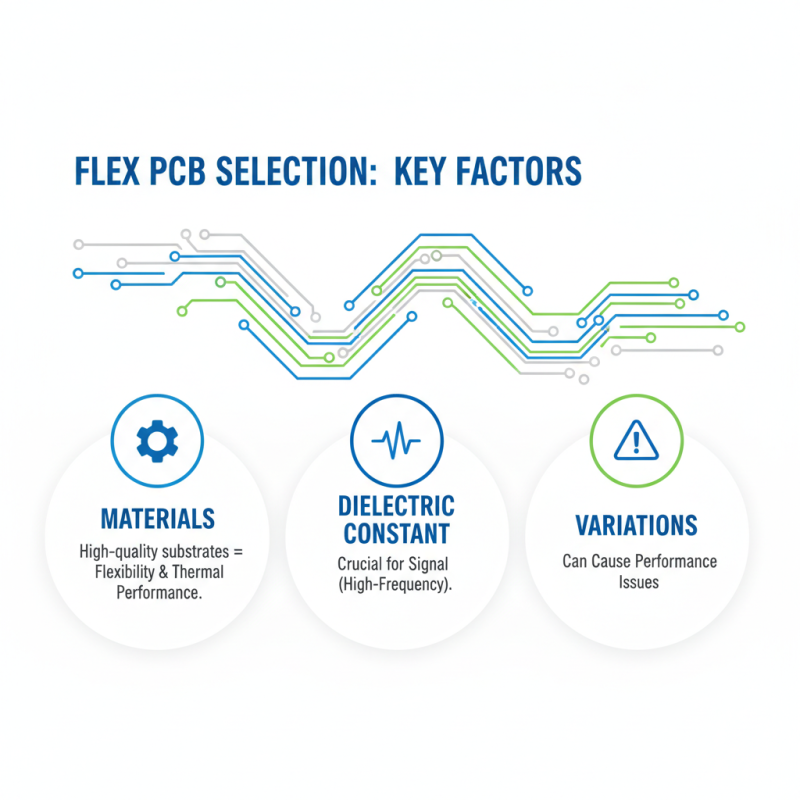
When selecting flex PCB boards, several key factors come into play. The choice of materials is critical. High-quality substrates improve flexibility and thermal performance. Moreover, the dielectric constant is essential for signal integrity. Variations in this can lead to performance issues in high-frequency applications.
Another vital consideration is the bend radius. Manufacturers usually specify a minimum bend radius, often ranging from 1 to 10 mm. Ignoring this could result in cracks. Data from IPC indicates that improper bending accounts for over 15% of flex PCB failures.
It's also important to evaluate the layer count. More layers can increase complexity but may enhance performance. However, higher layer counts often lead to increased costs and design challenges. Balancing these factors is key. Choosing the right flex PCB involves a careful assessment of specific project requirements.
Top 10 Flex PCB Boards Recommended for Various Projects
Flex PCB boards are crucial in modern electronics. They enable designers to create compact, lightweight, and flexible circuits. According to industry reports, the market for flexible printed circuits is expected to grow at a CAGR of 10.5% from 2021 to 2026. This shift highlights the increasing reliance on these boards in various sectors, including consumer electronics and automotive.
When choosing the right flex PCB, consider your project requirements. Some applications demand high durability, while others prioritize flexibility. A report from IPC states that nearly 25% of PCB failures come from material issues. It’s essential to select a board that fits your technical needs. Not all materials perform equally under stress or in high-frequency applications.
Cost is another critical factor. High-performance boards tend to come with higher price tags. Yet, investing in a top-quality flex PCB can prevent costly failures in the long run. Designers sometimes overlook the trade-off between cost and performance. This can lead to issues down the line, impacting overall project success. It's vital to balance these considerations while making your choice.
Comparative Analysis of the Best Flex PCB Boards in the Market
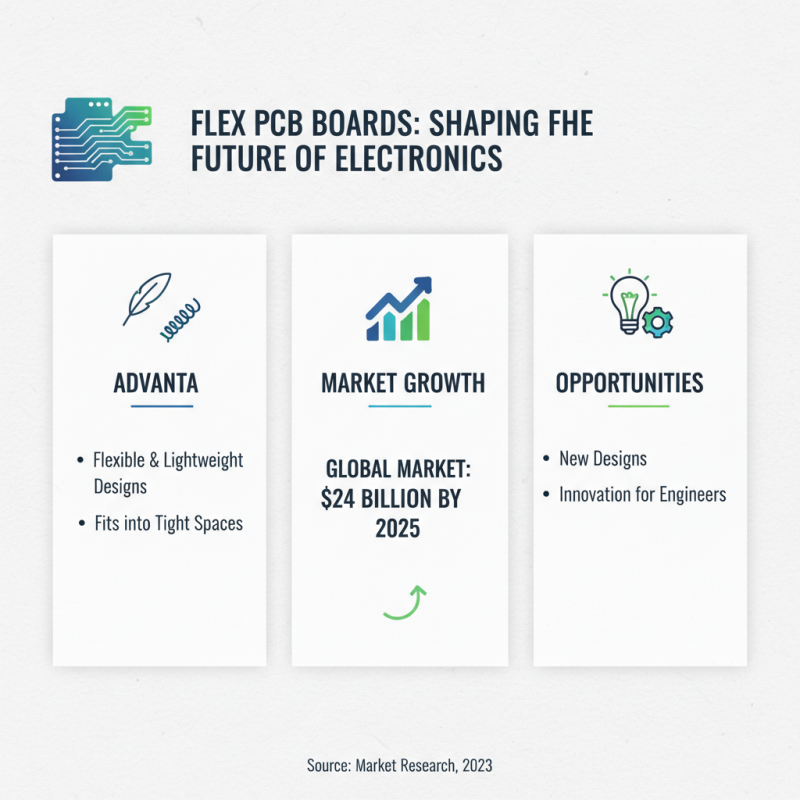
Flex PCB boards are revolutionizing the electronics industry. They offer flexibility and lightweight designs, fitting into tight spaces. Market research shows that the global flexible printed circuit board market is projected to grow significantly, reaching approximately $24 billion by 2025. This presents new opportunities for designers and engineers alike.
While many manufacturers provide vast options, not all flex PCBs are created equal. It's crucial to analyze attributes like material quality, layer count, and production techniques. A detailed report suggests that single-layer flex circuits usually suffice for simpler applications. However, multilayer systems tend to enhance reliability, especially in complex devices.
Some boards can pose challenges in terms of durability and thermal management. Poor thermal control may lead to performance issues in high-tension environments. This underscores the need for careful selection based on project requirements. Engineers must balance between flexibility, durability, and cost. Essential considerations include the intended use and environmental conditions. Each factor can influence the long-term success of a project.
Common Applications and Industries Utilizing Flex PCB Technology
Flexible printed circuit boards (Flex PCBs) have gained significant traction in various industries. Their adaptability makes them ideal for tight spaces. Common applications include medical devices, consumer electronics, and automotive sectors. In medical technology, Flex PCBs enable compact designs that fit into small devices like pacemakers. The lightweight nature of these boards also helps in reducing overall device weight.
In consumer electronics, Flex PCBs support innovative designs. Smartphones and wearable technology often use these boards. They allow for more intricate layouts and help improve performance. However, manufacturing Flex PCBs can pose challenges. Testing their durability and reliability requires precise techniques. Often, mistakes can lead to failures in functioning, which is a major concern.
Automotive applications also benefit from Flex PCB technology. They are used in advanced driver-assistance systems (ADAS) and infotainment systems. While the integration of Flex PCBs can enhance automotive design, it is imperative to ensure their reliability under various conditions. Environmental factors can impact their longevity. This calls for thorough evaluation and testing processes. Overall, while Flex PCBs offer great potential, careful consideration is essential for successful outcomes.
10 Best Flex PCB Boards for Your Next Project
Related Posts
-
10 Best Flexible Circuit Boards for Innovative Electronics?
-
Understanding Rigid Flex PCB Applications and Advantages in Electronics
-

What is a Flexible PCB Board and How is it Used?
-

2026 How to Use Flexible Printed Circuit in Modern Electronics?
-

Understanding the Importance of Flexible Printed Circuits in Modern Electronics
-

Top 10 Tips for Choosing the Best Flex PCB Board for Your Project