10 Best Flexible Circuit Boards for Innovative Electronics?
In the fast-paced world of electronics, the demand for flexible circuit boards is on the rise. A flexible circuit board allows for innovative designs and improved device performance. According to a recent market report, the global flexible printed circuit (FPC) market is expected to reach $40 billion by 2026, growing at a CAGR of 12.5%. This growth signifies a shift towards more compact and adaptable electronic solutions.
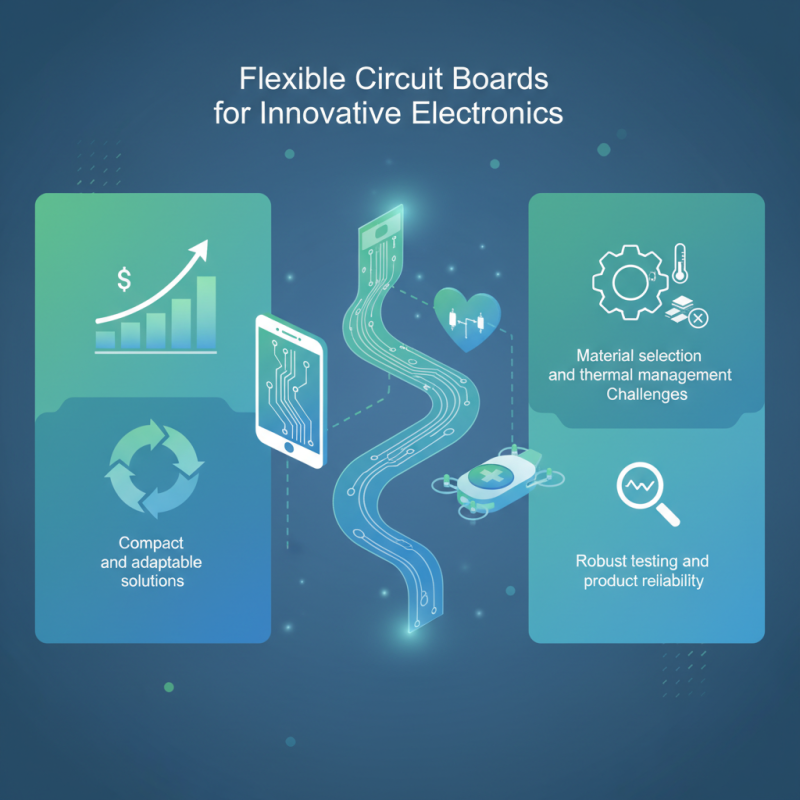
Manufacturers are embracing flexible circuit boards in various applications, from smartphones to medical devices. These circuits provide enhanced durability and can fit into previously unusable spaces. However, the transition to flexible designs introduces challenges. Engineers must navigate issues related to material selection and thermal management. A 2021 study noted that improper handling during production could result in defects, leading to substantial costs.
Despite these obstacles, the potential of flexible circuit boards is undeniable. As technology continues to advance, more industries will rely on this innovation. Yet, businesses must remain vigilant about quality. Investing in robust testing protocols is essential to ensure product reliability in a competitive market. The future of electronics hinges on the successful integration of flexible circuit boards, but the journey is not without its imperfections.
Overview of Flexible Circuit Boards and Their Applications
Flexible circuit boards, also known as flexible printed circuits, are revolutionizing electronics. Their bendable nature allows unique designs that rigid circuits cannot achieve. These circuits enable compact devices where space is limited. They find applications in wearables, smartphones, and medical devices. The ability to conform to different shapes enhances functionality in innovative ways.
Consider the medical field. Flexible circuits in devices like heart monitors are crucial. They are lightweight and can be easily adhered to the skin. However, challenges exist. Durability remains a concern; wear and tear can affect performance. In wearables, moisture from sweat can lead to failures. Engineers are continuously seeking solutions to enhance longevity.
In consumer electronics, flexible boards contribute to sleek designs. A thin profile is essential in today's market. Nonetheless, creating reliable connections can be tricky. Improper adhesion may lead to circuit breaks. As designers push boundaries, reliability must not be overlooked. Balancing innovation with practicality is a constant challenge.
10 Best Flexible Circuit Boards for Innovative Electronics
Key Features to Look for in Flexible Circuit Boards
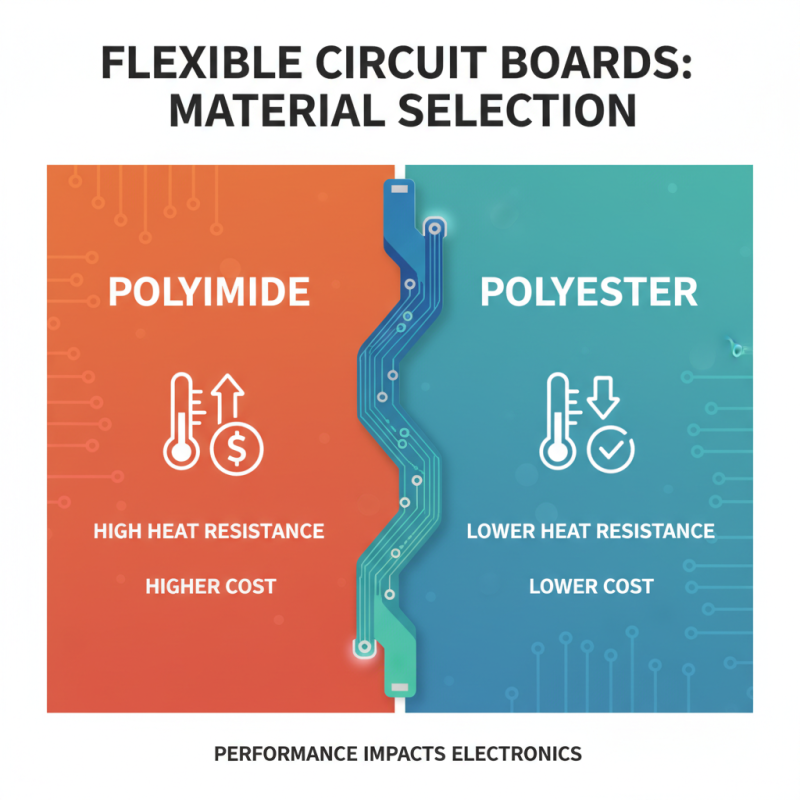
When selecting flexible circuit boards, several key features stand out. The material of the circuit is crucial. Common options include polyimide and polyester. Polyimide offers great thermal stability but can be costly. Polyester, on the other hand, is more affordable but less heat resistant. These materials will impact the performance of electronic devices significantly.
Durability is another important aspect. A reliable flexible circuit board should withstand bending and twisting without losing functionality. Some boards offer enhanced resistance to moisture and chemicals. This feature is vital for devices used in challenging environments. Additionally, the thickness of the copper layer plays a role. Thicker layers can handle higher currents but add weight.
Consideration of your design requirements also matters. Some circuits require intricate designs and tight tolerances. However, these designs can lead to manufacturing challenges. Each feature comes with trade-offs. Balancing flexibility, durability, and performance requires careful thought. Reflecting on these aspects will guide you in making informed choices for your innovative electronics.
Top 10 Flexible Circuit Boards for Cutting-Edge Electronics
Flexible circuit boards are transforming the electronics landscape. Their ability to bend and fit into compact spaces drives innovation. According to a recent market report, the flexible printed circuit board market is expected to grow by over 10% annually. This growth reflects increasing demand in sectors like medical devices and wearable technology.
Investors are noticing the popularity of flexible circuits in consumer electronics. They are employed in smartphones, tablets, and fitness wearables. These boards often face challenges. For instance, while they offer versatility, they can compromise on durability. Manufacturers must navigate the balance between flexibility and strength, which is not always easy.
Innovative designs are paving the way for future developments. Advanced materials enhance performance, yet high production costs remain a concern. Companies must continually assess the return on investment for such technologies. The question remains: will flexible circuits evolve to meet ever-changing consumer needs? The answer will define the future of electronic devices.
10 Best Flexible Circuit Boards for Innovative Electronics
| No. |
Material |
Thickness (mm) |
Flexibility Rating |
Temperature Range (°C) |
Application Area |
| 1 |
Polyimide |
0.05 |
High |
-40 to 260 |
Consumer Electronics |
| 2 |
Polyester |
0.1 |
Moderate |
-30 to 120 |
Medical Devices |
| 3 |
FR-4 |
0.2 |
Low |
-20 to 130 |
Industrial Equipment |
| 4 |
Teflon |
0.04 |
Very High |
-50 to 230 |
Aerospace |
| 5 |
Copolymer |
0.075 |
High |
-30 to 180 |
Wearable Devices |
| 6 |
Silicone |
0.1 |
Moderate |
-50 to 200 |
Automotive |
| 7 |
Aluminum |
0.3 |
Low |
-20 to 150 |
Power Electronics |
| 8 |
PET |
0.05 |
High |
-40 to 140 |
Telecommunications |
| 9 |
Polyurethane |
0.1 |
Very High |
-40 to 180 |
IoT Devices |
| 10 |
Epoxy |
0.2 |
Moderate |
-20 to 150 |
Smart Devices |
Comparative Analysis of Flexible Circuit Board Materials
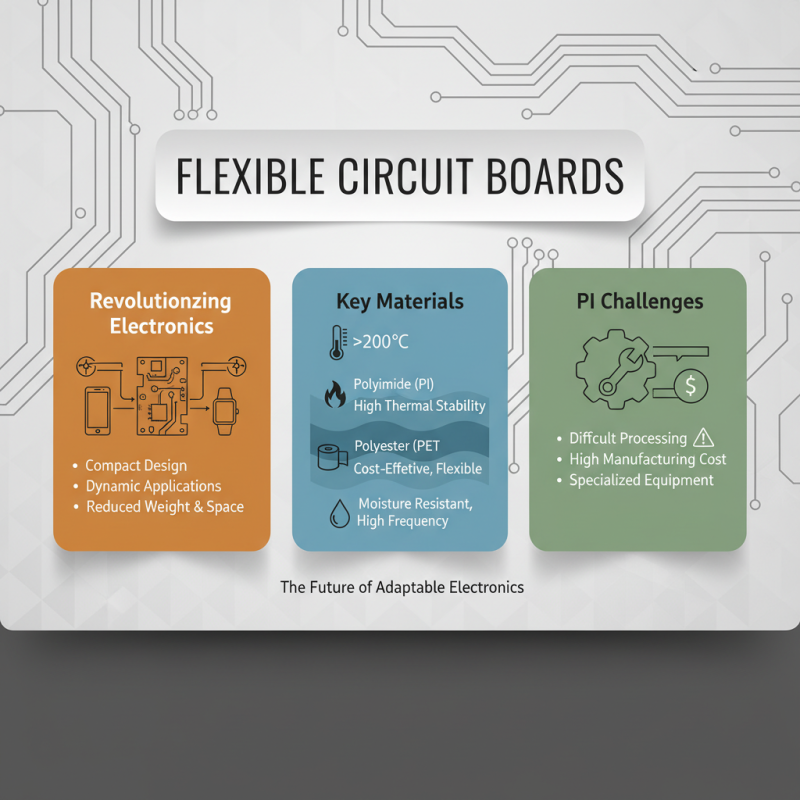
Flexible circuit boards are revolutionizing electronics by offering unique advantages. These boards are typically made from materials such as polyimide, polyester, and liquid crystal polymer. Polyimide is known for its excellent thermal stability, which can withstand temperatures exceeding 200°C. However, this comes at a cost; polyimide can be difficult to process and expensive to manufacture.
Another option is polyester. It is lightweight and cost-effective, making it a popular choice for various applications. Yet, it has limitations in terms of temperature tolerance and mechanical strength. Liquid crystal polymer (LCP) stands out for its high-performance characteristics. It offers excellent dimensional stability and can operate effectively in harsh conditions. Despite these benefits, LCP can pose challenges in terms of adhesion during assembly processes.
The growing demand for flexible electronics is pushing manufacturers to innovate. A report by the Flexible and Printed Electronics Consortium noted that the market for flexible electronics is expected to reach $46 billion by 2026. However, as materials become more advanced, the complexity of production processes increases. More research is needed to enhance material properties and optimize manufacturing efficiency. The journey to perfecting flexible circuit boards is full of challenges but also ripe with potential for groundbreaking applications.
Future Trends in Flexible Circuit Board Technologies
Flexible circuit boards are rapidly evolving. Their integration in innovative electronics is transforming various industries. These boards offer unparalleled adaptability in design and can conform to different shapes. This flexibility opens up unique applications, from wearables to advanced medical devices. However, challenges remain. For instance, durability can be an issue. Engineers must ensure these boards can withstand wear over time.
Recent trends indicate a push towards eco-friendly materials. Sustainable options are gaining traction as industries aim to reduce waste. Yet, the performance of these materials is still being tested. Balancing sustainability with functionality is critical. Additionally, advances in printing technology are changing production methods. 3D printing, for example, can allow for intricate designs. Still, this technique is not without flaws. The precision and reliability of printed circuits need improvement.
Industry experts believe that artificial intelligence will play a role in shaping future designs. AI can streamline processes and enhance customization. However, relying on technology raises questions. Will human oversight diminish? How will that affect the innovation process? Addressing these uncertainties is vital as we move forward. The future of flexible circuit technology is promising but not without challenges.