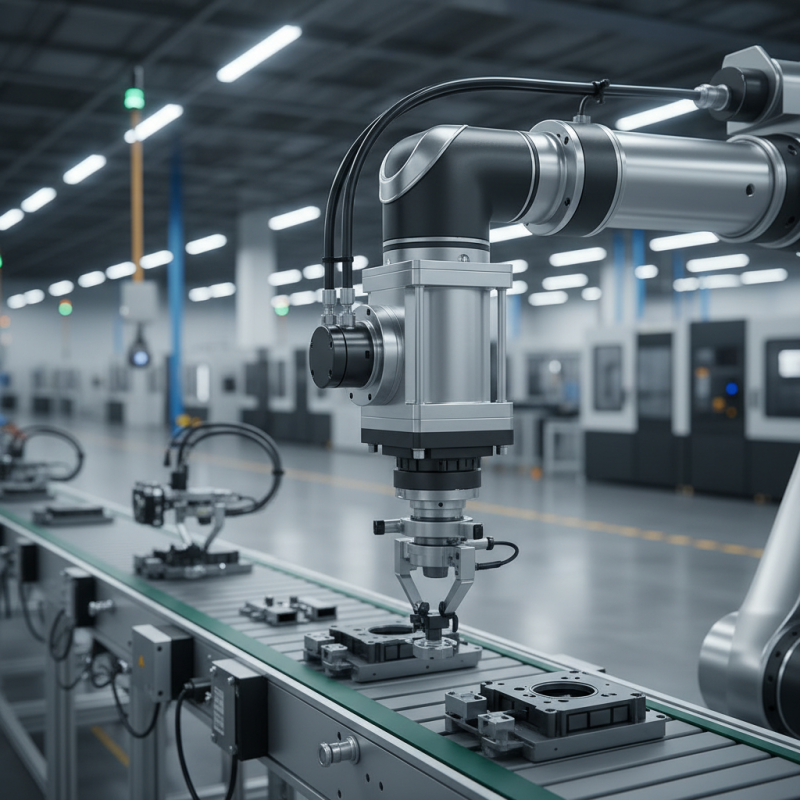
China Top 180 Rotation Rotary Actuator Applications and Benefits?
The 180 Rotation Rotary Actuator plays a vital role in various industries. It delivers precise movement and control, which is essential for automation processes. This actuator allows for a complete 180-degree motion, making it versatile and highly functional.
Applications of the 180 Rotation Rotary Actuator span across fields like robotics and manufacturing. In robotic arms, this actuator enables smooth and accurate movements. In factories, it facilitates innovative assembly lines, enhancing efficiency. It is remarkable how a simple device can transform capabilities and processes.
However, some challenges exist. Maintenance is crucial to ensure longevity. Users must understand the device's limitations. The 180 Rotation Rotary Actuator can encounter wear over time, leading to performance issues. Reflecting on these aspects can improve the implementation of rotary actuators, maximizing their benefits.
Overview of Rotary Actuators in China
Rotary actuators play a crucial role in various industries in China. These devices convert rotational motion into linear motion, enabling numerous applications. In manufacturing, robotics, and automation, their efficiency is unmatched. They empower machines to handle tasks requiring precise movement and control.
In the construction sector, rotary actuators are pivotal. They assist in operating heavy machinery. Tracking their integration into new equipment is essential. This technology can reduce manual labor but requires careful handling to ensure safety and efficiency. Sometimes, operators may face challenges in using these devices effectively.
Tips: When selecting a rotary actuator, consider the required torque and speed. A mismatch can lead to inefficiency. Proper training for operators is vital. Ensuring they understand the nuances of these devices can significantly enhance productivity. Remember, even a small error in setup can result in costly downtime.
China Top 180 Rotation Rotary Actuator Applications and Benefits
| Application Area | Benefits | Common Uses | Industry Sector |
| Automation Machinery | High precision and control | Robotic arms, conveyor systems | Manufacturing |
| Aerospace | Reliable and lightweight operation | Flaps and landing gear control | Aerospace |
| Automotive | Space-saving design | Throttle control, steering | Automotive |
| Food Processing | Sanitary operation and maintenance | Mixing, packaging machines | Food and Beverage |
| Medical Equipment | Precision and reliability | Surgical instruments, imaging devices | Healthcare |
Key Applications of 180° Rotation Actuators
180° rotation actuators play a crucial role across various industries. These devices enable precise and efficient control over movement, often found in automation systems. In manufacturing, for instance, they are integral in robotic arms, facilitating tasks like assembly and packaging. A report from the International Federation of Robotics notes that automation in manufacturing has increased productivity by over 30% in recent years.
Another key application lies in the automotive industry. Here, 180° rotation actuators are essential for adjusting components such as mirrors and windows. The need for reliable and fast adjustments is critical, especially in electric vehicles. Data from a recent market analysis indicates that the demand for electric vehicles is expected to grow at a 22% CAGR from 2023 to 2030, pushing actuators into the spotlight.
Despite the advantages, challenges still exist. Designing actuators for extreme environments can be problematic. Factors like temperature and humidity can affect performance. Additionally, the integration of actuators into existing systems often requires careful planning and resources. Companies must address these challenges to fully leverage the benefits of 180° rotation actuators in their applications.
Benefits of Using Rotary Actuators in Various Industries
Rotary actuators play a vital role in various industries, enhancing operational efficiency. They convert energy into mechanical motion, enabling precise control of rotational movement. In manufacturing, these actuators facilitate automated machinery. This automation leads to quicker production times and reduces labor costs. However, some may find that integration can be complex. It often requires skilled technicians for proper setup.
Moreover, in the robotics sector, rotary actuators are essential for achieving fluid motion. They enable robots to perform intricate tasks with ease. These components help in applications like welding, painting, and assembly. Yet, designing a robot that maximizes actuator potential is not always straightforward. Engineers face challenges in selecting the right actuator type for specific tasks.
In the automotive and aerospace industries, rotary actuators drive systems such as gears and valves. Their efficiency can improve fuel economy and reduce emissions. However, their performance may vary based on operating conditions. Users must be cautious in choosing actuators that withstand harsh environments. Adjustments and testing are critical to ensure reliability across diverse applications.
Technological Advancements in China's Actuator Market
China's actuator market is evolving rapidly. Recent technological advancements have paved the way for more efficient rotary actuators. These devices are crucial in various industries, including manufacturing and automation. The integration of smart technology has made them more responsive and easier to control.
Rotary actuators are now equipped with sensors that enhance precision. This means machines can operate with better accuracy and speed. Additionally, the materials used have improved, resulting in lighter and more durable products. However, challenges remain. Some manufacturers struggle with the transition to high-tech solutions. Adopting new technologies often incurs high costs.
Moreover, not every company can keep pace with advancements. There are concerns about the skills gap in the workforce. Training is vital to capitalize on technological growth. Without proper education, the industry risks stagnation. Addressing these issues could lead to more robust growth in China's actuator market.
Applications and Benefits of China's Top 180 Rotation Rotary Actuators
Future Trends and Developments in Rotary Actuator Technology
In recent years, rotary actuator technology has seen significant advancements. As industries seek automation, the demand for efficient, reliable actuators increases. A report by MarketsandMarkets predicts the rotary actuator market will grow to $6.8 billion by 2025. This reflects the importance of these components in various applications.
Future trends indicate a shift towards smarter actuators. Integration with IoT devices is likely, enabling remote monitoring and control. This could lead to enhanced efficiency and predictive maintenance. Energy-saving features are also becoming crucial, addressing sustainability concerns. However, some companies struggle to adapt to these changes, often missing opportunities to innovate.
Tip: When selecting a rotary actuator, consider the specific application and environment. This ensures longer lifespan and better performance.
As technology evolves, the need for specialized knowledge grows. Not all manufacturers are equipped to handle these innovations. Some face challenges in training their workforce. Regular updates and training sessions could help mitigate this issue. Investing in education promises better responses to market demands.