How to Choose the Best PCB Printed Circuit Board for Projects?
Choosing the right PCB printed circuit board for your projects is crucial. A good choice can significantly impact the performance of your circuit. Various factors come into play when selecting a PCB printed circuit board. These include board size, layer count, and material. Understanding these factors is essential for successful project completion.
Many newcomers struggle with the technical specifications. They might overlook details like trace width and copper thickness. These elements are vital for ensuring durability and efficiency. It's common to feel overwhelmed by choices. Mistakes can happen when rushing through the selection process. Reflecting on your previous choices might reveal gaps in your decision-making.
In the world of electronics, precision matters. Each project is unique, and so are its needs. The right PCB printed circuit board can enhance functionality. However, missteps can lead to unwanted outcomes. Taking the time to evaluate your options is key. Your project deserves careful consideration.
Understand Your Project Requirements for PCB Selection
When selecting a PCB for your project, understanding your specific requirements is crucial. Consider the purpose of your circuit. Will it be used in high-frequency applications? You may need a specific material. For basic projects, standard FR-4 might suffice. However, for advanced designs, you might explore alternatives that offer better thermal and electrical performance.
Moreover, think about the size and layout of your circuit. Compact designs need carefully placed components. If your layout is too complex, it might lead to manufacturing issues. Simplicity can sometimes yield the best results. Prioritize essential features. Do you require multiple layers? More layers can improve signal integrity but complicate manufacturing.
Don’t forget about component compatibility. Ensure your selected PCB can accommodate all components you intend to use. This consideration can help avoid frustrating discrepancies. Lastly, remember budget constraints. High-performance materials can be costly. Balancing quality and cost is often challenging but necessary. Reflecting on these aspects will lead to a more informed decision.
Explore Different Types of PCBs and Their Applications
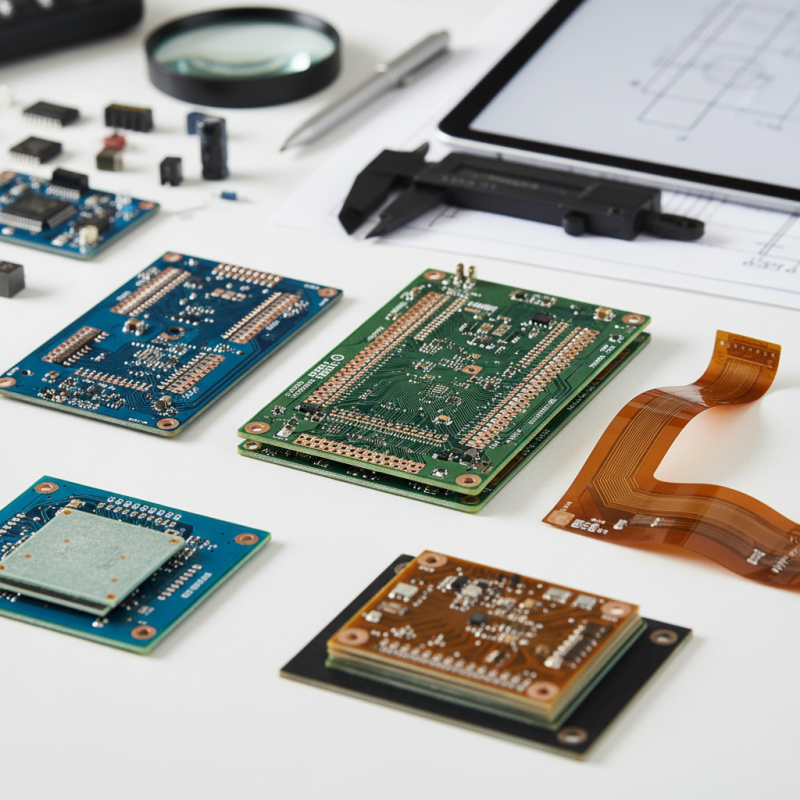
When selecting a PCB for your projects, understanding the various types available is crucial. PCBs come in different forms, such as single-sided, double-sided, and multi-layer boards. Single-sided PCBs are simple and cost-effective for basic electronic applications. They are often used in consumer products where space is not a concern. On the other hand, double-sided boards allow more complex designs and component placements, making them suitable for more advanced projects.
Multi-layer PCBs offer numerous advantages. They enable more intricate designs by stacking multiple layers, which saves space in compact devices. However, they can be challenging to fabricate and may require higher costs. The choice depends on the project’s complexity and budget constraints.
When choosing a PCB type, consider the specific requirements of your project. Think about the components you will use and the space available. Tips to remember: always review the board's tolerances. Test it under real conditions before finalizing your design. Today’s industry leans towards flexibility and adaptability. Strive for designs that can evolve over time. Reflect on what might not work in the future as well. The goal is not just to create but to create sustainably and innovatively.
Evaluate Material Options for Durability and Performance
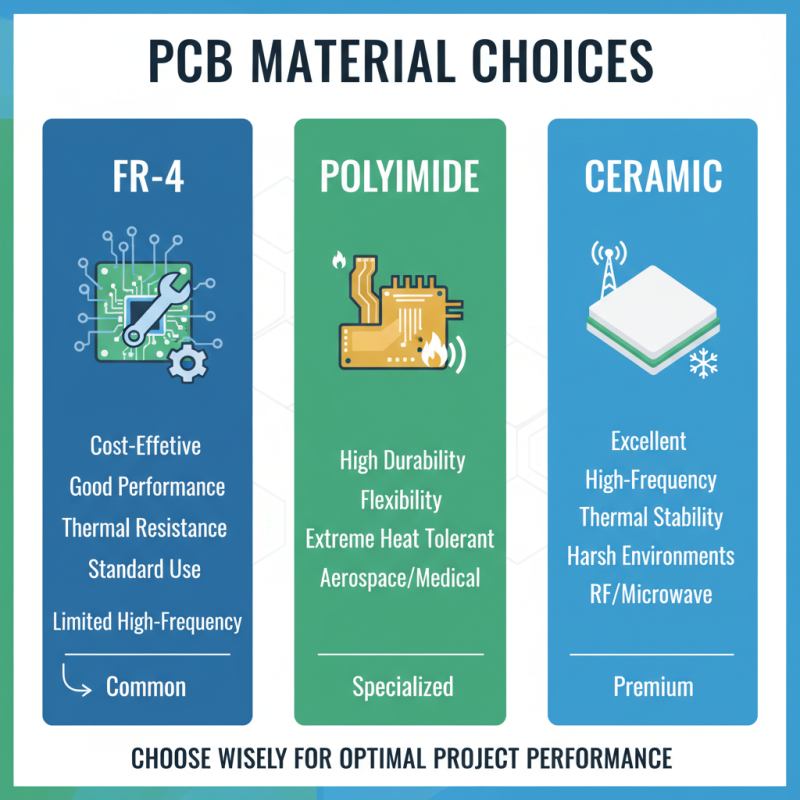
When selecting a PCB for your project, material choice is crucial. Different materials impact durability and performance. Common options include FR-4, polyimide, and ceramic. FR-4 is widely used due to its good balance of cost and performance. It stands up well under thermal stress, but can be limited in high-frequency applications.
Polyimide is known for its flexibility and thermal resistance. However, it can be more expensive and harder to source. If your project requires extreme conditions, ceramic can be beneficial. It's durable and resistant to moisture. Yet, ceramics are typically more fragile during manufacturing.
As you weigh these options, consider your specific project needs. Durability is vital, but over-engineering can lead to extra costs. It’s easy to get caught up in finding the best material. Sometimes, simpler solutions work just as well. Analyze how each material's properties align with your goals. Don't rush into decisions; reflect on long-term impacts. Quality often trumps just having the newest or most advanced material.
Consider Manufacturing Techniques and Costs Involved
Choosing the right PCB can be overwhelming. Manufacturing techniques and costs are crucial factors to consider. Different techniques lead to varying quality and price ranges. A simple design may not require advanced processes, allowing for lower costs. Complex designs, however, might need specialized manufacturing, leading to higher expenses.
When it comes to costs, look closely at material choices. Some materials are more expensive but enhance durability. Others may be budget-friendly yet might not withstand environmental stress. A balance between cost and quality is essential. Overlooking this can result in project delays or failures.
Tip: Always obtain multiple quotes from manufacturers. Compare not just prices but also techniques used. This insight helps you understand trade-offs. Additionally, consider lead times. Rushing orders may incur extra charges. Reflect on your project's timeline and budget before making a final decision.
Analyze PCB Design and Layout for Optimal Functionality
When designing a printed circuit board (PCB), the layout is crucial for optimal functionality. A well-thought-out design can minimize noise and improve signal integrity. Pay attention to the positioning of components. Place signal lines as short as possible. This reduces impedance and helps with the performance of your circuit.
Tips: Use ground planes to reduce noise. They provide a solid reference point for signal lines. Also, consider trace widths for current handling. Wider traces can carry more current but take up more space. Be mindful of that.
Another aspect to think about is heat dissipation. Components generate heat when operating. If not managed, excessive heat can lead to failure. Ensure that the layout allows for airflow. Position heat-sensitive elements away from heat sources. Reflect on this often. Sometimes, the most effective solution is to revisit and revise the layout based on testing results. The best designs come from iterative improvements.