2026 How to Choose the Right Flexible Circuit Board for Your Project?
Choosing the right flexible circuit board is crucial for any project. According to a recent report from the Flexible Electronics and Displays Center, the market for flexible circuit boards is projected to reach $25 billion by 2026. These boards are vital for modern electronics, from smartphones to medical devices.
Expert Dr. Karen Lin emphasizes, “Selecting the right flexible circuit board can significantly impact performance and reliability.” This quote reflects the importance of understanding specific requirements, such as substrate materials and layer counts.
While many options exist, each project often reveals unique challenges. Not all flexible circuit boards are created equal. Manufacturers offer a variety of materials—polyimide, polyester, and others—that can affect durability and flexibility. Understanding these details is essential, yet many still overlook them. A small oversight in material choice can lead to project delays or performance issues. Careful consideration can avoid costly mistakes.
Understanding the Basics of Flexible Circuit Boards
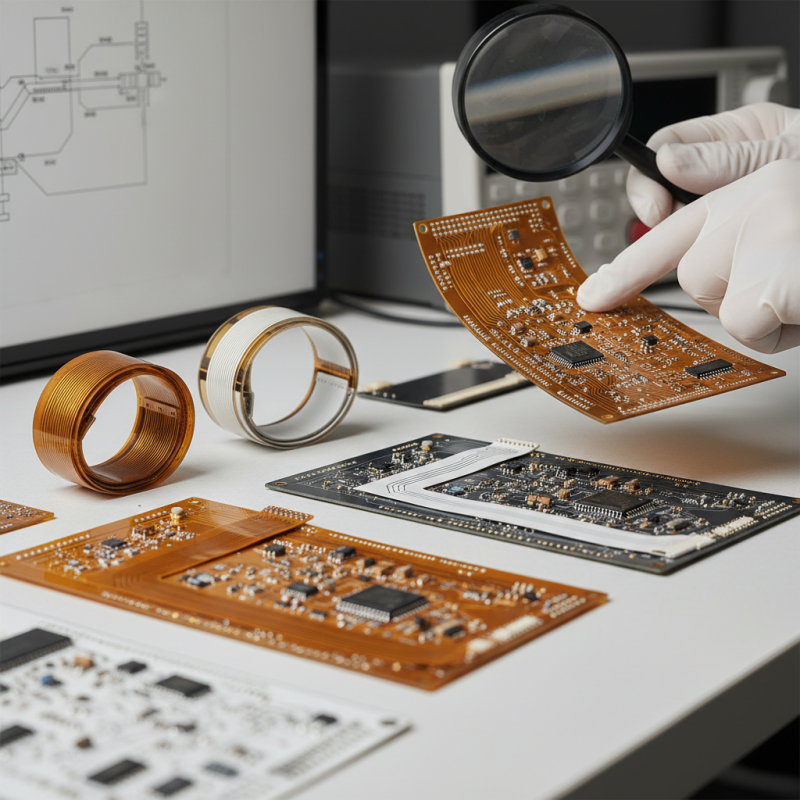
Flexible circuit boards are a popular choice for many electronic applications. They offer versatility, lightweight design, and space-saving benefits. Understanding their basics helps in selecting the right one for your project.
Flexible circuit boards are typically made from materials like polyimide or polyester. These materials allow for bending, folding, and twisting, which is essential for compact designs. However, the durability of these circuits can vary. Some may not withstand repeated stress, leading to potential failures. It's crucial to assess the mechanical demands of your design.
Another key aspect is the production process. Different manufacturing techniques can affect the performance and cost of the circuit. For example, some processes may enhance reliability but add to the expense. If your budget is tight, it can lead to tough choices. Balancing quality and cost often requires careful consideration and planning.
2026 How to Choose the Right Flexible Circuit Board for Your Project? - Understanding the Basics of Flexible Circuit Boards
| Thickness (mm) | Material Type | Max Width (mm) | Min Radius (mm) | Temperature Range (°C) |
|---|---|---|---|---|
| 0.1 | Polyimide | 300 | 2.5 | -40 to 125 |
| 0.2 | PET | 250 | 3.0 | -30 to 85 |
| 0.5 | FR-4 | 200 | 4.0 | -20 to 105 |
| 0.3 | E-Flex | 275 | 3.5 | -40 to 150 |
Key Factors to Consider in Selecting Flexible Circuit Boards
When selecting a flexible circuit board, several key factors impact your decision. The thickness of the board is crucial. Common options range from 0.1mm to 0.5mm. Thicker boards may resist bending, while thinner ones offer more flexibility. Consider the application. If the circuit will endure constant movement, opt for a thinner option.
Material choice also matters. Polyimide is widely used due to its thermal stability. FR-4 serves well in many applications but lacks flexibility. Recent market reports indicate that the flexible circuit board industry will grow by approximately 10% annually. This growth emphasizes the evolving technology and materials in the field.
Cost plays an undeniable role. While it might be tempting to go for the cheapest option, quality should not be sacrificed. Poor materials can lead to malfunctions, causing setbacks. A project could fail due to inadequate components. Balancing cost and quality can be challenging but is essential for long-term success.
Types of Flexible Circuit Boards and Their Applications
Flexible circuit boards are versatile components in modern electronics. They come in various types, each tailored for specific applications. For instance, single-sided flexible boards feature a conductive layer on one side. These are often used in simple devices like handheld remotes. Their simplicity makes them cost-effective, but they may not suit more complex requirements.
Double-sided flexible boards allow for increased circuit density. They are essential for devices needing more intricate layouts. For example, wearable technology often employs these boards due to their compactness. However, the design can become challenging, requiring careful planning.
Multi-layer flexible circuit boards take complexity to another level. They consist of several layers, enabling advanced functionalities. Such designs are common in medical devices and sophisticated smartphones. Nevertheless, they demand meticulous design processes and can be more costly. Choosing the right type depends on the specific needs of your project, as each configuration has its advantages and drawbacks. It’s vital to weigh these factors during the decision-making process.
Evaluating Performance and Durability in Flexible Circuit Designs
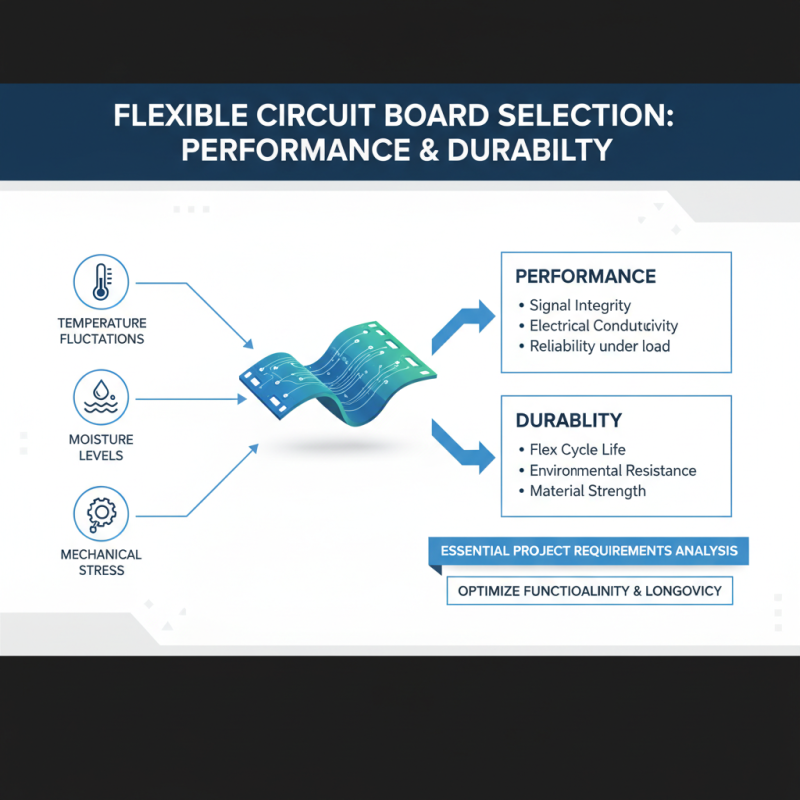
When selecting a flexible circuit board, performance and durability are paramount. These factors determine how well the circuit will function under varying conditions. It's essential to know the specific requirements of your project. Consider temperature fluctuations, moisture levels, and mechanical stress. These variables can significantly impact the performance of the circuit.
Tips: Always assess the operating environment of your circuit. This will guide material choices. A common mistake is ignoring environmental factors. Choosing an inappropriate material can lead to early circuit failure.
Durability also hinges on the design process. Thin layers can save space but may compromise strength. Balancing flexibility and resilience is challenging. Overemphasizing one aspect may result in a circuit that doesn't perform reliably. Precision in design and materials is non-negotiable.
Tips: Prototype testing is a must. It helps identify potential issues before full-scale production. Small details can have significant consequences in real-world applications. Pay attention to those weaknesses. Even a slight oversight can lead to substantial failures down the line.
Cost Considerations and Budgeting for Flexible Circuits
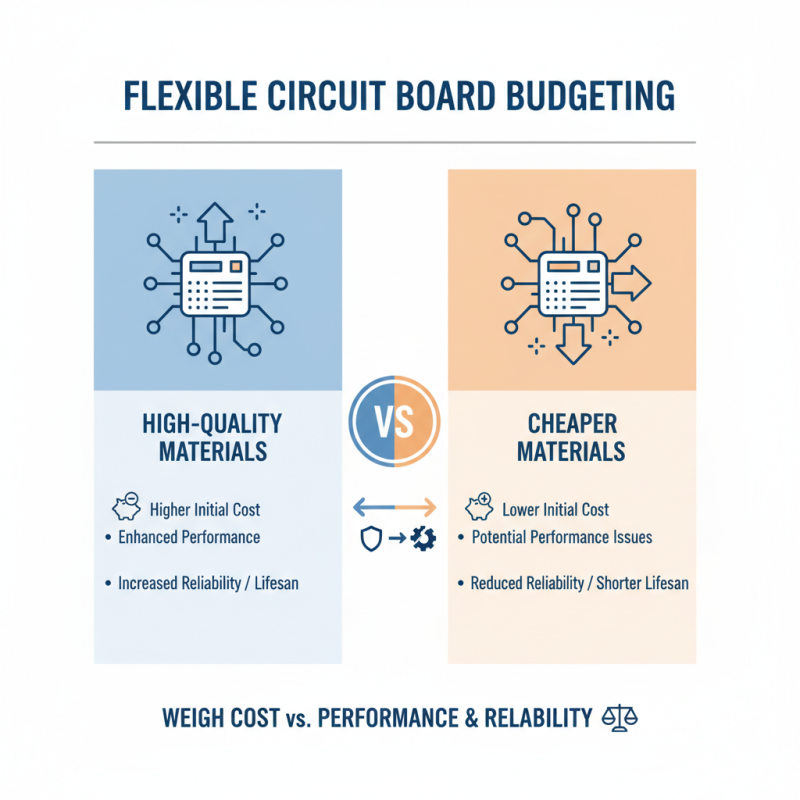
When budgeting for flexible circuit boards, cost can vary significantly. Materials often make a big difference. High-quality materials tend to be more expensive but can enhance performance. Conversely, cheaper options might save money upfront but can lead to more issues down the line. It’s essential to weigh these factors carefully.
Labor costs also play a crucial role. Depending on the complexity of your design, manufacturing can become costly. Keep in mind, intricate designs may require advanced production techniques, raising the overall expense. It's worth exploring different manufacturers to find a balance between quality and cost-effective solutions.
Don’t forget to account for potential mistakes. Designing flexible circuits can be tricky, and errors can be pricey. Sometimes, simplifying a design can reduce costs. Yet, this might not always meet your project's requirements. Finding the right balance between budget and performance is a continuous challenge. It often requires reflection and adjustment throughout the process.
Related Posts
-
Top 10 Benefits of Flexible Printed Circuits for Electronics?
-
Top 10 Benefits of Using Flex PCB Boards in Modern Electronics
-

Understanding the Importance of Flexible Printed Circuits in Modern Electronics
-
Exploring the Future of Electronics: How Flexible Printed Circuit Boards Will Revolutionize device Design in 2024
-

2025 Trends in Flexible Printed Circuit Boards: Innovations and Applications
-

10 Best Flexible Circuit Boards for Innovative Electronics?