How to Choose the Best Circuit Board Design for Your Project?
Choosing the right circuit board design is crucial for any electronics project. With varied applications, specific requirements must be met. The complexity of designs can significantly influence project outcomes. Understanding the nuances of circuit board design will lead to better functionality and performance.
Many factors come into play when selecting a design. Consider the size, shape, and components of your project. Each choice impacts the overall efficiency and reliability. Collaborating with experienced designers can yield invaluable insights. They bring expertise that can prevent costly mistakes. However, even seasoned professionals face challenges in circuit board design.
One must also reflect on budget constraints and time limitations. Balancing quality with costs is essential. Poor decisions can result in inefficiencies. Ultimately, dedicating time to research different circuit board designs is vital for success. Make informed choices, and allow room for improvement along the way.
Understanding the Basics of Circuit Board Design
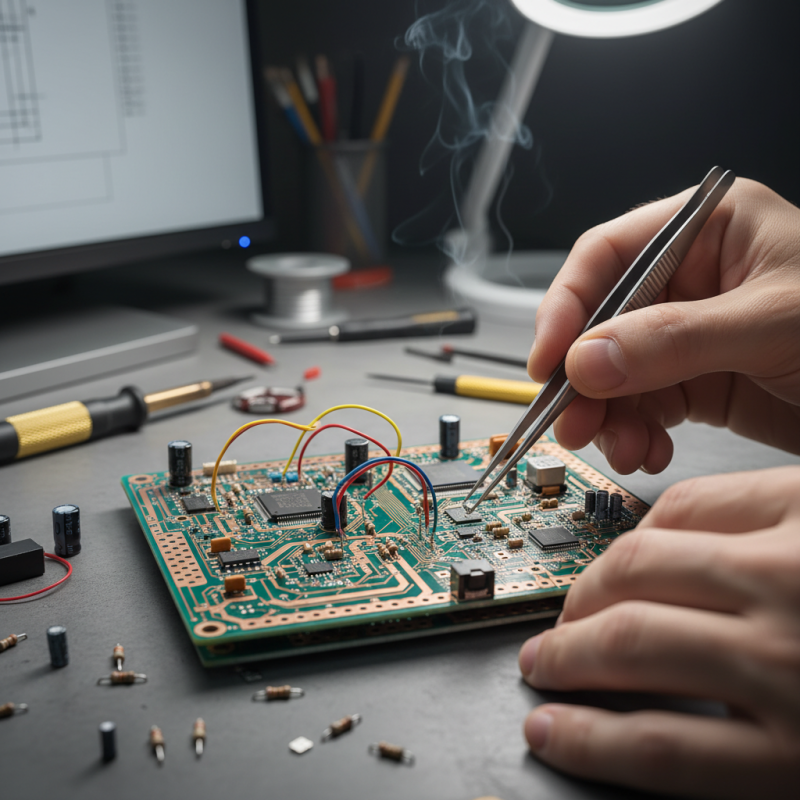
Understanding the basics of circuit board design is crucial for any electronics project. A circuit board connects various electronic components, allowing them to function together. Key elements include traces, pads, and vias.
Traces are conductive paths that connect components. Pads are spots where components attach. Vias are tiny holes that connect traces on different layers.
When designing a circuit board, it's essential to consider layout and spacing. Proper spacing prevents interference and signal loss. Failure to maintain adequate distance can lead to circuit failure. Also, the choice of materials impacts durability and functionality. Common materials include FR-4 and CEM-1, each with unique properties.
Remember, mistakes in design can lead to costly revisions. It's natural to overlook minor details, but these can cause significant issues. Engaging with communities or seeking feedback can help spot flaws early. Practice makes perfect, so learning from previous designs is important for improving future projects. Embracing these challenges fosters growth in your engineering skills.
Identifying Project Requirements and Specifications
Identifying project requirements is crucial for effective circuit board design. Start by defining functionality. Determine what your circuit board needs to achieve. For instance, does it power a device, process signals, or perform complex calculations? Understanding these specifications helps to align design choices with project goals.
Next, consider physical constraints. Size, weight, and layout must fit the intended application. According to a recent industry report, over 70% of design failures stem from insufficient attention to these factors. Creating a prototype can help visualize dimensions and functionality. Testing early can save time and costs later on.
Don’t overlook environmental factors. Circuit boards must operate reliably under specific conditions. This includes temperature extremes and moisture levels. Research shows that 60% of electronic failures relate to environmental issues. Analyzing these elements is essential for a successful design. Balancing all variables makes the final product more robust and effective.
Evaluating Different Circuit Board Materials and Processes
Selecting the right circuit board material and processes is vital for project success. Different materials can significantly impact performance and reliability. For example, FR-4 is a popular choice due to its balance of electrical insulation and thermal stability. According to IPC's 2022 report, nearly 90% of boards use FR-4, highlighting its industry acceptance. However, for high-frequency applications, materials like Rogers may outperform standard options because of their lower dielectric constant.
Evaluating processes is equally crucial. The choice between through-hole and surface mount technology affects design complexity and assembly costs. A study from PCB World indicated that surface mounting can save up to 30% in assembly time and reduce space on the board. Yet, this technology requires precise handling and can lead to higher rework rates if not managed properly. Additionally, the choice of soldering techniques influences durability; lead-free solder is a standard today, but it presents unique challenges, such as higher melting points and thermal fatigue.
Choosing the best circuit board involves a balance of material properties and manufacturing processes. There are trade-offs with each decision, such as cost versus performance and reliability versus manufacturability. It’s essential to assess the specific needs of your project to make informed choices.
Choosing the Right Design Software and Tools
Choosing the right design software for circuit boards can be overwhelming. The selection process is crucial for the success of your project. Start by evaluating your specific needs. Are you a beginner or an experienced designer? Different software caters to these different skill levels, impacting your productivity and design quality.
**Tips:** Consider the learning curve associated with each tool. Some software might offer extensive features but can be challenging for novices. You might benefit from platforms with user-friendly interfaces. This can save you time and frustration.
Explore tools that offer helpful libraries and templates. They can significantly speed up the design process. But remember, over-relying on templates may hinder your creativity. Striking a balance is key. Also, check for compatibility with manufacturing processes. Not all designs translate directly from software to physical boards.
**Tips:** Always prioritize software that supports collaboration. If you are working on a team, seamless sharing and feedback capabilities are vital. Inconsistent communication can lead to design errors. Testing your design with simulation tools is essential, too. It helps to identify potential issues before production.
How to Choose the Best Circuit Board Design for Your Project?
| Criteria |
Description |
Recommended Tools |
| Usability |
Ease of use for beginners and experienced users. |
EasyEDA, Fritzing |
| Features |
Advanced design features such as 3D modeling and simulation. |
Altium Designer, KiCad |
| Cost |
Affordability and value for budget-conscious projects. |
Eagle, DipTrace |
| Support |
Availability of documentation, tutorials, and customer support. |
CircuitMaker, OrCAD |
| Compatibility |
Integration with other tools and hardware for seamless workflow. |
Fusion 360, PSpice |
Assessing Manufacturing and Production Considerations
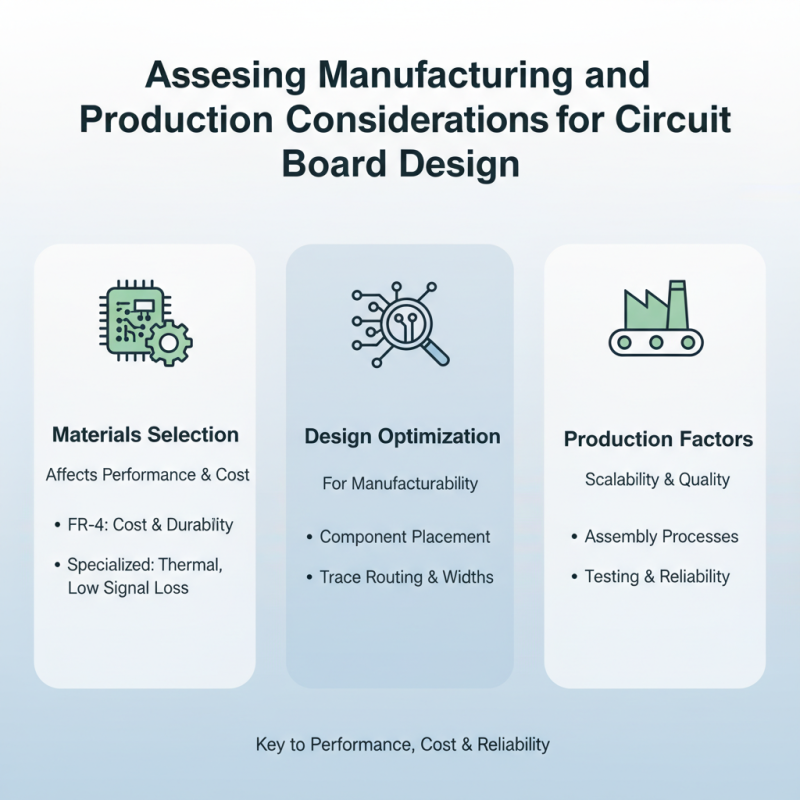
When choosing a circuit board design, manufacturing and production factors are paramount. Understanding the required materials is essential. Different materials affect not only performance but also costs. For example, FR-4 is common due to its balance of cost and durability. However, more advanced projects may need specialized materials for better thermal conductivity or reduced signal loss.
Production techniques also play a role in the design phase. Factors such as board thickness, layer count, and trace width need careful consideration. High layer counts can lead to complications during manufacturing. Additionally, tighter tolerances may result in higher production costs. Assessing the skill level of your manufacturing partner is crucial. Ensure they have a proven track record with complex designs. Frequent communication during the design phase can help address potential issues upfront.
Finally, remember that prototypes are invaluable for testing designs before full-scale production. Iterative testing allows you to refine the design. It's normal for initial prototypes to reveal flaws. Identifying these early can save time and resources. Balancing design aspirations with practical manufacturing capabilities is a challenge but essential for project success.