How to Choose the Right PCB Printed Circuit Board for Your Project?
Choosing the right PCB printed circuit board is essential for project success. The PCB acts as the backbone of your electronic design. A well-selected PCB can optimize performance, reliability, and cost.
Understanding your specific requirements is crucial. Consider aspects like size, layer count, and material. Each project is unique, and one-size-fits-all does not apply here. A complex design might need a multilayer PCB printed circuit board, while a simple project could work with a single-layer option.
Mistakes can happen when selecting a PCB. Sometimes, the initial choice leads to unforeseen issues. It's important to reflect and adjust as necessary. Keep an eye on manufacturer capabilities, as not all can handle specialized needs. By focusing on these factors, you can make informed decisions and enhance your project's outcomes.
Understanding PCB Types and Their Applications
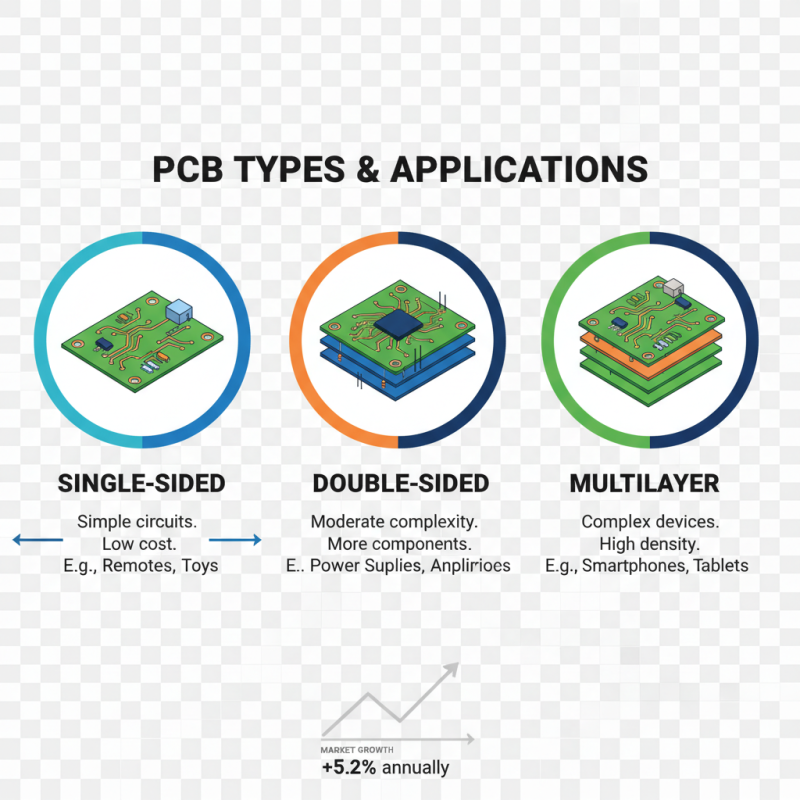
When selecting a printed circuit board (PCB) for a project, understanding the various types and their applications is essential. There are several common PCB types: single-sided, double-sided, and multilayer. Each type serves different needs based on complexity and functionality. For instance, multilayer PCBs can handle more components and are ideal for compact devices. They are standard in smartphones and tablets, reflecting a market growth rate of approximately 5.2% annually, as outlined in industry reports.
Flex PCBs and rigid-flex PCBs are increasingly popular due to their versatility. Flex PCBs offer great adaptability in intricate designs while maintaining performance. Rigid-flex boards combine the best of both worlds, supporting large circuits without sacrificing flexibility. They are often used in aerospace applications, where weight and space are critical.
Choosing the right PCB also includes considering factors like material, thickness, and layer count. Many designers overlook these attributes, leading to performance issues. According to studies, improper PCB selection can result in a 30% increase in failure rates during product testing. Balancing quality and cost is vital for project success. Always reflect on how the chosen type aligns with long-term project goals. Engaging in thorough research can prevent costly mistakes down the line.
Key Specifications to Consider for PCB Selection
Choosing the right printed circuit board (PCB) for your project involves several critical specifications. The first is the board thickness. Common options range from 0.2 mm to 2.0 mm. Thicker boards can handle more power, but they are heavier and less flexible. Consider what your project really needs. Lightweight designs often prefer thinner boards.
Material choice plays a significant role, too. FR-4 is standard for most applications, but other materials provide specific benefits. For example, rigid-flex PCBs offer more design freedom but can be more complex to manufacture. Think about your project's usage. High-temperature environments may require specialized materials.
Finally, surface finish options shouldn't be overlooked. Choices like HASL or ENIG affect solderability and durability. Each option has trade-offs. For instance, ENIG provides better protection, but it can be more expensive. Balancing cost and performance is crucial. It's easy to get lost in these details. Reflect on the essential requirements of your project and avoid getting overwhelmed by the variety of possibilities.
Evaluating Design Complexity and Layer Count
When designing a printed circuit board (PCB), evaluating design complexity and layer count is crucial. Complexity can influence how the board performs. A simple project may only require a single layer. However, more complex designs often need multiple layers to accommodate additional components and routing.
Tips: Consider how many components you plan to use. If you’re unsure, start with a two-layer board. This allows easier routing without overwhelming the design. A multi-layer PCB can get complicated quickly. It might lead to signal integrity issues or even manufacturing errors.
Also, think about the available space. A compact project may benefit from a multilayer PCB, but it can be harder to prototype. Reflect on your project’s needs. What works for one might not work for another. A good PCB design balances complexity with practicality.
Material Choices: FR4 vs. Other Substrate Options
When selecting a PCB, the choice of substrate material is crucial. FR4 is a popular option, known for its balance of cost and performance. This fiberglass-reinforced epoxy laminate remains stable at high temperatures. It is suitable for many standard applications. However, FR4 may not be the best choice for every project.
Considerations like flexibility, thermal conductivity, and frequency response matter. For instance, polyimide substrates offer excellent flexibility and thermal resistance. They're ideal for applications needing bent or twisted circuits. On the other hand, ceramic substrates provide superior thermal conductivity. They are excellent for high-power applications but can be cost-prohibitive.
It’s also essential to evaluate the specific requirements of your design. Think about the environment your PCB will operate in. Moisture and temperature can impact performance. Sometimes, manufacturers make shortcuts or overlook these details, leading to future issues. Reflecting on these factors ensures a more reliable and efficient design.
Cost Considerations and Budgeting for PCB Projects
Cost considerations in PCB projects can significantly impact development timelines and overall budgets. According to a recent report by the IPC, PCB manufacturing costs can vary widely based on complexity and material requirements. For basic designs, costs can start around $2 per square inch. More intricate boards can rise to $10 or more. This variance is crucial for budgeting.
When planning, include all expenses: prototyping, testing, and production. A survey from the IEEE indicates that nearly 30% of PCB projects exceed their initial budget. This often happens due to underestimating the cost of high-grade materials or revisions. Failing to account for these can lead to delays.
Quality matters, but so does cost. A balance is necessary for project success. Many projects use cheaper materials to cut costs but face reliability issues later. It’s vital to consider long-term effects. Questions arise: are cost savings gaining you quality in the end? Such reflections can lead to smarter budgeting in future projects.
How to Choose the Right PCB Printed Circuit Board for Your Project? - Cost Considerations and Budgeting for PCB Projects
| Parameter |
Description |
Estimated Cost ($) |
Lead Time (Days) |
| Material Type |
FR-4, CEM-1, Polyimide |
20 - 50 |
5 - 10 |
| Layer Count |
Single, Double, Multi-layer |
30 - 200 |
7 - 14 |
| Surface Finish |
HASL, ENIG, OSP |
10 - 40 |
3 - 5 |
| Quantity |
Prototype vs Production |
100 - 5000 |
10 - 30 |
| Routing Requirement |
Standard, High-density |
50 - 300 |
7 - 21 |