How to Design a Circuit Board Efficiently in 2026?
Designing a circuit board efficiently in 2026 requires a blend of innovation and practicality. In a rapidly evolving tech landscape, circuit board circuit board design must adapt to new demands. Engineers face challenges from shrinking device sizes and increasing functionality.
Sustainability is now critical. Eco-friendly materials are becoming essential in circuit board circuit board construction. This shift prompts designers to rethink traditional methods. What worked in the past may not suffice today.
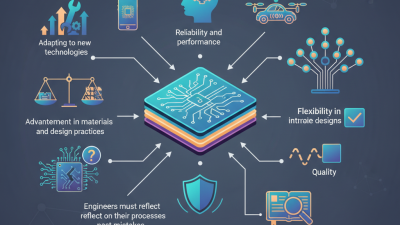
Collaboration plays a vital role. Diverse teams lead to fresh ideas and faster solutions. However, communication gaps can hinder progress. Engineers must reflect on lessons learned from previous projects. Adapting to new technologies means continuous learning and adaptation. Each mistake leads to improvement. Planning for the future is crucial, but flexibility is just as important.
Understanding the Basics of Circuit Board Design in 2026
In 2026, circuit board design has evolved significantly. Understanding the basics is crucial for engineers. Reports suggest that the global market for printed circuit boards will exceed $75 billion by 2026. This growth reflects an increasing demand for innovative technologies in electronics.
One key aspect of modern design is the integration of AI. AI-driven tools can enhance design accuracy and speed. They help in identifying potential errors early, reducing costly revisions. However, reliance on such technologies can lead to oversight. Engineers must strike a balance between automation and manual checks.
Material selection also plays a vital role in circuit board performance. Advanced materials like flexible substrates and high-speed laminates are gaining traction. Yet, many designers overlook the importance of thermal management. Poor thermal design can cause issues, leading to product failures. Continuous education and awareness of new materials are essential for success.
Analysis of Circuit Board Design Complexity in 2026
Key Software Tools for Efficient Circuit Board Design
In 2026, efficient circuit board design stands out as a key challenge in electronics. Designers increasingly rely on specialized software tools to enhance productivity and accuracy. A report by the IPC indicates that the electronic design automation (EDA) market is projected to exceed $12 billion by 2026, highlighting the growing need for robust software solutions.
Modern design tools focus on integrated workflows. They enable real-time collaboration among teams. However, issues like steep learning curves remain prevalent. Efficiency can also suffer due to inadequate training. Companies report that up to 30% of design time is wasted on avoidable errors. Advanced features, such as AI-driven suggestions, help mitigate this, but their effectiveness relies heavily on user input.
Moreover, simulation capabilities are vital. They allow engineers to test designs under various conditions. A recent survey found 70% of engineers prioritize these features. Still, over-reliance on simulations can lead to oversight in practical testing. The balance between virtual and real-world validation proves essential for successful outcomes. Hence, while tools can enhance design efficiency, continuous learning and adaptation are equally important.
How to Design a Circuit Board Efficiently in 2026? - Key Software Tools for Efficient Circuit Board Design
| Tool Name |
Functionality |
Key Features |
Target Users |
Pricing Model |
| Tool A |
PCB Layout Design |
3D Visualization, Auto-router, Library Management |
Engineers, Designers |
Subscription |
| Tool B |
Simulation & Analysis |
Signal Integrity, Thermal Analysis |
R&D Teams, Universities |
One-time Fee |
| Tool C |
PCB Manufacturing |
Quick Turnaround, Cost Estimation |
Startups, Small Businesses |
Pay-per-use |
| Tool D |
Collaboration Platform |
Real-time Collaboration, Version Control |
Teams, Freelancers |
Freemium |
| Tool E |
Supply Chain Management |
Inventory Tracking, Supplier Management |
Manufacturers, Procurement Teams |
Subscription |
Best Practices for Circuit Board Layout and Components Placement
Efficient circuit board design in 2026 demands precise attention to layout and component placement. Start with a clear schematic. Visualize the flow of signals. Place high-frequency components close to the power source. Ensure shorter traces reduce interference. This will help in optimizing performance. Careful planning prevents costly errors.
Next, consider thermal management. Components generate heat. Position them wisely to avoid overheating. Create ample space for airflow. Use thermal vias to dissipate heat. Think about future upgrades. Leave room for additional components or modifications. Flexibility in design can save time later.
Despite these strategies, designers may face challenges. Components might not fit as planned. Traces can become tangled. Regularly reviewing and iterating on layouts can lead to improvements. Embrace feedback and adapt. A circuit board design is a journey, not a destination.
Sustainability and Material Considerations in Circuit Board Design
In 2026, circuit board design will increasingly focus on sustainability. As environmental concerns grow, material selection becomes critical. The global printed circuit board (PCB) market is projected to reach $85 billion, with a rising demand for eco-friendly materials. Traditional materials can contribute significantly to electronic waste. Finding alternatives is not just beneficial; it's necessary.
Research shows that about 50 million tons of e-waste is generated annually. Less than 20% is recycled. This highlights the need for biodegradable options in circuit board design. Materials like biodegradable polymers and recyclable metals are emerging. These materials not only reduce waste but also meet performance standards. Yet, the challenge remains in balancing functionality with eco-friendliness. Innovations are still required to enhance the properties of sustainable materials.
Further, the energy consumption during production is an often overlooked factor. Sustainable design should consider energy-efficient manufacturing processes. Reports indicate that adopting energy-efficient methods can reduce costs by up to 25%. There is a long road ahead. While advancements are being made, many designs still rely on harmful chemicals and inefficient methods. Reflection on these practices is essential for progress.
Testing and Validation Methods for Circuit Boards in 2026
In 2026, testing and validation methods for circuit boards have evolved significantly. Advanced simulations using AI have become crucial. According to a recent industry report, over 70% of engineers use AI-driven tools to predict potential failures. These tools analyze millions of data points in seconds. Early detection of issues helps reduce costs and time.
Physical testing remains essential. As the complexity of designs increases, so does the need for rigorous validation. Incorporating automated test equipment (ATE) improves precision. A study indicates that ATE usage has grown by 40% in the last two years. However, it’s important to note that not all tests can mimic real-world conditions perfectly. Engineers must constantly reflect on test outcomes and refine their processes.
Moreover, the transition towards eco-friendly materials poses new challenges. Sustainable testing methods are gaining traction. The aim is to ensure that these materials perform as expected and comply with regulations. In a rapidly changing environment, it’s easy to overlook aspects of thorough validation. Keeping pace with technology while ensuring reliability requires constant vigilance.