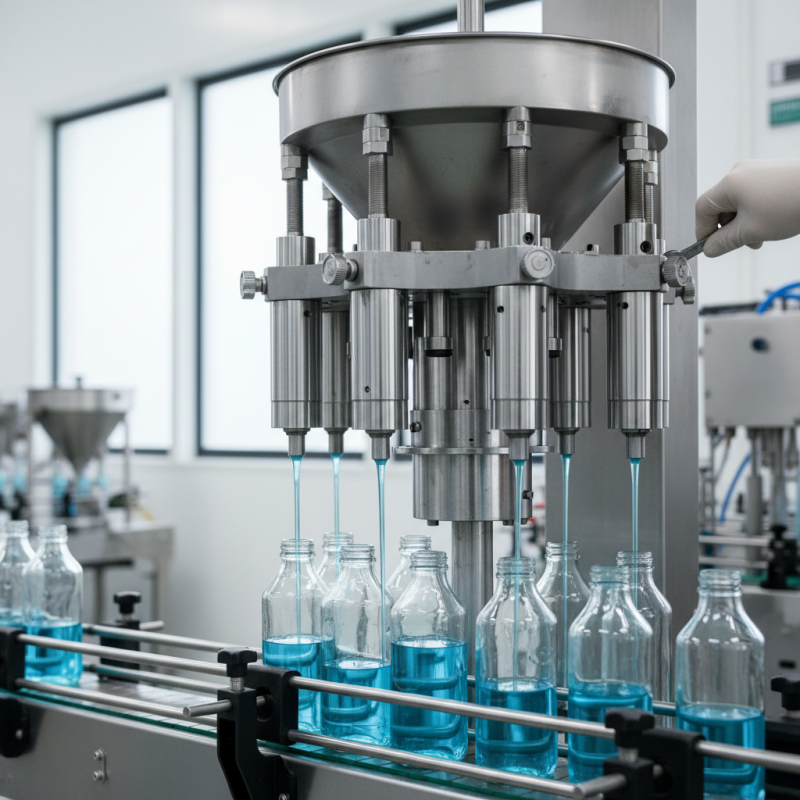
What is a Piston Filler and How Does it Work?
A Piston Filler is an essential tool in the food, pharmaceutical, and cosmetic industries. This machine efficiently fills containers with precise amounts of liquid or semi-liquid products. Understanding how a piston filler operates can greatly enhance production efficiency.
The core mechanism involves a piston that draws material into a chamber. When the stroke is complete, it pushes the product out through a nozzle. This process ensures consistent filling, reducing waste and improving quality.
However, like any machine, piston fillers require regular maintenance. Operators often overlook minor adjustments, which can lead to inefficiencies. Knowledge of effective maintenance practices is crucial for optimal performance. Understanding these details helps ensure that the piston filler operates smoothly.
Understanding the Basics of Piston Fillers in Liquid Packaging
Piston fillers play a crucial role in liquid packaging by providing efficient and accurate filling of various liquids. According to the latest market analysis, the global liquid filling machine market is projected to grow to USD 5.9 billion by 2027, highlighting the increasing importance of precise filling equipment. Piston fillers use a cylindrical piston to draw liquid into a chamber and then dispense it into containers. This method minimizes spillage and ensures consistent volume.
The mechanics are relatively straightforward. As the piston retracts, liquid is drawn in through an intake valve. The movement of the piston then forces the liquid out through a nozzle when the cycle repeats. The accuracy of this system is notable; typical piston fillers can achieve an accuracy rate of ±1%, which is critical in industries such as pharmaceuticals and food processing. However, it’s worth noting that these systems can sometimes struggle with highly viscous fluids, requiring adjustments and careful calibration.
Modern piston fillers can be integrated into automated packaging lines. This integration improves efficiency, yet the technology is not without challenges. Regular maintenance is essential to avoid clogging and ensure optimal performance. Even slight wear and tear on the components can lead to inconsistencies. Operators must regularly check and calibrate the machinery to maintain accuracy and reliability in the filling process. Understanding these nuances can help businesses optimize their liquid packaging strategies.
The Mechanism of Action: How Piston Fillers Operate Efficiently
Piston fillers are widely used in the packaging industry. They operate based on a straightforward yet effective mechanism. A cylindrical chamber holds the liquid to be filled. When the piston moves back, the chamber fills with the liquid. This action creates a vacuum, drawing in the substance.
As the piston moves forward, it compresses the liquid. The liquid is then forced out through the nozzle. This process ensures accurate dosing and minimal spillage. Operators often appreciate this precision. However, maintaining consistency can be challenging. Variations in liquid viscosity affect filling speeds and accuracy. Regular calibration is vital.
Understanding this mechanism is crucial for achieving efficiency. Operators should adjust settings based on the liquid’s properties. Inconsistent results may arise from poor adjustments. Learning the nuances of different liquids helps in optimizing performance. Mastering the operation of piston fillers can lead to smoother production runs. Nonetheless, there is always room for improvement and fine-tuning in this process.
Comparing Piston Fillers with Other Filling Technologies: A Data Analysis
Piston fillers have gained traction in various industries due to their efficiency and precision. When comparing piston fillers to other filling technologies, data shows significant operational differences. For instance, a recent report indicated that piston fillers can achieve filling accuracies of up to 99.5%. This is notably higher than gravity fillers, which average around 90%. The choice of filling technology directly influences production costs and product quality.
While piston fillers excel in viscosity handling, other methods like vacuum fillers present limitations. Vacuum fillers, for example, struggle with thicker liquids. In contrast, piston fillers maintain consistent fill volumes, even with varying viscosities. However, this precision often comes at a higher initial investment compared to simpler technologies.
Tips: When selecting a filling technology, consider both capacity and precision. Assessing product viscosity is crucial. Make use of pilot runs to identify the best fit for your production line before making a significant financial commitment. Always weigh the balance of upfront costs against long-term productivity gains. Understanding these variables can lead to improved efficiency and reduced waste in your operations.
Applications of Piston Fillers Across Various Industries: A Statistical Overview
Piston fillers are vital in many industries, offering versatility and efficiency. They provide precise filling for a wide range of products. This feature is essential in sectors such as food and beverage, pharmaceuticals, and personal care. In these areas, maintaining accurate volume is crucial for quality control.
In the food industry, piston fillers can handle varied viscosities, from sauces to purees. Their ability to fill both thin liquids and thicker pastes makes them indispensable. Similarly, in pharmaceuticals, these machines maintain stringent dosages essential for safety and efficacy. Their use in personal care products, like creams and lotions, ensures user satisfaction through consistent application.
Tip: Regular maintenance of piston fillers enhances their lifespan. Ensure all parts are clean and functioning well.
Piston fillers contribute significantly to efficiency statistics across sectors. In food and beverage, they can boost production rates by over 25%. That’s substantial when meeting high consumer demand. Despite their advantages, operators need to be vigilant about calibration. Inaccurate settings can lead to fill errors, affecting product integrity.
Tip: Frequent checks on calibration settings can prevent costly mistakes. An ounce of prevention is worth a pound of cure. Taking time for these routines pays off in the long run.
Key Maintenance Tips to Ensure Optimal Performance of Piston Fillers
Maintaining piston fillers is crucial for optimal performance in various industries. Regular maintenance not only extends equipment life but also improves filling accuracy. Reports indicate that poorly maintained equipment can lead to a 15-20% decrease in efficiency. This inefficiency can result in product waste and increased operational costs.
Regular inspection is vital. Operators should check seals and gaskets for wear and tear. A worn seal can lead to product leakage, affecting both quality and safety. Additionally, calibrating the filling volume ensures consistency. According to industry studies, calibration discrepancies can cause a filling variance of more than 5%, which is unacceptable for precise applications.
Cleaning the system also plays a significant role. Leftover residue can alter product quality and affect the next batch. It's recommended to clean piston fillers after each use. However, some operators neglect this step, which can lead to performance issues. Documenting maintenance activities can help track the condition of the equipment and identify areas needing attention. Proper maintenance practices are essential for operational reliability and quality assurance in filling processes.
What is a Piston Filler and How Does it Work? - Key Maintenance Tips to Ensure Optimal Performance of Piston Fillers
| Dimension | Description |
| Filling Volume | Ranges from 10 ml to 5 L, depending on the model. |
| Filling Speed | Can achieve speeds of 20 to 120 containers per minute. |
| Typical Applications | Used for liquids, creams, oils, and other semi-viscous products. |
| Maintenance Frequency | Recommended every 3 months for optimal performance. |
| Common Maintenance Tasks | Checking seals, lubricating moving parts, and calibrating the filler. |