
What Are the Top 10 Types of Steel Light Poles?
Choosing a steel light pole involves more than comparing height or price. Shape, mounting method, coating, and intended use all affect performance. A pole beside a parking lot faces different demands from one lighting a sports field or roadway. Wind exposure, fixture weight, soil conditions, and access for maintenance matter, too. Small details count.
This guide introduces ten common steel pole types and configurations, including round and tapered designs, octagonal poles, high-mast poles, decorative styles, davit-arm models, and anchor-base or direct-burial installations. These categories do not all describe the same feature: some refer to pole shape, while others describe mounting or function. That distinction is easy to miss. There is no universal winner.
A useful comparison starts with the site. A tall pole may cover a wide area, but it can require heavier foundations and specialized access. A decorative pole may suit a pedestrian street, yet offer less flexibility for large fixtures. Review material specifications, corrosion protection, structural design, and maintenance needs before selecting a product. Local site conditions and qualified engineering review should guide final decisions. The examples ahead offer a practical starting point, not a substitute for project-specific assessment. And some trade-offs are not obvious until installation begins.
How Steel Light Poles Are Classified by Structure and Use
Steel light poles are classified by shape, mounting arrangement, and the job they perform. These categories can overlap: a tapered polygonal pole, for example, may carry one arm or several. Shape affects wind response, appearance, and how equipment attaches.
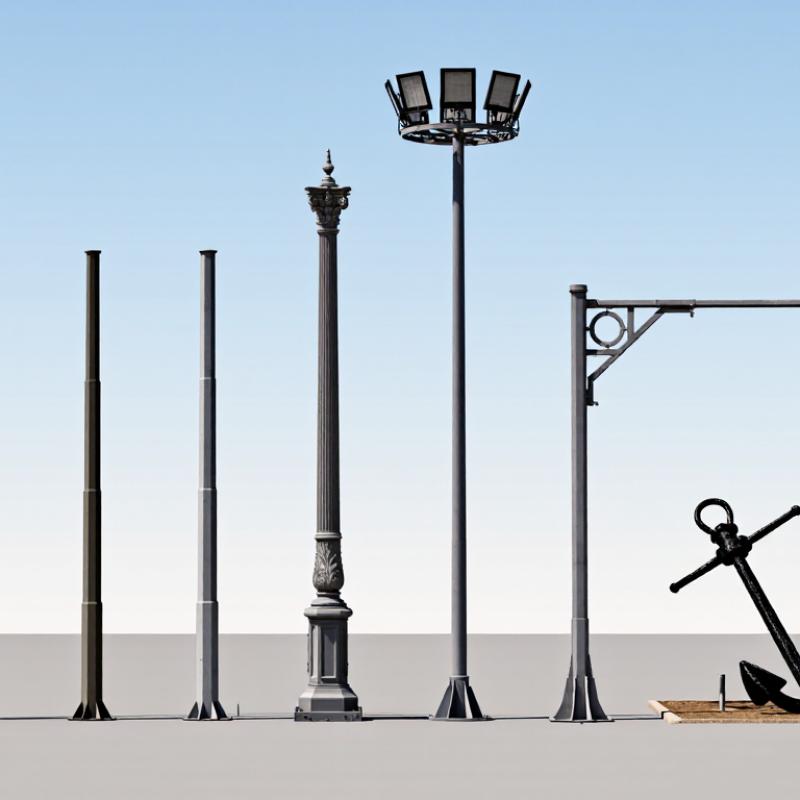
Common structural types include straight, stepped, tapered round, and polygonal poles. Straight poles keep a consistent profile; tapered designs widen toward the base for stiffness. Single-arm and double-arm poles direct light across roads or parking areas. Davit poles use a curved arm to place the fixture over a roadway. Hinged poles can lower for servicing, while decorative poles suit walkways and civic spaces. High-mast poles raise several fixtures above large areas. Ten useful types, but not ten completely separate families.
Use matters as much as form. A short, single-arm pole may fit a neighborhood street, while a high-mast structure can cover a broad interchange or yard. A hinged design may reduce the need for elevated service equipment, though its joint still needs inspection. Small detail, big consequence. Pole height, fixture weight, soil conditions, and wind exposure should guide selection.
A category name alone cannot confirm suitability; project drawings and site conditions deserve a careful review.
The 10 Main Types of Steel Light Poles
Steel light poles are commonly grouped by shaft shape, arm design, mounting, and use. The ten main types are round tapered, square tapered, octagonal tapered, straight-shaft, davit-arm, mast-arm, high-mast, anchor-base, direct-burial, and decorative poles. Round shafts suit many streets and parking areas. Square and octagonal forms offer crisp lines and broad mounting faces. Straight shafts keep the profile simple. Davit arms curve over a roadway; mast arms carry fixtures across wider spaces. High-mast poles illuminate large sites from fewer, taller structures. Anchor-base poles bolt to concrete foundations, while direct-burial poles extend into the ground. Decorative models add detail. Categories can overlap.
Selection depends on wind exposure, fixture weight, mounting height, soil, and corrosion conditions. AASHTO’s 2015 LRFD specifications for structural supports use a 50-year design-life basis and address wind, fatigue, and serviceability. That is a design assumption, not a promise of maintenance-free service. A coastal pole may need a different protective finish than one in a sheltered inland lot. Check the pole’s loading calculations and foundation details together; specifying a strong shaft alone can miss the weak point. Even small choices, such as arm length, change the load at the base. That detail is easy to overlook.
Where Each Type of Steel Light Pole Is Commonly Used
What Are the Top 10 Types of Steel Light Poles?
Where Each Type of Steel Light Pole Is Commonly Used
Steel light poles suit different sites, not just different looks. Anchor-base poles are common in streets and parking lots, where bolts secure the base to concrete. Direct-burial poles fit paths and smaller roads, provided the soil and installation depth are suitable. Tapered round poles appear along highways and campuses, while octagonal and square poles often serve roadways and commercial areas. Their shape can affect appearance, access, and wind response.
High-mast poles illuminate highway interchanges, ports, and large parking areas from fewer, taller structures. Davit-arm poles are frequent on roads, directing fixtures over traffic. Twin-arm poles light both sides of broad streets or parking aisles. Decorative poles suit parks and town centers; they look appealing, though ornate details may complicate maintenance. Traffic-signal poles with lighting arms are used at intersections, where visibility and equipment layout must be considered. Smaller pedestrian poles work along walkways and campus paths.
Tips: Match pole height, arm reach, and fixture weight to the site’s wind exposure and ground conditions. Check the base and access needs before choosing a style. A pole that looks right on a plan may feel too large beside a narrow path.
How Pole Design, Finish, and Mounting Options Differ
Steel light poles differ most visibly in shaft shape, arm geometry, finish, and base connection. Round tapered shafts shed water easily and suit many roadway layouts; square or fluted profiles can offer a more architectural look. Straight poles with short arms keep fixtures close to the shaft, while davit arms extend light over roads or walkways. The arm length changes leverage, so it also affects structural design. AASHTO’s specifications for structural supports address wind and fatigue loading, making local exposure and fixture area important inputs—not just pole height.
Finish matters outdoors. Hot-dip galvanizing provides a zinc coating, while paint or powder coating adds color and can create a layered corrosion-protection system. The American Galvanizers Association’s published atmospheric-corrosion data estimate more than 75 years to first maintenance for galvanized steel in rural exposure, but about 20–25 years in temperate marine conditions. Those are estimates, not promises; coating thickness, damage, and maintenance change results. Salt air is unforgiving.
Mounting options include anchor-base plates bolted to concrete and direct-burial shafts set into the ground. Anchor bases simplify replacement, but require accurate bolt placement and a suitable foundation. Direct burial avoids exposed anchor bolts, yet underground corrosion deserves attention. Small detail, big consequence. A specification can look complete on paper and still miss site drainage or access for future repairs.
| Steel Pole Type | Typical Design | Common Finish Options | Typical Mounting Options | Common Applications |
|---|---|---|---|---|
| Tapered Round Pole | Circular shaft that gradually narrows toward the top; often supplied with a handhole and a top tenon or arm attachment. | Hot-dip galvanized; galvanized steel with a compatible paint or powder-coat system. | Anchor-base plate bolted to a concrete foundation; direct burial is available for some designs. | Roadways, parking areas, pathways, and general site lighting. |
| Tapered Octagonal Pole | Eight-sided tapered shaft. The faceted profile provides a different appearance from a round shaft and is commonly used for roadway poles. | Hot-dip galvanized; optional exterior coating over galvanized steel where specified. | Anchor-base plate with anchor bolts; arm or luminaire attachment selected for the project. | Streets, highways, parking lots, and public infrastructure. |
| Straight Round Pole | Uniform-diameter circular shaft, typically made from a steel tube or formed section; may have a tenon or side-mounted bracket. | Hot-dip galvanized; painted or powder-coated finish may be specified for appearance or added surface protection. | Base plate and anchor bolts, or direct burial when the pole design and site conditions allow. | Walkways, campuses, parking areas, and utility or site lighting. |
| Square or Rectangular Pole | Four-sided shaft, available straight or tapered. Flat faces can suit contemporary site designs and certain bracket arrangements. | Hot-dip galvanized; optional paint or powder coating over a suitable prepared surface. | Base plate and anchor bolts; some models are designed for direct burial. | Commercial properties, campuses, parks, and architectural outdoor lighting. |
| High-Mast Pole | Tall, engineered steel pole that commonly supports a lowering ring or fixed headframe carrying multiple luminaires. | Hot-dip galvanized is common for outdoor corrosion protection; coating systems depend on the environment and specification. | Typically anchor-base mounted to a project-engineered concrete foundation; lowering systems require compatible pole and hardware. | Highways, interchanges, ports, large parking areas, and other expansive sites. |
| Sports-Lighting Pole | Engineered pole sized for luminaire weight, wind loading, aiming requirements, and the height needed for the playing area. | Hot-dip galvanized; optional exterior coating may be used to meet aesthetic or environmental requirements. | Usually anchor-base mounted to a designed foundation; mounting frames or crossarms are selected for the lighting layout. | Sports fields, courts, stadiums, and recreational facilities. |
| Davit-Arm Roadway Pole | Steel shaft fitted with a curved or offset arm that projects the luminaire over a roadway or other target area. | Hot-dip galvanized; galvanized steel with a compatible paint or powder coat is also used. | Commonly anchor-base mounted; arm orientation and attachment are set to suit the roadway layout. | Roadways, streets, intersections, and perimeter roads. |
| Traffic-Signal Pole | Structural steel shaft designed to support traffic signals, signs, or related equipment; configurations may include a mast arm. | Hot-dip galvanized is widely used; additional coating may be specified for local exposure or appearance. | Typically bolted to a concrete foundation using an anchor-base connection; assemblies are designed for their specific loads. | Signalized intersections and roadway control locations. |
| Decorative Steel Pole | Appearance-focused shaft that may incorporate fluting, a base cover, ornamental details, or a traditional or contemporary profile. | Paint or powder coat in a specified color; galvanizing may be used beneath a compatible coating system. | Usually base-plate and anchor-bolt mounted; mounting details depend on the pole and luminaire design. | Downtown streets, parks, civic spaces, campuses, and commercial developments. |
| Direct-Burial Steel Pole | Shaft designed to be embedded in the ground rather than attached to an exposed base plate; the buried section requires suitable protection. | Protective coating or galvanizing selected for the pole design and soil exposure; buried-zone protection should follow the project specification. | Embedded directly in a prepared foundation or soil according to the engineered installation details. | Pathways, parks, parking areas, and other sites where an exposed base plate is not preferred. |
How to Choose a Steel Light Pole for a Specific Site
Choose a steel light pole by starting with the site, not its appearance. A parking lot may suit a tapered round pole with a single arm, while a roadway may need a taller, multi-arm design. Sports fields often require high-mast poles to spread light across a broad area. Check mounting height, fixture weight, outreach, and wind exposure together. Small details matter. A coastal site, for example, may need stronger corrosion protection than a sheltered inland location.
Next, review ground conditions and installation needs. Soft or uncertain soil can affect foundation design, so confirm local geotechnical information before selecting the base. Anchor-base poles can simplify replacement, while direct-burial designs may suit some simpler sites. Galvanized steel can help resist corrosion, but coating choice should reflect the environment and maintenance plan. Check access, too: a hinged pole can make servicing easier where equipment cannot reach safely. Even a tidy lighting layout can leave dark patches if nearby trees or buildings block the beams. It is easy to overlook those shadows on a drawing. Have a qualified lighting and structural professional verify illumination, wind loads, foundations, and applicable local requirements before installation.