Top Electric Coolant Heater Manufacturers Worldwide?
The global electric vehicle market is reshaping how manufacturers manage cabin and battery temperatures. The International Energy Agency’s Global EV Outlook 2024 reported nearly 14 million electric car sales in 2023. It also projected stronger growth in 2024. This expansion increases demand for reliable Electric Coolant Heater systems across passenger cars, commercial vehicles, and buses.
The stakes are practical. An Electric Coolant Heater can warm battery coolant, improve cold-weather performance, and support faster cabin heating. The U.S. Department of Energy’s Vehicle Technologies Office identifies thermal management as an important factor in electric vehicle efficiency, range, and battery durability. Manufacturers must therefore evaluate more than heating capacity. They should examine voltage options, coolant flow, response time, CAN communication, electromagnetic compatibility, and functional safety controls.
This guide reviews leading manufacturers worldwide through an engineering and purchasing perspective. It considers production scale, automotive certifications, product customization, testing capability, and field experience. IATF 16949 quality systems and ISO 26262-related development practices can indicate stronger process control, although certificates alone prove little. Real validation matters.
No ranking is flawless. Supplier performance may vary by region, vehicle platform, and contract terms. Some companies publish detailed technical data, while others disclose very little. That difference can affect comparisons. Buyers should request test curves, pressure-drop data, cold-start results, warranty conditions, and sample units before approving a supplier. The following overview aims to connect market visibility with practical evidence, not promotional claims. It also highlights manufacturers that appear prepared for the changing requirements of electric mobility.
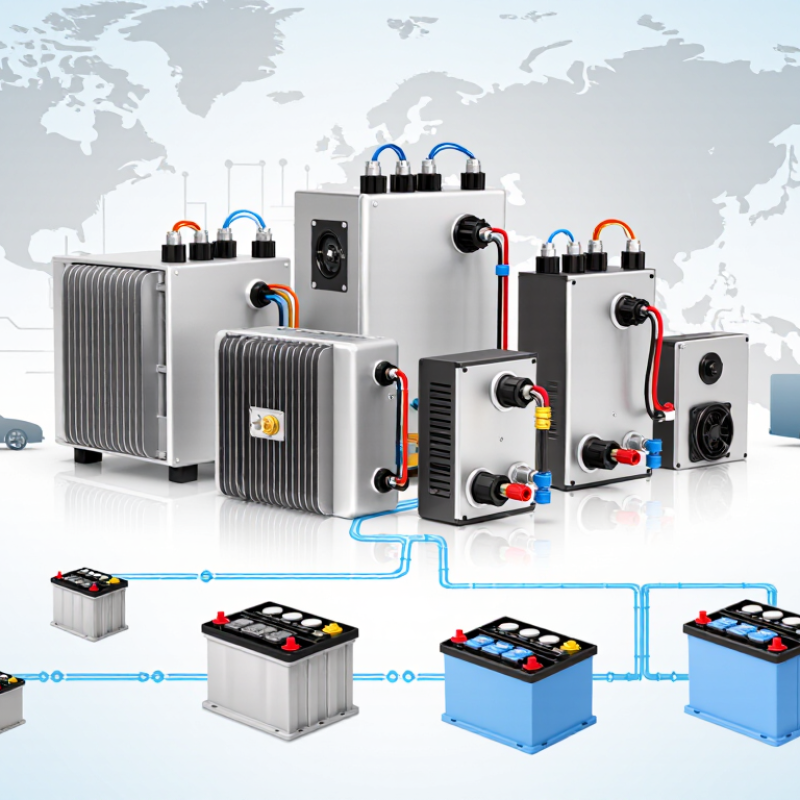
Electric Coolant Heaters: Definition, Purpose, and Operating Principles
Electric Coolant Heaters: Definition, Purpose, and Operating Principles
An electric coolant heater warms a vehicle’s liquid thermal circuit without engine waste heat. It usually contains a high-voltage PTC ceramic element, temperature sensors, and control electronics. PTC means positive temperature coefficient. Resistance rises as temperature increases. This behavior limits current naturally, although it does not replace proper protection.
A coolant pump circulates the heated glycol mixture through selected components. These may include the battery pack, cabin heat exchanger, inverter, and onboard charger. The control unit adjusts heating power according to coolant temperature, battery condition, and cabin demand. Many passenger-vehicle systems deliver several kilowatts of heat. Exact output depends on voltage, packaging, and cold-weather requirements. Small details matter.
The market need is expanding quickly. The IEA Global EV Outlook 2024 recorded nearly 14 million electric car sales in 2023, representing about 18% of new-car sales. Its Global EV Outlook 2025 reported more than 17 million sales in 2024. Growing electric fleets increase demand for reliable thermal hardware and qualified global manufacturers. Yet peak heating power is not enough for comparison. Engineers should examine response time, insulation, coolant compatibility, noise, diagnostics, and low-temperature efficiency. A heater may perform well on a test bench but struggle in a dense vehicle compartment. That assumption can fail. Real validation should include frozen starts, repeated cycling, electrical faults, and uneven coolant flow. Manufacturer selection therefore depends on tested system integration, not attractive specifications alone.
Key Technologies Used in Modern Electric Coolant Heaters
Top Electric Coolant Heater Manufacturers Worldwide?
Modern electric coolant heaters rely on three core technologies: PTC ceramic elements, high-voltage switching, and closed-loop temperature control. PTC materials increase resistance as temperature rises, limiting overheating without complex mechanical parts. This supports safer cabin heating and battery conditioning.
The IEA’s Global EV Outlook 2024 reports nearly 14 million electric car sales in 2023, representing about 18% of global car sales. This growth increases demand for compact, high-voltage thermal systems. Many current heaters operate between 400 and 800 volts. They must deliver rapid heat while protecting battery range. Liquid coolant channels improve heat transfer around the element. Sensors then adjust output within milliseconds. Small details matter.
A reliable manufacturer should show measured efficiency, insulation performance, pressure resistance, and electromagnetic compatibility data. ISO 16750 testing is useful for vehicle electrical and environmental durability. The U.S. Department of Energy also identifies temperature control as a major factor in battery performance and charging behavior. Still, efficiency claims are not always comparable. Test conditions can differ sharply.
Tips: Check heating power at low temperatures, not only laboratory conditions. Ask for flow-rate curves and fault-response tests. Review coolant compatibility carefully. A heater that performs well at 20°C may struggle at -20°C. I would also question lifetime claims without cycle-test evidence. That is where many evaluations become too optimistic.
Regional Overview of the Electric Coolant Heater Industry
Top Electric Coolant Heater Manufacturers Worldwide?
Electric coolant heater production is concentrated in regions with strong electric vehicle and thermal management industries. Europe remains influential, especially in Germany, France, Sweden, and nearby manufacturing hubs. These areas emphasize compact designs, high-voltage safety, and dependable operation in cold climates. Many European factories test heaters through repeated temperature cycles, vibration exposure, and coolant leakage checks.
Asia-Pacific has become a major production center. Manufacturers in China, Japan, and South Korea serve large battery, vehicle, and component markets. Their strengths often include high-volume production, rapid tooling changes, and competitive component sourcing. However, output volume does not always prove long-term reliability. I have seen specifications look impressive while connector sealing receives less attention. That detail can become costly in humid conditions.
North American manufacturers focus on commercial vehicles, buses, and specialized electric platforms. Their development work often considers larger coolant circuits and demanding fleet schedules. Regional suppliers also pay close attention to service access, replacement time, and integration with vehicle control systems. Across all regions, leading producers typically validate power stability, thermal response, insulation resistance, and software communication. Certification records matter. So does traceable quality data. Regional differences remain important, but supplier selection should depend on tested performance, application fit, and after-sales engineering support rather than factory location alone.
Major Applications and Future Market Developments
Electric coolant heaters are becoming critical in battery-electric vehicles, plug-in hybrids, buses, and fuel-cell platforms. The IEA Global EV Outlook 2024 reported nearly 14 million electric car sales in 2023. It also expected sales to exceed 17 million in 2024. More vehicles create stronger demand for compact, dependable thermal systems.
Their main task is practical. They warm battery packs before charging and maintain cabin comfort in freezing weather. They also protect usable driving range. In commercial vans, fast warm-up can support early-morning deliveries and repeated short trips.
High-voltage heaters, liquid-cooled housings, and integrated sensors are gaining attention. According to the IEA, electric cars could represent almost half of global car sales by 2035 under stated policies. That outlook encourages suppliers to improve efficiency, durability, and production scale.
IDTechEx’s 2024 thermal-management research also highlights greater integration between battery, cabin, and power-electronics cooling circuits. The change is technically promising, but not effortless. A single efficiency figure can mislead. Real performance depends on ambient temperature, software calibration, insulation, and charging habits.
Future systems may become smaller and smarter, yet repairability and cold-weather testing still deserve more attention.