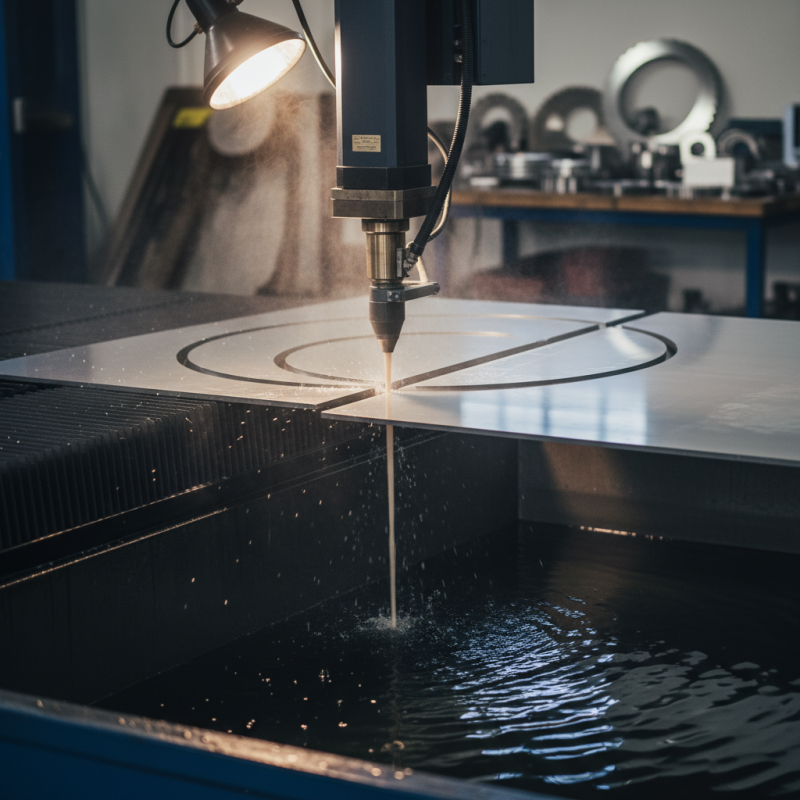
What is Waterjet Cutting Machinery and How Does It Work?
waterjet cutting machinery is a powerful tool in modern fabrication. It utilizes high-pressure water to cut through various materials. This method is known for its precision and versatility. Waterjet systems can slice through metals, glass, and even stone.
One of the main advantages of waterjet cutting is the lack of heat affected zones. This means that the material stays tempered and retains its properties. It's a clean process that minimizes waste. However, waterjet cutting machinery can be expensive to maintain. Operators need training to achieve optimal results.
Despite its advanced technology, some challenges remain. The machinery requires regular calibration to ensure accuracy. Additionally, the high energy consumption can be a concern. Yet, the benefits often outweigh these drawbacks. Waterjet cutting continues to evolve, promising further innovations in the industry.
What is Waterjet Cutting Machinery?
Waterjet cutting machinery is an advanced tool used in various industries. This technology utilizes high-pressure water mixed with abrasive materials to cut through different substances. It is known for its precision and versatility. From metals to glass, waterjet cutting can handle a range of materials. The equipment operates by shooting a jet of water at a speed of over 60,000 psi, creating a powerful cutting force.
One interesting aspect of waterjet cutting is its eco-friendliness. It produces minimal waste compared to traditional methods. However, the process is not without drawbacks. The machinery can be expensive to maintain. Operators require skill to ensure optimal performance. In some cases, the cutting edges may need further finishing, impacting overall efficiency.
Despite these challenges, waterjet cutting remains a preferred choice for many applications. The capability to create intricate shapes sets it apart from conventional cutting methods. Users should evaluate their specific needs to determine if it is the right fit. Balancing costs with benefits is essential for any project.
The History and Development of Waterjet Cutting Technology
The history of waterjet cutting technology dates back to the 1930s. Early attempts to use water for cutting materials focused on erosion. Researchers discovered that high-velocity water could effectively cut soft materials. This concept evolved over decades. By the 1970s, waterjet cutting technology had advanced significantly with the introduction of garnet abrasives. This development expanded the capabilities of waterjet systems.
Data from industry reports highlight the growing applications of waterjet technology. Reports show that the global waterjet cutting market was valued at approximately $1.57 billion in 2020. Projections suggest it will reach $2.9 billion by 2026. These figures reflect a surge in diverse industries adopting waterjet cutting. Sectors like aerospace and automotive benefit from precise cuts without thermal distortion. However, the method is not without challenges. Maintenance issues and the need for skilled operators can hinder efficiency.
Waterjet technology represents a blend of innovation and practicality. Many still grapple with optimizing the process for various materials. The learning curve can be steep, but the potential rewards are significant. As more businesses explore its capabilities, they confront these hurdles while embracing its advantages.
How Waterjet Cutting Machinery Works: Key Components
Waterjet cutting machinery is a fascinating technology that utilizes high-pressure water to cut various materials. The key components of this system work together to achieve precision and efficiency. One critical part is the pump. It generates immense pressure, often exceeding 60,000 psi. This pressure transforms water into a powerful tool. The importance of maintaining the pump cannot be overstated. A malfunction here can lead to inefficiency or even damage.
Another essential component is the cutting head. The cutting head mixes water with an abrasive substance. This mixture intensifies the cutting power, allowing for a cleaner cut on tough materials. The nozzle’s design affects the water stream's shape and speed, impacting cutting quality. Even a slight misalignment can result in poor performance. It’s essential to regularly inspect and calibrate this part.
Control systems play a vital role in waterjet technology. They manage the movement and speed of the cutting head. Operators need to be trained to use these systems effectively. Mistakes can lead to waste or inferior work. Overall, understanding these components can significantly enhance the use of waterjet cutting machinery, but ongoing learning and adjustment are key.
What is Waterjet Cutting Machinery and How Does It Work?
| Component | Description | Function |
| Abrasive Material | Material like garnet used to increase cutting efficiency. | Enhances the cutting power of the waterjet. |
| High-Pressure Pump | Pumps water to extremely high pressures. | Provides the force necessary for cutting materials. |
| Cutting Head | Houses the focusing nozzle and abrasive mixing chamber. | Directs the high-pressure waterjet onto the material. |
| Controller Software | Computer program used to control the cutting process. | Ensures precision and accuracy in cutting paths. |
| Work Table | Platform where the material is placed for cutting. | Supports the workpiece during the cutting process. |
Types of Materials Suitable for Waterjet Cutting
Waterjet cutting is a versatile method for various materials. It uses high-pressure water mixed with abrasives for cutting. This technology can handle different mediums effectively. From metal to stone, it adapts well. Some materials perform better than others.
Metals, including aluminum and steel, are commonly used. They cut smoothly and provide precise results. Waterjet cutting also works well with glass. The technique reduces cracking and provides clean edges. Additionally, softer materials like rubber and foam are suitable. They require less pressure, making the process efficient.
However, not all materials are ideal for this method. Thick materials can pose challenges. Some dense plastics may warp under pressure. Reflecting on these aspects is crucial for optimal use. Careful material selection can improve outcomes. Balancing efficiency with the right choices is often a learning experience.
Applications of Waterjet Cutting in Various Industries
Waterjet cutting technology has transformed various industries by offering precise and efficient cutting solutions. This method utilizes high-pressure water jets mixed with abrasives to cut through a wide range of materials. From metals to glass, the capabilities of waterjet cutting are impressive. The aerospace industry benefits greatly, with reports estimating that waterjet cutting can reduce material waste by up to 80%.
In the construction sector, waterjet cutting is increasingly popular for its ability to create intricate designs in stone and concrete. This versatility allows architects and designers to push creative boundaries. The automotive industry also utilizes waterjet systems for cutting intricate parts, enhancing both precision and speed in production. A study found that waterjet cutting requires less energy than traditional methods, making it a more sustainable choice.
Tip: Always assess material type before choosing waterjet cutting. Not all materials respond equally well. Testing is essential to ensure optimal results. Additionally, consider the thickness of the material as it can impact the cutting speed and quality.
While waterjet cutting is highly effective, it's not without challenges. Operator training is critical for achieving desired outcomes. Misalignment can lead to defects. Regular maintenance of machinery is also necessary to avoid unexpected downtimes. Understanding these aspects can greatly enhance operational efficiency in various industries.