
Why Are Orthopedic Spine Implants in High Demand?
Orthopedic Spine Implants are in high demand because spinal disorders affect mobility, comfort, and daily independence. Degenerative disc disease, fractures, spinal deformities, and some injuries may require surgical stabilization when nonsurgical care does not provide enough relief. For surgeons, implants such as screws, rods, cages, and plates can help support the spine or maintain alignment while healing occurs. The need is real.
Demand also reflects longer life expectancy, greater awareness of treatment options, and advances in surgical planning and implant design. Imaging tools can help clinicians assess anatomy, while improved materials and techniques may support more precise procedures. In selected cases, minimally invasive approaches can reduce tissue disruption. Still, an implant is not a cure by itself. Recovery depends on the diagnosis, overall health, surgical judgment, and rehabilitation.
A growing market should not be confused with a guarantee of better outcomes. Implant choice must fit the patient’s condition, and every operation carries risks, including infection, complications, or the need for further treatment. Evidence, surgeon experience, and careful follow-up matter. Some questions remain unsettled, too: newer designs may appear promising, but long-term results can take years to understand. Looking at these clinical needs and limits helps explain why demand is rising—and why thoughtful use matters just as much.
What Orthopedic Spine Implants Are and How They Work
Why Are Orthopedic Spine Implants in High Demand?
What Orthopedic Spine Implants Are and How They Work
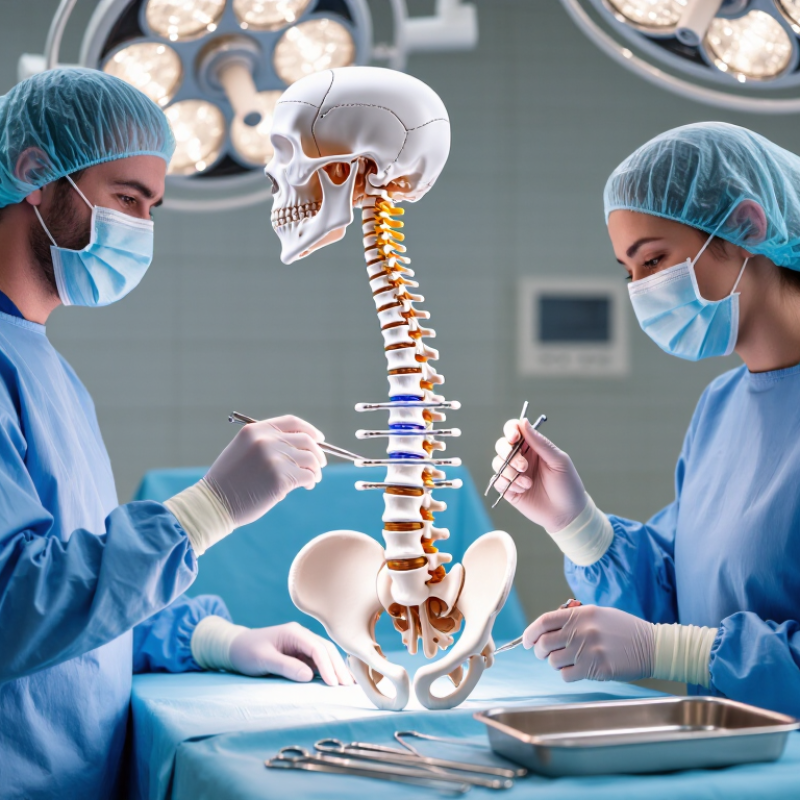
Orthopedic spine implants are devices placed during certain operations to support or stabilize the spine. Common examples include screws, rods, plates, and interbody cages. A cage may sit between two vertebrae, helping maintain space and providing a structure where bone can grow. Screws and rods can hold vertebrae steady while healing occurs. Some procedures use artificial discs to preserve movement instead. They are not interchangeable. The right device depends on the diagnosis, anatomy, and surgical plan.
Tips: Ask what each implant is meant to do, how long recovery may take, and what follow-up imaging is expected. Share your full medical history with your care team.
These devices may be considered for problems such as spinal instability, fractures, or painful disc disease when other treatments have not helped enough. Their purpose is not simply to “hold the back together.” They can help maintain alignment or support fusion, but outcomes vary. Healing takes time. A stable implant does not guarantee that pain will disappear, and recovery can feel uneven. The choice is not always obvious; patients should discuss possible benefits, risks, and alternatives with a qualified spine specialist.
Why Are Orthopedic Spine Implants in High Demand? — What Orthopedic Spine Implants Are and How They Work
| Implant or Category | What It Is | How It Works | Common Clinical Purpose | Why It Contributes to Demand |
|---|---|---|---|---|
| Pedicle screws and rods | Metal screws placed into vertebrae and connected by rods. | The linked construct helps hold selected vertebrae in a planned position and limits motion while the bones heal after a fusion procedure. | Spinal fusion for certain cases of instability, deformity, or degenerative disease. | They are used in many types of instrumented fusion procedures. The need depends on diagnosis, anatomy, and the surgeon’s treatment plan. |
| Interbody cages | Spacers placed between vertebral bodies after removal of a spinal disc. | A cage helps maintain disc-space height and provides a space for bone graft. Over time, bone may grow through or around the graft area to achieve fusion. | Selected lumbar or cervical fusion procedures. | They support reconstruction of the disc space in procedures where fusion is appropriate. A cage does not itself guarantee that fusion will occur. |
| Bone graft materials | Bone or graft substitutes used to support new bone formation at a fusion site. | Graft material provides a scaffold and, depending on the type, biological signals or cells that can support bone healing. | Fusion procedures where bone growth between vertebrae is intended. | Fusion is used to treat selected spinal conditions, so graft materials are commonly considered alongside implants that stabilize the spine. |
| Cervical plates | Low-profile plates secured to the front of the cervical spine with screws. | They help stabilize the treated level and may hold a bone graft or cage in position while fusion develops. | Selected anterior cervical discectomy and fusion procedures. | They are used in some cervical fusion operations, although the need for a plate varies with the procedure and patient factors. |
| Artificial disc replacements | Devices that replace a damaged disc while allowing motion at the treated level. | The implant separates adjacent vertebrae and is designed to permit controlled movement rather than fuse the bones together. | Carefully selected patients with certain forms of cervical or lumbar disc disease. | They offer a motion-preserving option for eligible patients, but they are not suitable for every diagnosis or anatomy. |
| Materials used in spine implants | Common materials include titanium or titanium alloys, cobalt-chromium alloys, stainless steel, and polyetheretherketone (PEEK). | Material properties differ. For example, metals provide structural strength, while PEEK is a polymer used in some spinal cages. Device design and material selection depend on the intended use. | Used across different implant types, including screws, rods, plates, and interbody devices. | Advances in materials and implant design support a broad range of procedures; the appropriate choice is specific to the device and clinical situation. |
| Drivers of clinical need | Spinal implants may be considered when surgery is recommended for conditions such as instability, deformity, fractures, or selected degenerative disorders. | Implants can provide structural support or replace a disc, while the body’s healing process remains essential to recovery and, in fusion surgery, bone union. | Use is determined by symptoms, imaging, diagnosis, overall health, and response to non-surgical care. | An aging population and the prevalence of spinal disorders can contribute to treatment needs, but implant use is not appropriate for every person with back or neck pain. |
Important: This table provides general educational information. The benefits and risks of a spinal implant procedure vary by patient, diagnosis, device, and surgical approach; treatment decisions should be made with a qualified healthcare professional.