2026 Top PCB Printed Circuit Board Types for Global Buyers
Choosing the right pcb printed circuit board in 2026 requires more than comparing prices.
Global buyers now evaluate signal speed, thermal performance, durability, traceability, and supply continuity. A board that performs well in a laboratory may fail inside a vibrating vehicle, a hot inverter, or a compact medical device. Real-world conditions matter.
John W. Mitchell, IPC president and chief executive officer, has described electronics as “the backbone of the global economy.” His observation explains why PCB selection affects much more than assembly costs. It influences product safety, maintenance intervals, certification planning, and customer trust.
This guide examines the leading PCB types available to international buyers. It covers single-sided, double-sided, multilayer, rigid-flex, flexible, metal-core, high-frequency, and HDI boards. Each type serves a different engineering problem. Copper weight, dielectric material, layer count, impedance control, and surface finish can change performance significantly.
Manufacturing experience also reveals an uncomfortable truth. The cheapest quotation is rarely the lowest total cost. Delayed samples, unclear stack-up drawings, weak inspection records, or inconsistent solder masks can create expensive setbacks. Some buyers still compare suppliers using price alone. That approach needs reconsideration.
Reliable sourcing depends on documented capabilities and practical communication. Buyers should request material specifications, tolerance data, testing methods, production photos, and relevant certifications. They should also confirm whether the supplier understands regional compliance requirements.
Technology changes quickly. Not every new PCB structure improves every product. A simpler board may be stronger, easier to repair, and more sustainable. This overview helps global purchasers compare options carefully, question assumptions, and select a pcb printed circuit board that matches actual operating conditions.
What Is a Printed Circuit Board and Why Does Its Type Matter?
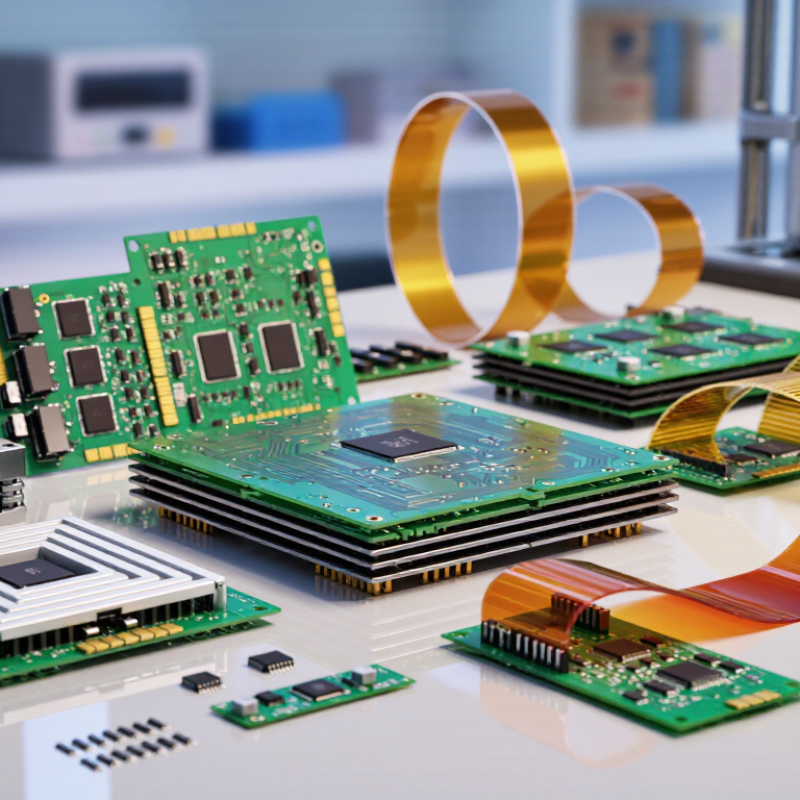
A printed circuit board is the physical platform that connects and supports electronic components. Copper pathways carry signals and power across its surface and inner layers. The board type matters because it affects flexibility, heat control, assembly cost, and long-term reliability.
A rigid PCB suits control panels, appliances, and many industrial products. A flexible PCB bends inside cameras, wearable devices, and compact medical equipment. Rigid-flex designs combine both advantages, but their structure demands tighter manufacturing control. High-density interconnect boards use fine pathways and microvias for smaller products. Metal-core boards can move heat away from high-power LEDs or similar components. In real sourcing work, buyers should match the PCB type with bending cycles, operating temperature, current load, and available production equipment. A cheaper board is not always the economical choice. I have seen small design changes create unexpected assembly problems.
Tips: Request layer drawings, material details, copper thickness, and test requirements before ordering. Check whether the supplier can inspect impedance, holes, solderability, and surface quality. Ask for sample boards from the same production process. Samples can reveal issues that specifications miss. Also review applicable safety and environmental requirements for the destination market. Leave tolerance for human error and measurement variation. Perfect assumptions rarely survive production.
How PCB Types Are Classified by Layers, Materials, and Structure
PCB types are commonly classified by layer count, material, and physical structure. Single-layer boards suit simple controls, while double-layer boards support denser routing on both sides. Multilayer designs, often using four to twelve layers, separate power, ground, and signal paths. More layers can improve electromagnetic performance, but they also increase drilling, lamination, and inspection demands.
Material selection depends on heat, flexibility, frequency, and operating environment. Standard glass-reinforced epoxy laminates work well for many industrial products. Polyimide supports repeated bending in flexible circuits. Metal-core boards help move heat away from power components, especially near LED arrays or motor drivers. High-frequency laminates control signal loss, but their processing requirements are less forgiving. A material chosen only by price may create failures later.
Structure adds another useful classification. Rigid boards keep a fixed shape, flexible boards bend around hinges, and rigid-flex boards combine both zones. Through-hole construction remains practical for mechanical strength, while surface mounting saves space. Microvias and sequential build-up structures support compact electronics, though their reliability depends on precise drilling and clean layer registration. During a design review, engineers should inspect the stack-up, copper thickness, bend radius, and impedance targets. A 1.6 mm board may look ordinary, yet an incorrect copper balance can cause warping. Even experienced teams sometimes approve a neat layout before checking thermal cycling data. That mistake deserves a second review.
2026 Top PCB Printed Circuit Board Types for Global Buyers
How PCB types are classified by layers, materials, and structure
PCB types are commonly distinguished by layer count and construction. Single-sided and double-sided boards are suitable for simpler circuits, while multilayer, HDI, and rigid-flex boards support higher wiring density, compact structures, and advanced electronic applications. The values shown represent typical layer-count examples used in industry; actual designs vary by electrical, mechanical, and manufacturing requirements.
Key Features of Rigid, Flexible, and Rigid-Flex PCB Designs
Rigid, flexible, and rigid-flex boards serve different engineering realities. Rigid PCBs provide stable support, predictable impedance, and efficient automated assembly. They suit control units, servers, and industrial instruments with fixed geometries. IPC’s 2024 market update reported continued demand from computing, automotive, and communications equipment, despite uneven regional recovery. That demand rewards disciplined layer planning and thermal design.
Flexible PCBs bend around hinges, cameras, and narrow battery compartments. Their polyimide construction reduces connectors, cable volume, and assembly height. However, repeated bending requires controlled bend radii, reinforced zones, and careful copper patterning. A sharp corner can become a fatigue point. Grand View Research estimates the global flexible PCB market will expand strongly through the decade, driven by compact electronics and vehicle electrification. The forecast is useful, but application mix can change quickly.
Rigid-flex designs combine mechanical stability with three-dimensional routing. They can remove cable assemblies and improve signal continuity across moving sections. The trade-off is higher material cost, tighter fabrication tolerances, and more demanding inspection. Prismark’s recent electronics industry forecasts link advanced substrate growth with high-speed computing and automotive electronics. Buyers should request stack-up details, bend-cycle data, impedance records, and thermal test results. Fit matters. Small errors multiply. A design may look elegant in CAD yet fail during repeated assembly or field vibration. That uncomfortable gap deserves review before volume production.
How Specialized PCBs Serve Different Global Industry Applications
Specialized PCBs serve different global industry applications because electrical demands vary sharply. A smartphone needs dense routing, while an industrial inverter needs heat control and current capacity. Grand View Research estimates that the global PCB market could exceed USD 100 billion before 2030. Its analysis also identifies consumer electronics, automotive systems, and telecommunications as major demand areas.
High-density interconnect PCBs support compact devices with fine traces, laser microvias, and tightly spaced pads. Rigid-flex boards reduce wiring and movement stress in medical instruments, cameras, and aerospace controls. Automotive radar often uses high-frequency laminates, where stable signal loss matters more than low purchase price. Heavy-copper PCBs suit battery systems and power converters. They manage larger currents through wider copper layers and stronger thermal paths. Small details matter. A poorly placed thermal via can create a hot spot.
Material selection also depends on operating conditions. Ceramic-based boards handle extreme heat, but they can be less forgiving during assembly. Flexible circuits save space, yet repeated bending requires controlled bend radii and careful coverlay design. IPC’s PCB industry standards, including IPC-2221 and IPC-A-600, provide widely used design and acceptance references. The 2024 IPC electronics industry data also indicates continued pressure from material costs, delivery risks, and uneven regional demand. These reports are useful, but forecasts are not guarantees. A global buyer should verify impedance, thermal cycling, moisture resistance, and traceability with actual test records. Cost alone is a weak filter. Sometimes, the cheaper board becomes the expensive failure.
2026 Top PCB Printed Circuit Board Types for Global Buyers - How Specialized PCBs Serve Different Global Industry Applications
A practical comparison of common PCB constructions, materials, performance characteristics, and application areas.
| PCB Type | Typical Construction | Common Materials | Key Technical Characteristics | Typical Global Industry Applications | Main Buyer Considerations |
|---|---|---|---|---|---|
| Single-Sided PCB | One copper layer on one side of an insulating substrate; components are generally mounted on the opposite side. | FR-2, paper phenolic, or glass-reinforced epoxy laminates. | Simple routing, low manufacturing complexity, suitable for low-density circuits and cost-sensitive designs. | Household appliances, basic controls, lighting products, toys, and simple industrial interfaces. | Circuit density, mechanical strength, operating temperature, hole-plating needs, and target production volume. |
| Double-Sided PCB | Copper layers on both sides, usually connected by plated through-holes or vias. | Glass-reinforced epoxy laminate, commonly FR-4, with copper foil and solder mask. | Higher routing density than single-sided boards; supports through-hole and surface-mount assembly. | Industrial controllers, consumer electronics, power supplies, instrumentation, and automotive modules. | Layer registration, via reliability, copper thickness, thermal requirements, and assembly method. |
| Multilayer PCB | Three or more conductive layers separated by dielectric material and laminated into a single board. | FR-4 and low-loss laminates with prepreg, copper planes, and plated vias. | Supports power and ground planes, controlled impedance, compact routing, and improved electromagnetic performance. | Servers, networking equipment, medical devices, industrial automation, transportation electronics, and embedded systems. | Layer count, stack-up design, dielectric thickness, signal integrity, thermal management, and fabrication yield. |
| HDI PCB | High-density multilayer construction using microvias, fine lines, fine spaces, and sequential lamination. | High-Tg laminates, low-loss dielectric materials, copper foil, and microvia-compatible build-up layers. | Enables compact form factors, increased interconnect density, shorter signal paths, and efficient component escape routing. | Mobile devices, compact computing systems, medical instruments, aerospace electronics, and advanced control modules. | Microvia structure, via-in-pad requirements, laser drilling capability, warpage control, inspection, and higher fabrication cost. |
| Flexible PCB | One or more copper layers bonded to flexible dielectric films; designed for bending or dynamic flexing. | Polyimide film, rolled-annealed copper, coverlay, and flexible adhesives. | Low mass, reduced wiring volume, bend capability, and suitability for three-dimensional packaging. | Wearable electronics, cameras, displays, medical equipment, automotive interiors, and compact consumer devices. | Static or dynamic bend radius, flex-cycle life, stiffener placement, crease protection, and connector durability. |
| Rigid-Flex PCB | Rigid board sections interconnected by flexible PCB sections within one integrated structure. | FR-4 or other rigid laminates combined with polyimide flex layers and flexible copper. | Combines component support with three-dimensional routing, reduced connectors, and improved packaging efficiency. | Aerospace systems, surgical instruments, industrial robotics, vehicle electronics, and rugged portable equipment. | Bend zones, layer transitions, mechanical stress, controlled impedance, assembly tooling, and lifecycle testing. |
| Metal-Core PCB | Copper circuitry separated from an aluminum or copper base plate by an electrically insulating dielectric layer. | Aluminum core, copper core, thermally conductive dielectric, and copper foil. | Improves heat spreading and mechanical support for high-power or high-brightness components. | LED lighting, power conversion, motor drives, automotive lighting, and thermal control assemblies. | Thermal resistance, dielectric breakdown voltage, base thickness, coefficient of thermal expansion, and mounting method. |
| RF and Microwave PCB | Single-layer or multilayer controlled-impedance construction optimized for radio-frequency signal transmission. | Low-loss PTFE-based, ceramic-filled, hydrocarbon-ceramic, or specialized high-frequency laminates. | Low dielectric loss, stable electrical properties, controlled impedance, and predictable performance at high frequencies. | Wireless infrastructure, radar, satellite communications, navigation, test equipment, and sensing systems. | Dielectric constant tolerance, dissipation factor, surface roughness, stack-up accuracy, connector design, and RF testing. |
| High-Speed Digital PCB | Multilayer controlled-impedance board with dedicated reference planes and carefully managed high-speed routing. | Low-loss FR-4 alternatives, advanced epoxy laminates, and very-low-loss dielectric materials. | Designed to reduce insertion loss, crosstalk, reflections, skew, and electromagnetic interference in fast data links. | Data centers, telecommunications, networking, industrial computing, automotive platforms, and high-performance embedded systems. | Material loss characteristics, trace geometry, differential-pair control, via transitions, power integrity, and simulation requirements. |
| Ceramic PCB | Conductive patterns formed on or within a ceramic substrate, using thick-film, thin-film, or direct-bonded copper methods. | Alumina, aluminum nitride, or other technical ceramics with copper or thick-film conductors. | High thermal conductivity, low moisture absorption, dimensional stability, and compatibility with demanding temperatures. | Power electronics, laser systems, high-temperature sensors, aerospace equipment, and advanced LED assemblies. | Brittleness, thermal expansion matching, metallization method, surface finish, machining limits, and higher material cost. |
| Heavy-Copper PCB | PCB with substantially thicker copper conductors than standard signal boards, sometimes using multiple copper weights. | FR-4 or high-temperature laminates with thick electrodeposited copper and reinforced plated holes. | Carries higher current, supports improved heat distribution, and provides enhanced mechanical strength in power paths. | Battery systems, renewable-energy converters, industrial power supplies, electric drives, and transportation power electronics. | Copper weight, etching capability, thermal cycling, plated-hole reliability, creepage and clearance, and board weight. |
Selection should be based on electrical performance, thermal conditions, mechanical constraints, applicable safety requirements, manufacturing capability, inspection needs, and the expected operating environment.
How Global Buyers Can Compare and Choose the Right PCB Type
Choosing a PCB begins with the product’s real working conditions, not a catalog label. A compact sensor may need a two-layer board, while a high-speed controller can require six or more layers. Compare layer count, board thickness, copper weight, dielectric material, and controlled impedance. These details affect signal quality, heat control, and assembly yield.
Ask for fabrication records, test reports, and clear tolerance data. A reliable supplier should explain solder mask limits, drill accuracy, surface finish, and electrical testing methods. For products sold across regions, check material declarations and applicable environmental requirements. Confirm whether the board supports lead-free assembly and the intended operating temperature. Small gaps in documentation often create larger delays later.
Cost needs a wider view. A cheap prototype board may use a material that performs poorly near motors, heat sources, or moisture. A flexible PCB can reduce wiring space, but repeated bending requires verified bend-radius data. Rigid-flex designs save assembly steps, yet they demand tighter engineering control. In sourcing reviews, buyers sometimes compare unit prices too early. That is an easy mistake. Request sample panels, inspect plated holes under magnification, and run the board in a realistic enclosure before approving volume production. Temperature cycling and vibration testing may reveal weaknesses that visual inspection misses.
Related Posts
-
What Is a PCB Board and How Does It Work?
-

How to Choose the Right Printed PCB Supplier?
-
10 Essential Tips for Understanding Circuit Boards and Their Functionality
-
Understanding PCB Production: Essential Insights for Future Electronics Innovators
-
How to Design a Printed Circuit Board for Beginners in Easy Steps
-

Printed PCB Tips for Cost Effective Sourcing Solutions?