What Is the Best Flexible Printed Circuit Board from China?
Choosing the best flexible printed circuit board from China requires more than comparing factory prices. The right decision depends on design fit, material control, manufacturing experience, and dependable inspection.
Joseph Fjelstad, a recognized flexible-circuit technology expert, has stated, “Flexible circuits are an enabling technology.” That idea matters during supplier evaluation. A reliable Chinese manufacturer should understand bend radius, copper thickness, adhesive selection, coverlay design, and impedance control. These details affect whether a circuit survives repeated folding or fails near a sharp corner.
Look closely.
A strong supplier can explain its material choices without vague promises. Ask for stack-up drawings, production samples, electrical test records, and process-control evidence. If the board will enter medical equipment, cameras, automotive systems, or compact consumer devices, trace reliability becomes especially important. A clean sample is useful, but it does not prove stable mass production.
Factory visits, third-party audits, and small pilot orders can reveal more than polished brochures. Check whether operators protect exposed copper, control contamination, and record temperature during lamination. These practical details often separate a capable partner from a low-cost reseller.
There is no universal “best” flexible printed circuit board. The best option matches the application, volume, performance target, and risk tolerance. Cost still matters. However, choosing the cheapest quotation may create hidden expenses through redesigns, delays, and field failures. Some supplier claims will remain difficult to verify remotely. That is why a careful evaluation should combine technical documents, physical samples, communication quality, and measurable quality data.
What Is a Flexible Printed Circuit Board?
What Is the Best Flexible Printed Circuit Board from China?
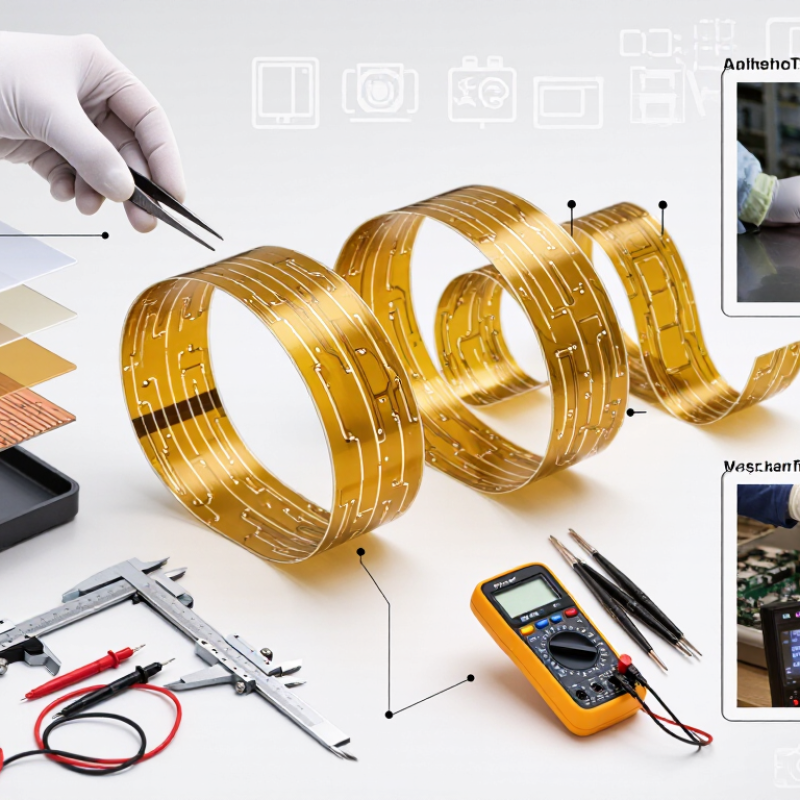
A flexible printed circuit board, or FPCB, uses thin copper traces on a bendable polymer film. Polyimide is common because it tolerates heat, vibration, and repeated movement. Adhesive layers, coverlay, stiffeners, and exposed contacts complete its structure.
Unlike rigid boards, an FPCB can fold through narrow spaces. It also reduces wiring, connectors, and assembly weight. ResearchAndMarkets estimates the global flexible printed circuit market will grow at roughly 11% annually through 2030. However, forecasts differ by research method and product scope. That difference deserves attention.
For a dependable Chinese FPCB, engineers should inspect layer alignment, copper thickness, bend radius, and impedance control. IPC-2223 guidance remains useful for designing flexible printed structures. A circuit may pass visual inspection but fail after thousands of bends. That is the uncomfortable part.
Mechanical testing must match the real device, not an ideal laboratory motion. A 2024 Yole Group analysis also identifies smartphones, wearables, and compact electronics as major demand areas. Those products need thin circuits, stable signals, and consistent mass production.
Tips:
Ask for cross-section images, material certificates, and bend-cycle results. Confirm whether the supplier tests dynamic or static bending. Check hole quality under magnification. Do not trust attractive samples alone. Small gaps, sharp corners, and excessive copper can create large failures. A complete design review should include drawings, tolerances, and packaging conditions.
How to Evaluate Chinese FPCB Manufacturers
What Is the Best Flexible Printed Circuit Board from China?
How to Evaluate Chinese FPCB Manufacturers
Choosing the best Chinese FPCB manufacturer requires more than comparing unit prices. In practical supplier reviews, inspect engineering depth, process control, and communication quality. Ask for controlled drawings, impedance data, material certificates, and inspection records. A reliable factory should explain its copper thickness, polyimide selection, minimum bend radius, and tolerance limits clearly. Vague answers are warning signs.
Request samples that match your real design. Check connector alignment, exposed-pad finish, coverlay edges, and bending performance under repeated movement. Review the supplier’s testing equipment, including continuity, insulation resistance, dimensional inspection, and automated optical inspection. Confirm whether production follows recognized quality systems and relevant industry standards. Certificates help, but they do not replace process evidence.
Visit the facility when possible. Observe material storage, humidity control, traceability labels, and how rejected boards are isolated. Ask how engineering changes are approved and recorded. A strong manufacturer will discuss risks before production starts. However, no factory is perfect. Small trial orders may reveal delays, unclear reports, or inconsistent packaging. That uncomfortable evidence matters. Evaluate corrective actions, not just polished presentations. Also confirm capacity, lead times, export documentation, and compliance with applicable environmental and product requirements before approving mass production.
What Is the Best Flexible Printed Circuit Board from China?
How to Evaluate Chinese FPCB Manufacturers
The chart presents a practical supplier-qualification model based on commonly used electronics manufacturing criteria. Quality systems and engineering capability receive the highest weights because they directly affect dimensional accuracy, circuit reliability, design-for-manufacturing support, and production consistency. Buyers should verify each criterion through audits, samples, test reports, and documented process records rather than relying only on quotations.
Which Certifications and Quality Standards Should You Check?
When selecting a flexible printed circuit board from China, certifications should support, not replace, technical verification. Start with IPC-6013 for qualification and performance requirements. IPC-A-600 helps inspectors judge visible defects, including lifted pads, exposed copper, and uneven coverlay edges. ISO 9001 indicates a controlled quality system, but it does not guarantee perfect circuits. That distinction matters.
For automotive applications, IATF 16949 is a stronger signal because it emphasizes traceability, process control, and corrective action. Medical projects may require ISO 13485, while material flammability should be checked against UL 94 ratings. Ask for current certificates, issuing-body details, scope, and expiration dates. A copied certificate proves very little. Request lot-level records, impedance reports, microsection images, solderability results, and bend-cycle data.
Market demand makes disciplined checking more important. MarketsandMarkets’ 2024 Flexible Electronics report projects the sector to grow from about 31.5 billion dollars in 2023 to 54.7 billion dollars by 2028. Fast growth can pressure factories to shorten inspection steps. That is where risk enters. I would also compare supplier data with IPC limits, rather than trusting a polished presentation. However, even IPC-based checks can miss assembly stress or field bending conditions. Build a small pilot batch, test it under real temperature and flex cycles, and record every failure. Perfect paperwork is not the same as reliable performance.
How to Choose the Best Chinese FPCB for Your Application
What Is the Best Flexible Printed Circuit Board from China?
Choosing the best Chinese FPCB starts with the application, not the lowest quotation. Research and Markets’ 2024 analysis estimates that Asia-Pacific remains the largest flexible circuit market, supported by mobile devices, vehicles, and medical electronics. That scale offers strong manufacturing experience, but quality varies between factories. Request evidence for copper thickness, bend radius, impedance control, and layer registration. Ask for process capability data, not only attractive samples.
Match the construction to real operating stress. Dynamic bending needs rolled-annealed copper, while static flexing may accept electro-deposited copper. For a compact camera module, a 0.15-millimeter board can reduce space, but its stiffener and connector area still need mechanical support. IPC-2223 provides useful design guidance for flexible and rigid-flex circuits. Confirm that the supplier follows applicable IPC workmanship requirements and can provide incoming-material records, electrical test results, and traceability.
Do not trust one prototype.
A serious evaluation should include repeated-bend testing, thermal cycling, insulation resistance, and solder-joint inspection. Yole Group’s advanced packaging reports repeatedly identify miniaturization and higher interconnect density as major industry drivers; your FPCB must therefore survive tighter spacing and greater heat exposure. I have seen projects fail because the drawing ignored adhesive squeeze-out near a connector. That mistake is easy to miss. Compare pilot-run yield, corrective-action speed, and engineering communication before signing a production agreement. The cheapest board may become the most expensive delay.