Who Are the Top 10 Flex PCB Manufacturers in China?
China has a broad ecosystem of printed circuit board suppliers, including manufacturers specializing in flexible circuits. Choosing among them takes more than comparing factory locations or advertised prices. Flex pcbs can bend around compact designs, but their performance depends on material selection, copper thickness, coverlay, and careful process control. Small details matter. A poorly matched bend radius or an inconsistent adhesive layer can affect reliability after repeated movement.
This guide introduces ten Chinese manufacturers for buyers to investigate, rather than presenting an unquestionable ranking. The companies should be assessed against practical needs: prototype support, production capacity, design-for-manufacturing guidance, inspection methods, lead times, and communication. Ask for current certifications and relevant product examples, then confirm that the quoted process suits your board’s layer count and operating environment. Evidence beats promises. A useful supplier can explain its limits, not just its strengths.
The best fit will depend on the application. A wearable device may require a different construction from an automotive control or a compact camera module. Request drawings, tolerances, and test requirements early. Compare written quotations carefully. This list can help narrow the search, but it cannot replace direct technical discussions or sample evaluation. No list is perfect. Supplier capabilities also change over time, so verify details before making a sourcing decision.
How Flex PCBs Are Made and Where They Are Used
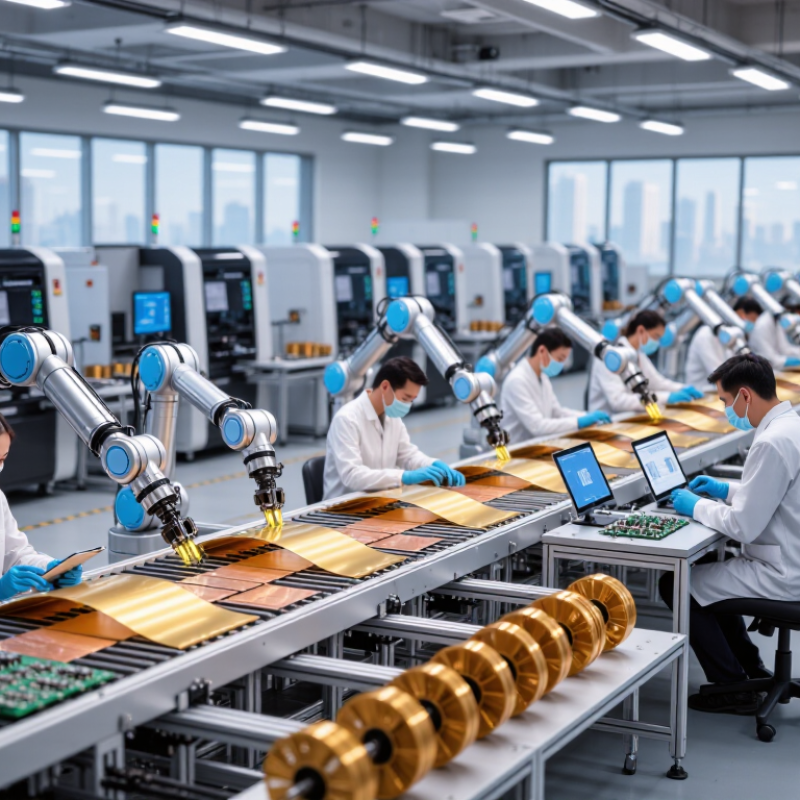
A flex PCB begins with a thin copper layer bonded to a flexible film, often polyimide. Engineers transfer circuit patterns by photolithography, then etch away unwanted copper. Tiny holes may be drilled or laser-cut, plated, and connected across layers. A protective coverlay is laminated over the traces; selected areas may receive stiffeners for connectors or components. The finished circuit is electrically tested and, where required, checked through repeated bending. Small details matter.
That sounds straightforward on paper. In production, thin materials can wrinkle, and heat or pressure can shift alignment. A weak point in many explanations is treating yield as automatic. Grand View Research estimated the global flexible printed circuit board market at about US$19.5 billion in 2023, projecting 10.4% annual growth through 2030. This forecast reflects demand for compact, lightweight electronics, not a guarantee for every supplier or design. Flex circuits appear in wearable devices, camera modules, vehicle sensors, and medical equipment, where rigid boards cannot follow curved housings or moving joints. Designers still need to limit sharp folds and repeated stress. A bend that looks harmless in a prototype may fatigue copper traces over time.

Criteria for Ranking Flex PCB Manufacturers in China
A credible ranking should begin with product evidence, not factory size or a polished sales deck. Prismark reported that global PCB production value fell about 15% to US$68.6 billion in 2023. That market shift makes quoted capacity a weak standalone measure. For flex PCB suppliers, compare audited yields, defect rates, on-time delivery, and the ability to control thin polyimide films, fine traces, and copper thickness across repeat orders.
Quality systems need verification. Check whether the manufacturer works to relevant IPC-6013 requirements and can provide traceable inspection records. Ask for cross-sections, dimensional reports, and test results from a representative flex circuit—not only a showcase sample. Bend performance also needs a defined test method, radius, and cycle count. Numbers need context. A high cycle figure means little if the test setup differs from the product’s actual use.
Engineering support and supply resilience deserve real weight. Review design-for-manufacturing feedback, prototype turnaround, tooling control, and documented change handling. Compare lead times against actual order history, not a single promise. Financial stability, material sourcing, and capacity for rush orders can separate a reliable partner from a fragile one. No score is perfect. Weighting still involves judgment, and public data rarely reveals factory-level yield; buyers should validate claims with audits and a controlled pilot order.
Who Are the Top 10 Flex PCB Manufacturers in China? - Criteria for Ranking Flex PCB Manufacturers in China
Suggested evaluation framework: The criteria below can be used to compare manufacturers consistently. They are ranking criteria, not claims about any specific company. Score each criterion from 0 to 5 using verifiable documents, audit results, and sample evaluations.
| No. | Ranking Criterion | Weight | Evidence to Review | Why It Matters |
|---|---|---|---|---|
| 1 | Manufacturing Capability | 15% | Process capability documentation, equipment list, and sample builds for the required layer count, stack-up, and flex design. | Confirms that the factory can manufacture the specific design rather than only standard flex circuits. |
| 2 | Quality Management and Certifications | 12% | Current certificates, certification scope, audit records, and documented corrective-action processes. | A quality system helps standardize production controls and traceability; certificates should be checked for validity and scope. |
| 3 | Product Reliability and Testing | 12% | Inspection and test plans, electrical test records, reliability-test reports, and failure-analysis examples relevant to the application. | Testing and documented results provide evidence that boards meet agreed electrical and mechanical requirements. |
| 4 | Engineering and DFM Support | 10% | Design-for-manufacturing feedback, stack-up recommendations, bend-area review, and documented engineering change handling. | Early engineering review can identify manufacturability risks before tooling and volume production. |
| 5 | Fine-Line and Complex-Design Process Control | 10% | Capability data and representative samples for the buyer’s required trace/space, via, coverlay, stiffener, and registration features. | Flex designs vary widely; capability should be verified against the actual drawing and acceptance criteria. |
| 6 | Production Capacity and Scalability | 10% | Relevant line capacity, staffing and equipment plans, production-loading information, and evidence of pilot-to-volume transition control. | Capacity and scalability help determine whether supply can support forecast demand without compromising process control. |
| 7 | Relevant Industry Experience | 8% | Anonymized project examples, application-specific process knowledge, and references where disclosure is permitted. | Experience with comparable applications can indicate familiarity with their design, testing, and documentation needs. |
| 8 | Material and Supply-Chain Control | 8% | Material specifications, lot traceability, supplier qualification practices, and change-notification procedures. | Controlled materials and traceability support consistent builds and help manage supply-chain changes. |
| 9 | Delivery Performance and Communication | 8% | Historical on-time-delivery data, quotation and lead-time assumptions, escalation paths, and order-status reporting practices. | Consistent delivery communication supports production planning and helps buyers respond to schedule changes. |
| 10 | Environmental and Regulatory Compliance | 7% | Applicable environmental management documentation and material declarations required for the target market and product. | Compliance requirements depend on the product and destination market, so declarations and supporting records should be verified. |
| Total Weight | 100% | Use the same evidence requirements for every manufacturer being evaluated. | ||
Scoring formula: Weighted score = (criterion score ÷ 5) × criterion weight. Add the weighted scores to produce a total out of 100. Rank manufacturers only after verifying comparable, current evidence; the weights are a suggested evaluation model and can be adjusted to suit project requirements.
Top 10 Flex PCB Manufacturers in China
A useful Top 10 list should compare engineering capability, not just factory size. China’s flex PCB suppliers serve phones, vehicles, medical devices, and industrial controls. Prismark’s 2024 industry forecast valued worldwide PCB production at about US$73.7 billion. This figure covers all PCB types, not flexible boards alone, so it should not be treated as flex-market revenue. Still, it shows the scale of the supply base.
For a practical shortlist, examine layer count, minimum trace width, copper thickness, and documented bend-cycle performance. Ask for stack-up drawings and test records. On a sample, check whether the coverlay stays aligned around a tight bend and whether connectors survive repeated movement. IPC standards can help buyers specify workmanship and acceptance criteria. Small details matter. Also compare engineering response times, traceability, process controls, and capacity for pilot runs before choosing a supplier.
One weakness in many rankings is their reliance on public claims; comparable factory data is rarely available. A high advertised layer count does not prove stable yields or reliable delivery. Request a production sample, review electrical-test results, and confirm how design changes are controlled. The “top ten” may shift with application, volume, and tolerance needs. A careful shortlist is more useful than a universal winner.
Capabilities and Specialties of the Leading Manufacturers
China’s leading flex PCB manufacturers often differentiate themselves through process depth, not headline capacity. Some focus on single- and double-sided circuits for compact sensors; others handle multilayer designs, rigid-flex assemblies, or fine-pitch components. Look for stated limits on copper thickness, minimum trace width, bend radius, and layer count. These figures reveal more than a broad claim of “high precision.”
Prismark’s 2024 industry review estimated global PCB production value at about US$69.5 billion in 2023, down roughly 15% year over year. The figure covers all PCB types, not flex circuits alone. Still, it highlights why buyers should check a supplier’s utilization, lead-time stability, and engineering support—not just its quoted price. A capable factory can provide design-for-manufacturing feedback, controlled-impedance options, and documented material traceability. Details matter.
Specialties also vary by application. Wearable devices may need thin, lightweight circuits with repeated-bend testing; automotive or industrial assemblies may prioritize thermal endurance and stable performance across production lots. IPC-6013 provides qualification and performance requirements for flexible printed boards, making it a useful reference when reviewing inspection plans. Ask for cross-section samples, bend-test conditions, and yield data tied to a comparable design. A polished sample is not proof of repeatability. Some specifications remain unclear until the first build.
How to Select a Flex PCB Manufacturer for Your Project
Choosing a flex PCB manufacturer starts with your board’s real working conditions. Is it bent once during assembly, or flexed thousands of times in service? Share the bend radius, movement cycle, copper weight, layer count, and available space. Ask the engineering team to review the stack-up, coverlay openings, stiffener locations, and trace clearances. Their questions can reveal whether they understand your design constraints. A low quote alone tells you little.
Tips: Send clear fabrication files and a written specification. Request a design-for-manufacturing review, sample panels, electrical test details, and examples of inspection records. Ask how revisions are tracked and how production issues reach your team. Ask for evidence. Keep it specific.
Compare the answers, not just the prices. Check whether the proposed materials and tolerances match your application, and confirm expected lead times at your target volume. Discuss prototypes before committing to a larger order. Notice how promptly the supplier identifies risks, such as copper cracking near a tight bend or a stiffener interfering with assembly. A polished presentation is helpful, but it cannot replace consistent process control. Even a careful checklist can miss something; have your design engineer review the final stack-up and sample.