What Are the Top Rigid Flex Board Manufacturers in China?
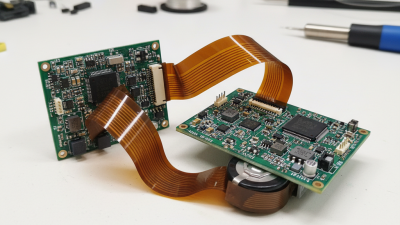
China is a major source of advanced printed circuit boards, including rigid-flex designs used in medical equipment, industrial controls, vehicles, and compact communications devices. A rigid flex board combines rigid circuit sections with flexible layers, reducing connectors and helping assemblies fit tight spaces. The design can look simple in a product photo. Its manufacturing is not.
Choosing a manufacturer requires more than comparing quoted prices. Buyers should examine engineering support, material traceability, layer-stack expertise, controlled-impedance capability, inspection methods, and experience with the intended application. Ask how the supplier manages bend radius, copper thickness, lamination, and test coverage. Request relevant certifications and sample documentation, then verify that they match the actual production site and product scope. Details matter.
This guide introduces notable rigid-flex manufacturers in China and the capabilities that may distinguish them. It is not a definitive ranking: factory strengths, lead times, and minimum order quantities change, while suitability depends on each project’s design and volume. A supplier known for high-volume production may not be the best fit for a small prototype run. That is easy to overlook. Use the company profiles as a starting point, and confirm claims directly through technical discussions, audits, or sample builds. A careful comparison can reduce avoidable redesigns, though no supplier choice removes every manufacturing risk.
Rigid-Flex Boards: Structure, Applications, and Key Benefits
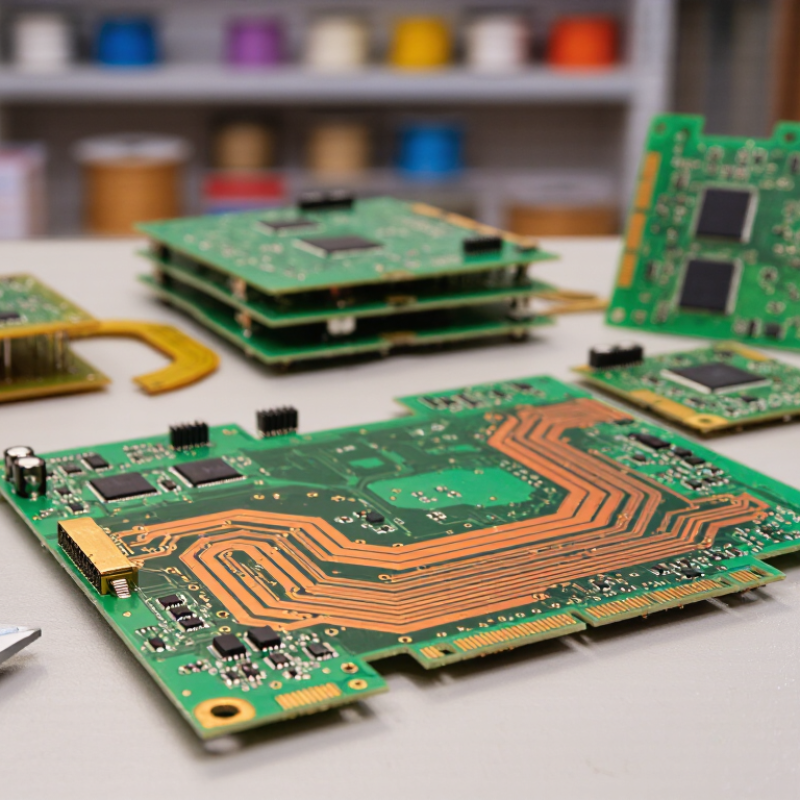
Rigid-flex boards combine rigid laminates with flexible polyimide sections. Plated-through holes and adhesive layers connect these zones. The rigid areas support connectors, processors, and shielding. The flexible sections bend around hinges, corners, or narrow enclosures. This structure reduces cable assemblies and saves valuable space.
In practical design reviews, Chinese manufacturers usually assess bend radius, layer count, copper thickness, and thermal demands before quoting. A wearable sensor may need repeated dynamic bending. An industrial controller may require only one installation bend. These are different reliability problems.
Engineers also inspect impedance control, via placement, coverlay alignment, and stiffener bonding. A small alignment error can create stress near the transition zone. Keep tolerances realistic.
Rigid-flex boards serve medical instruments, cameras, robotics, aerospace equipment, and compact consumer devices. Their key benefits include fewer connectors, lower assembly weight, and improved signal continuity. They can simplify enclosure design and reduce potential failure points. However, they cost more than standard rigid boards. Bending rules are easy to underestimate. Early prototype testing matters more than attractive datasheets. Thermal cycling, flex-life testing, and cross-section analysis reveal weaknesses that visual inspection may miss. Some projects overdesign the rigid section, adding weight without improving performance. A careful manufacturer should explain that trade-off clearly.
How to Evaluate Rigid-Flex Board Manufacturers in China
Evaluating rigid-flex board manufacturers in China requires more than comparing quoted prices. Start with engineering evidence. Ask for a controlled stack-up drawing, material specifications, bend-radius limits, and impedance targets. A capable supplier should explain how flex layers transition into rigid sections. Request recent cross-section reports and dimensional inspection data. Vague answers are warning signs. They may indicate outsourced processes or weak process control.
Visit the facility when practical, or arrange a live video audit. Observe clean storage for polyimide films, humidity controls, drilling equipment, laser-via inspection, and final electrical testing. Document everything. Check whether operators record lot numbers at each critical step. Ask how they handle copper cracks, delamination, and solder-mask damage. Their corrective-action records matter more than polished presentations. However, one remote audit cannot prove long-term consistency. That limitation deserves honest recognition.
Evaluate samples under realistic conditions. Bend assembled coupons repeatedly, measure resistance, and inspect plated holes under magnification. Confirm testing follows agreed industry criteria and includes thermal cycling when required. Review capacity, lead-time history, engineering response, and change-control procedures. A low-cost prototype can become expensive after redesigns. Samples reveal weaknesses. Customer references can help, though they may show only successful projects. Independent testing is wise for safety-critical or high-volume work.
Leading Rigid-Flex Board Manufacturers in China
What Are the Top Rigid-Flex Board Manufacturers in China?
Leading Rigid-Flex Board Manufacturers in China
China remains a major manufacturing base for advanced printed circuit boards. Prismark’s 2023 industry data estimated China’s mainland PCB output at about US$39.6 billion, representing more than half of global production. That scale supports mature rigid-flex supply chains, from polyimide materials to laser drilling and automated optical inspection. However, production volume alone does not prove technical leadership.
Leading rigid-flex board manufacturers usually demonstrate controlled layer registration, stable impedance, and reliable dynamic bending performance. Their factories should provide traceable material records, microsection analysis, and electrical test reports. IPC-2223 and IPC-6013 offer useful design and qualification references for flexible and rigid-flex constructions. A serious supplier should also explain how it manages copper cracking, adhesive flow, and plated-through-hole fatigue.
Details matter.
Ask for sample cross-sections, bend-radius data, and thermal-cycle results. A dependable factory can show process limits, not only attractive samples. It should also clarify whether inspection covers every panel or only selected pieces. MarketsandMarkets has projected continued growth in flexible electronics, driven by wearable devices, automotive systems, and compact medical equipment. Yet market forecasts can hide factory-level differences. Some manufacturers still rely heavily on manual assembly or inconsistent outsourced processes. That deserves scrutiny. The strongest candidates combine engineering experience, documented quality systems, and responsive technical communication. Certification helps, but it never replaces independent verification and a controlled pilot order.
Manufacturing Capabilities and Quality Standards Compared
China’s leading rigid-flex board manufacturers differ more in process control than in marketing claims. Strong suppliers usually support four to twelve-layer designs, fine-pitch components, and controlled impedance requirements. Their engineering teams review bend zones, stack-up geometry, copper thickness, and minimum bend radius before production.
Manufacturing capability becomes visible on the factory floor. Look for laser drilling, automated optical inspection, flying-probe testing, and cross-section analysis. A reliable plant records registration accuracy between rigid and flexible sections. It also checks adhesive flow, coverlay alignment, solder mask clearance, and plated-hole quality. Some facilities run thermal cycling and repeated flex tests. These tests reveal weaknesses that a visual inspection may miss.
Quality standards should be verified, not simply listed. Request current certificates, first-article reports, material traceability, and sample microsections. IPC-based workmanship controls are useful, but they do not replace application-specific testing.
Ask how the manufacturer handles nonconforming lots and engineering changes. Response time matters.
Small details matter.
A supplier may pass routine inspection yet struggle with high-density transitions or thin flexible tails. This is where practical experience separates capable manufacturers from average ones. Still, no factory is flawless. Even experienced teams can underestimate warpage, connector stress, or assembly heat. Buyers should compare yield data, corrective-action records, and pilot-run results instead of relying on polished presentations. A transparent manufacturer will explain limits clearly, including processes it cannot perform consistently.