10 Best Printed PCB Manufacturers for Global Buyers
Choosing a printed pcb manufacturer is not just a price comparison. Board quality, communication, and delivery reliability can affect an entire product schedule. For global buyers, distance adds practical questions: Can the supplier clarify technical details? Are production updates easy to follow? Will shipping timelines fit the project?
This guide introduces ten manufacturers for buyers evaluating different project needs, from early prototypes to larger production runs. It considers factors such as fabrication capabilities, material options, quality controls, order flexibility, and support for international customers. No single supplier suits every design. A compact multilayer board may require different processes from a simple control board, and the lowest quotation may not include the same specifications or testing.
Details matter. Before requesting quotes, prepare clear Gerber files, layer counts, material requirements, tolerances, and expected quantities. Ask how the manufacturer handles design questions, inspection records, packaging, and schedule changes. Check certifications and service claims directly with the supplier; requirements and scope can vary. It is also wise to compare sample policies and clarify who pays for shipping or revisions. Those details are easy to overlook.
A manufacturer’s website can look convincing, yet actual communication may feel slower or less precise. That deserves attention. The companies featured here offer a starting point, not a substitute for technical review or a carefully scoped quotation. Compare them against your board’s requirements, request written confirmation of critical specifications, and leave room for verification. A careful choice often begins with better questions, not a longer vendor list.

PCB Types and Build Options: Rigid, Flex, and Rigid-Flex
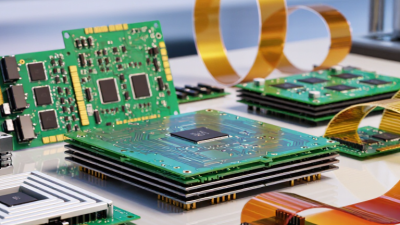
Rigid PCBs suit boards that need stable support, repeatable dimensions, and efficient panel production. They are common in control units, power modules, and dense computing hardware. Build options include layer count, copper thickness, laminate grade, surface finish, and controlled impedance. Specify these early; changing the stackup later can affect cost and signal performance. Small details matter.
Flexible circuits bend around hinges, narrow enclosures, and moving assemblies. Their polyimide base saves space, but repeated motion requires careful design. Set the bend radius, copper type, and layer arrangement with the expected movement in mind. A trace placed too close to a crease may fatigue sooner than planned. That risk is easy to underestimate.
Rigid-flex combines supported rigid sections with flexible links, reducing connectors and assembly steps. It can simplify a compact device, though fabrication and inspection are more demanding. Share bend zones, stiffener locations, component clearances, and stackup drawings with the fabricator. Ask how tolerances are measured, not only whether they are supported. For global sourcing, compare sample results and documentation alongside quoted lead times; the lowest price alone says little about fit or consistency.
Quality Benchmarks: IPC-6012 Classes 1–3 and ISO 9001
10 Best Printed PCB Manufacturers for Global Buyers
IPC-6012 and ISO 9001 answer different questions when evaluating a printed circuit board supplier. IPC-6012 sets qualification and performance requirements for rigid printed boards. Its Classes 1, 2, and 3 reflect different end-use reliability needs, from general electronics to high-reliability applications. Class 3 is not automatically the right choice for every design; unnecessary requirements may add cost and inspection time. Confirm the applicable class, revision, and acceptance criteria in your drawings and purchase documents.
Tips: Request the supplier’s current ISO 9001 certificate and check that its scope covers the relevant production site. Ask for inspection records tied to your board lot. Look for measurable details, such as copper thickness, hole-wall quality, and solder-mask registration. Clear evidence beats broad claims.
A certificate supports confidence in a quality management system, but it does not guarantee every board will meet your needs. Compare sample reports with your actual stack-up and tolerances. Check how the manufacturer controls changes, nonconforming boards, and lot traceability. A neat document package can still leave practical questions unanswered. That is easy to miss. Ask how defects are recorded and how corrective actions are verified. Also confirm whether testing is performed in-house or by an external laboratory. Requirements can vary by application, and even a careful review may not catch every production risk.
Printed PCB Quality Benchmarks for Global Buyers
IPC-6012 class levels indicate different intended product reliability requirements—not manufacturer ratings or numerical quality scores.
Class 1 covers general electronic products, Class 2 dedicated-service electronic products, and Class 3 high-performance electronic products where continued performance is critical. Actual acceptance requirements depend on the applicable IPC-6012 revision and the specific criteria. ISO 9001 is a quality-management-system standard; it is not an IPC product class or a PCB performance grade.
Manufacturing Capabilities: Layer Count and 1 oz Copper (34.8 μm)
Layer count and 1 oz copper thickness are useful starting points when comparing printed PCB manufacturers. A 1 oz copper layer corresponds to approximately 34.8 μm before processing. Finished copper may differ because plating, etching, and board design affect the final measurement. Ask whether a quoted thickness refers to base copper or finished copper.
More layers can support denser routing, but they also require careful stackup planning and registration. For example, a six-layer board with narrow traces needs tighter alignment than a simple two-layer design. Confirm the manufacturer’s supported layer range, minimum trace and spacing, and stackup options. These capabilities should match your actual files, not just a general specification sheet. Details can get missed.
Tips: Send representative Gerber files and state the required copper thickness clearly. Request the finished-copper tolerance and stackup before ordering. If impedance matters, include target values and controlled-impedance requirements; 1 oz copper alone does not guarantee a particular electrical result. A small test run can reveal issues, though it may not represent every production condition.
10 Best Printed PCB Manufacturers for Global Buyers - Manufacturing Capabilities: Layer Count and 1 oz Copper (34.8 μm)
Capability reference for comparing PCB suppliers. The rows show common layer-count categories, not a ranked list or claims about specific manufacturers. Actual availability depends on the supplier, board construction, materials, and design rules.
| Layer-Count Category | Typical Fabrication Context | 1 oz Copper Reference | Availability Consideration | Buyer Checkpoint |
|---|---|---|---|---|
| 1–2 layers | Single-sided and double-sided boards for relatively simple circuits. | Nominal copper foil thickness: 34.8 μm (1 oz/ft²). | Commonly offered by PCB fabricators; confirm the chosen base material and copper specification. | Check minimum trace/space, finished copper requirements, and whether copper weight means starting foil or finished copper. |
| 4 layers | Multilayer construction with internal signal or plane layers. | 1 oz foil may be specified for selected layers; layer weights can differ within one board. | Common multilayer category, subject to the supplier’s stack-up options. | Request a proposed stack-up and confirm core, prepreg, and copper weights by layer. |
| 6 layers | Additional routing and plane layers for denser designs. | 1 oz nominal foil is a selectable copper-weight specification, not a guarantee of finished thickness. | Usually assessed against board thickness, via structure, and spacing requirements. | Check layer-to-layer registration and whether controlled impedance is required. |
| 8 layers | Higher routing density with more options for signal and reference-plane placement. | 1 oz copper can be used on selected layers when supported by the stack-up. | Confirm the supplier’s standard and custom stack-up capabilities. | Review impedance requirements, dielectric thicknesses, and sequential lamination needs. |
| 10 layers | Multilayer boards for designs requiring further routing capacity or plane separation. | Specify 1 oz foil per layer where needed; copper distribution may vary across the stack. | Capability depends on the fabricator’s process and the design’s aspect ratio and tolerances. | Ask for design-rule limits and a manufacturability review before release. |
| 12 layers | Complex multilayer construction with several internal layers. | 1 oz is a nominal foil-weight designation; plating and processing affect finished copper thickness. | Confirm layer count, finished board thickness, and via construction as a combined specification. | Check drill sizes, aspect ratio, registration, and impedance-control capability. |
| 14–16 layers | High-density multilayer designs with more demanding stack-up coordination. | 1 oz may be available on specific layers; heavier or lighter copper may be needed elsewhere. | Often requires supplier-specific engineering review and stack-up approval. | Confirm lamination cycles, material availability, and the supplier’s tolerance limits. |
| 18–20 layers | Advanced multilayer boards with complex routing and reference-plane arrangements. | 1 oz foil remains a nominal starting-copper specification, subject to layer-specific processing. | Availability varies substantially by equipment, materials, and process controls. | Request documented capability limits for registration, drilling, and finished thickness. |
| 22–28 layers | High-layer-count builds that may require specialized stack-up and lamination planning. | Specify copper weight by layer; do not assume every layer uses 1 oz. | Typically requires quotation and technical review with a suitable multilayer fabricator. | Confirm material system, via strategy, layer registration, and test requirements. |
| 30+ layers | Very high-layer-count construction for specialized applications. | 1 oz copper can be specified where appropriate, but the complete stack-up must be reviewed. | Specialist capability; availability and design limits are supplier-specific. | Obtain written confirmation of the exact layer count, materials, tolerances, and inspection plan. |
Technical note: 1 oz copper means a nominal copper mass of one ounce per square foot, equivalent to approximately 34.8 μm of copper foil before fabrication processing. Finished outer-layer copper can differ because of plating and other process steps. Verify the fabricator’s definition of copper weight and finished copper thickness on the quotation and stack-up.
10 Leading Printed PCB Manufacturers: Capabilities, Markets, and Reach
PCB manufacturers differ less by headline capacity than by what they can repeatedly hold: layer count, copper weight, line width, and registration tolerance. A supplier skilled in high-density interconnect boards may not suit thick-copper power boards. Request capability tables, board cross-sections, and recent lot data—not just a polished factory tour. Prismark’s 2024 industry analysis valued global PCB production at about $73.6 billion in 2023, reflecting a weaker market than the previous year. Buyers should check whether quoted lead times reflect current factory utilization or an expected recovery.
Market reach means more than export coverage. Check where engineering support is based, whether local teams can review stack-ups, and how quickly a plant can replace a failed panel. WSTS reported worldwide semiconductor sales of $627.6 billion in 2024, up 19.1% year over year. This signals expanding electronics activity, not guaranteed PCB orders. Compare suppliers across automotive, industrial controls, telecom, and consumer markets; qualification experience can vary sharply. Ask for documented impedance control, thermal-cycle results, traceability, and change-notification rules. Details matter. Capability sheets rarely reveal yield stability during demand spikes, so validate samples and review production performance.
Global Buyer Scorecard: MOQ, Lead Time, Compliance, and Logistics
A useful global buyer scorecard starts with minimum order quantity, not headline price. Ask whether the quoted MOQ applies to bare boards, assembled panels, or each design revision. A prototype run of 20 boards may suit early testing, while repeat production may require a different price break. Confirm how unused panels are handled. Small details matter.
Lead time needs a clear starting point. Does the clock begin after files pass engineering review, or after payment and material approval? Request separate estimates for fabrication, assembly, and shipping. A stated “10-day” turnaround can mean different things. Ask about weekends, holiday shutdowns, and delays when a specified laminate is unavailable. Then compare like with like.
Compliance documents should match the actual board and destination. Request material declarations, test reports, and process records relevant to your product, and verify the revision dates. For logistics, check shipping options, tracking, packaging protection, and who handles customs paperwork. A low quote can lose its appeal if boards arrive late or poorly packed.
I would keep one imperfect column in the scorecard: “confidence in the estimate.” It forces buyers to record unanswered questions, not just polished promises.
Related Posts
-
2026 Top PCB Printed Circuit Board Types for Global Buyers
-

Top 10 PCB Printed Circuit Board Suppliers Worldwide?
-

What Is a PCB Board and How Does It Work?
-

How to Choose the Right Printed PCB Supplier?
-

What Is a PCB Circuit Board and How Does It Work?
-

How to Choose a PCB Printed Circuit Board Supplier